'%3e%3cpath%20d='M12.0683%2015.2949H11.015C10.9053%2015.2949%2010.8164%2015.3838%2010.8164%2015.4935V25.7849C10.8164%2025.8946%2010.9053%2025.9835%2011.015%2025.9835H12.0683C12.1779%2025.9835%2012.2668%2025.8946%2012.2668%2025.7849V15.4935C12.2668%2015.3838%2012.1779%2015.2949%2012.0683%2015.2949Z'%20fill='%230048FF'/%3e%3cpath%20d='M15.0278%2015.2949H13.9915C13.8819%2015.2949%2013.793%2015.3838%2013.793%2015.4935V25.7849C13.793%2025.8946%2013.8818%2025.9835%2013.9915%2025.9835H15.0278C15.1374%2025.9835%2015.2263%2025.8946%2015.2263%2025.7849V15.4935C15.2263%2015.3838%2015.1374%2015.2949%2015.0278%2015.2949Z'%20fill='%230048FF'/%3e%3cpath%20d='M9.09443%2015.2949H1.71809C1.60845%2015.2949%201.51953%2015.3838%201.51953%2015.4935V21.6128C1.51953%2024.0267%203.47634%2025.9834%205.89013%2025.9834H9.09448C9.20412%2025.9834%209.29304%2025.8946%209.29304%2025.7849V15.4935C9.29299%2015.3838%209.20407%2015.2949%209.09443%2015.2949Z'%20fill='%230048FF'/%3e%3cpath%20d='M24.342%2015.2949H16.9486C16.8389%2015.2949%2016.75%2015.3838%2016.75%2015.4935V25.7849C16.75%2025.8946%2016.8389%2025.9835%2016.9486%2025.9835H20.17C22.5838%2025.9835%2024.5406%2024.0267%2024.5406%2021.6129V15.4935C24.5406%2015.3838%2024.4517%2015.2949%2024.342%2015.2949Z'%20fill='%230048FF'/%3e%3cpath%20d='M15.016%206.07227H13.9798C13.8702%206.07227%2013.7812%206.16113%2013.7812%206.27082V13.6882C13.7812%2013.7978%2013.8701%2013.8868%2013.9798%2013.8868H15.016C15.1257%2013.8868%2015.2146%2013.7979%2015.2146%2013.6882V6.27077C15.2146%206.16113%2015.1257%206.07227%2015.016%206.07227Z'%20fill='%230048FF'/%3e%3cpath%20d='M12.0605%206.07227H11.0071C10.8975%206.07227%2010.8086%206.16113%2010.8086%206.27082V13.6882C10.8086%2013.7978%2010.8975%2013.8868%2011.0071%2013.8868H12.0605C12.1701%2013.8868%2012.259%2013.7979%2012.259%2013.6882V6.27077C12.259%206.16113%2012.1701%206.07227%2012.0605%206.07227Z'%20fill='%230048FF'/%3e%3cpath%20d='M23.5711%206.07227H16.9368C16.8272%206.07227%2016.7383%206.16113%2016.7383%206.27082V13.6882C16.7383%2013.7978%2016.8271%2013.8868%2016.9368%2013.8868H23.571C24.9125%2013.8868%2025.9999%2012.7993%2025.9999%2011.4578V8.50119C26%207.1597%2024.9125%206.07227%2023.5711%206.07227Z'%20fill='%230048FF'/%3e%3cpath%20d='M9.08494%206.07227H2.42892C1.08748%206.07221%200%207.15965%200%208.50114V11.4577C0%2012.7992%201.08748%2013.8867%202.42892%2013.8867H9.08494V13.8867C9.19457%2013.8867%209.28349%2013.7978%209.28349%2013.6881V6.27077C9.28349%206.16113%209.19457%206.07227%209.08494%206.07227Z'%20fill='%230048FF'/%3e%3cpath%20d='M20.1871%201.47349C18.9897%20-0.129579%2016.7113%20-0.459759%2015.1081%200.737715C14.8681%200.916974%2014.1377%201.46252%2013.1094%204.1681C13.109%204.16937%2013.1084%204.17064%2013.1079%204.17191C13.0397%204.35157%2013.173%204.54383%2013.3652%204.54383H20.6349C20.7291%204.54383%2020.8107%204.47766%2020.8298%204.38539C21.0343%203.40226%2020.8339%202.33941%2020.1871%201.47349Z'%20fill='%230048FF'/%3e%3cpath%20d='M12.4378%202.93607C11.6806%201.28298%2011.1489%200.885569%2010.9508%200.737694C9.34772%20-0.459731%207.06926%20-0.129601%205.87183%201.47346C5.22508%202.33944%205.02465%203.40224%205.22915%204.38542C5.24834%204.47764%205.32979%204.54386%205.42404%204.54386H11.7223C11.8052%204.54386%2011.8796%204.49231%2011.9084%204.41447C11.9384%204.33311%2011.9691%204.2509%2012.0006%204.16808C12.1533%203.76609%2012.2995%203.41209%2012.4385%203.09953C12.4616%203.04748%2012.4615%202.98792%2012.4378%202.93607Z'%20fill='%230048FF'/%3e%3c/g%3e%3cdefs%3e%3cclipPath%20id='clip0_4773_3494'%3e%3crect%20width='26'%20height='26'%20fill='white'/%3e%3c/clipPath%3e%3c/defs%3e%3c/svg%3e)
Free ad placement
EN


Free ad placement

Goods, services, cars, real estate and jobs

Create a seller page

EN



0

14

0




ТОО "Helio Solar"
Helio Solar is a company in the field of solar energy and renewable energy, which is engaged in the supply, design, installation and maintenance of solar power plants for businesses, private facilities and industrial enterprises in Kazakhstan.
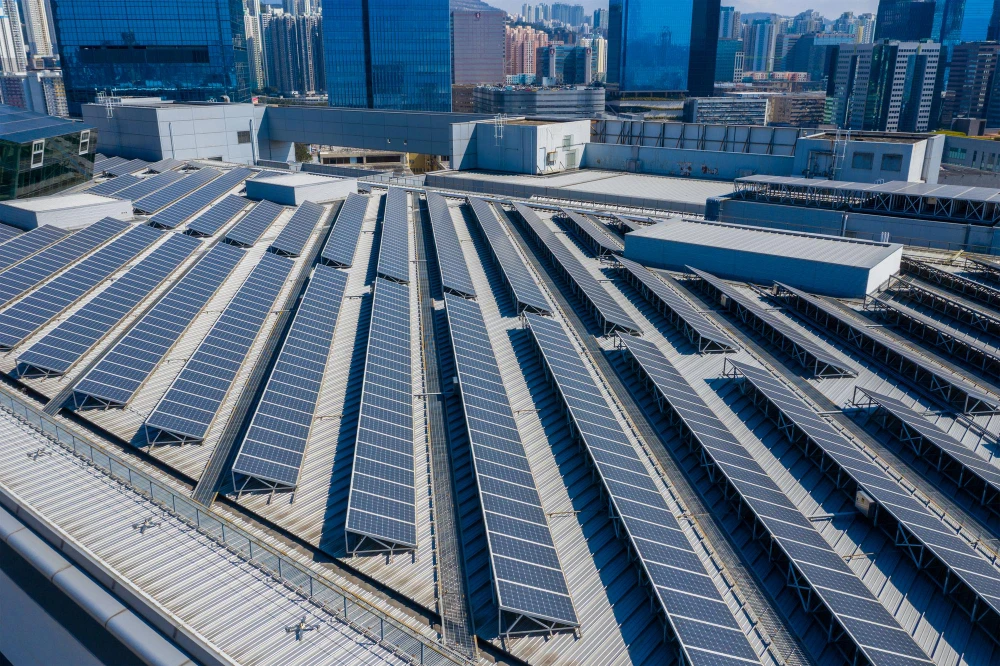
A solar power plant for a commercial facility is not just a set of panels on a roof or a land plot. For a warehouse, retail building, office, service center, production site, farm facility or car service station, a PV system solves several practical business tasks: it helps cover part of daytime electricity demand, makes energy costs more transparent, supports future load planning and improves control over engineering infrastructure. LLP "Helio Solar" works in solar energy and renewable energy, providing equipment supply, design, installation and maintenance of solar power plants for businesses, private facilities and industrial enterprises in Kazakhstan.
Why commercial solar should be assessed as an engineering decision
Commercial electricity consumption is rarely flat. A retail facility uses lighting, refrigeration, ventilation and checkout equipment. A warehouse may rely on lighting, gates, chargers, cold storage and security systems. A production site adds machines, pumps, compressors, automation and climate control. That is why the decision to install a solar power plant should begin not with the number of panels, but with the actual consumption profile of the facility.
Kazakhstan’s renewable energy sector is already part of the national power balance. According to data published with reference to the Ministry of Energy of the Republic of Kazakhstan, renewable energy facilities generated 8.62 billion kWh of electricity in 2025, which is 13.7% more than in 2024. The share of renewables in total electricity generation reached 7%. For commercial customers, these figures show that solar energy is becoming a practical infrastructure tool, not an experimental option.
Basic information about the company and its activity profile is available through the LLP "Helio Solar" profile on Mytrade.kz.
Key business tasks solved by a PV system
The same installed solar capacity can produce different value for a warehouse, a shop, a farm or a production facility. The result depends on operating hours, daytime demand, seasonal load, roof conditions, internal electrical infrastructure and future development plans. A commercial solar project should therefore be linked to a concrete operational task.
| Commercial task | How a solar power plant helps | What to check before ordering | Risk if ignored |
|---|---|---|---|
| Reduce daytime grid consumption | Part of the electricity is generated on site during sunny hours | Hourly load profile, operating schedule, seasonality | The system capacity may not match real demand |
| Make energy costs more transparent | Monitoring shows generation, consumption and deviations | Electricity bills for 12 months, peak load, connected capacity | The calculation may rely on averages instead of operational data |
| Prepare for business expansion | The project can take into account new equipment, larger areas or additional loads | Expansion plans, future consumers, condition of internal networks | The facility may need a new recalculation after expansion |
| Reduce pressure on daytime infrastructure | Part of the load is covered by local generation | Switchboards, cable lines, connection points, power supply diagram | The PV system may be limited by weak internal infrastructure |
| Improve technical control | Generation data helps detect soiling, shading or technical deviations earlier | Monitoring system, service access, maintenance procedure | Loss of output may remain unnoticed for too long |
This table is useful when comparing contractors. If a supplier offers a system capacity without asking about electricity consumption, shading, roof condition and connection points, the calculation may be too general for a commercial facility. LLP "Helio Solar" works with equipment supply, design, installation and maintenance of solar power plants, so the project should be viewed as an engineering cycle rather than a one-time panel purchase.
Task 1: covering part of the daytime load
The main operational value of a solar power plant is that it produces electricity when many commercial facilities are active. Retail stores, warehouses, offices, production areas and service buildings often consume more electricity during the day due to lighting, ventilation, refrigeration, pumps, machines, office equipment and automation systems. If generation and consumption coincide, the PV system works directly for the facility’s daily operations.
The global market confirms the scale of this shift. According to IEA PVPS Snapshot 2025, global photovoltaic capacity exceeded 2.2 TW by the end of 2024, while more than 600 GW of new PV systems were commissioned during 2024. This means solar power has become a mainstream infrastructure solution used by businesses, utilities and industrial users worldwide.
To compare the facility’s needs with available service directions, it is useful to review the current offers from LLP "Helio Solar".
Task 2: managing energy costs with real data
Many commercial facilities see only the final electricity bill, but not always the structure behind it. A business may not clearly know which zones consume the most energy, when the load peaks, or which equipment affects the bill most. Preparing for a solar project changes that approach: the company collects annual consumption data, reviews daytime peaks, analyzes seasonal patterns and identifies the main power-consuming systems.
After commissioning, monitoring becomes an important management tool. It shows daily generation, seasonal variation, possible losses from dust, shading, connection errors or technical deviations. Without this data, the owner may notice a performance issue only after the system has already lost part of its expected effect.
For a faster visual impression of the company’s direction, commercial customers can view the Helio Solar Reels videos.
Task 3: planning future load growth
Commercial facilities rarely remain unchanged. A warehouse may add cold storage. A shop may expand the retail floor. A production site may connect new equipment. An office may increase the number of workplaces. An agricultural facility may strengthen pumping or ventilation systems. If these changes are not considered early, the electrical infrastructure may stop matching the actual load.
A solar power plant does not replace a full electrical engineering assessment, but it helps the business calculate the future energy balance more consciously. Before ordering, it is important to understand what share of the load can realistically be covered by solar generation, whether the system should be expandable, whether storage is relevant, how the system will connect to existing infrastructure and how maintenance access will be organized.
Materials on solar design, installation and service topics can be followed in the news and offers section of LLP "Helio Solar".
Task 4: reducing the risk of wrong configuration
For a commercial facility, a configuration mistake can be more costly than for a small residential system. Insufficient capacity will not cover the expected demand. Excessive capacity may complicate the project’s economics. An unsuitable inverter can limit system performance. Ignored shading, incorrect orientation or weak internal networks may reduce actual generation compared with the calculation.
Kazakhstan’s renewable energy statistics also show that the technology is developing at system level. According to data published with reference to the Ministry of Energy, in 2025 Kazakhstan had 162 renewable energy facilities with a total installed capacity of 3.5 GW, including 49 solar power plants. Still, for an individual commercial site, the final result depends on inspection quality, design accuracy, installation discipline and later maintenance.
To compare how different business solutions are presented visually, users can browse the short video section on Mytrade.kz.
What data should be prepared before calculation
Before requesting a solar proposal, a commercial customer should prepare initial data. This allows the contractor to calculate the system based on the real operating mode of the facility, rather than on average assumptions. The more accurate the input data, the lower the risk of mistakes in capacity, connection scheme and equipment selection.
- electricity consumption data for at least the last 12 months;
- daytime and seasonal load patterns, if available;
- facility type: warehouse, store, office, production site, farm facility, car service station or service area;
- list of equipment that creates the main electricity demand;
- available roof, canopy, facade or land area for PV installation;
- shading from nearby buildings, trees, pipes, structures or neighboring objects;
- connected capacity, switchboard condition and internal network limitations;
- future plans for expansion or connection of new equipment.
When choosing a supplier, it is important to compare not only equipment names, but also the logic of calculation, inspection procedure and maintenance approach. On the Mytrade.kz marketplace for finding suppliers and services, businesses can review company profiles, offers and published materials in one place.
A solution should work on the site, not only in the calculation
For a commercial facility, a solar power plant solves several connected tasks: it covers part of daytime demand, improves energy cost transparency, supports future load planning, strengthens infrastructure control and reduces the risk of incorrect configuration. That is why the project should start with the facility’s consumption logic, technical conditions and business goals — not only with the number of panels.
After commissioning, stable performance also depends on service discipline. The role of maintenance in generation stability, monitoring and equipment condition is reviewed in the previous article about how maintenance affects stable solar power plant operation.