'%3e%3cpath%20d='M12.0683%2015.2949H11.015C10.9053%2015.2949%2010.8164%2015.3838%2010.8164%2015.4935V25.7849C10.8164%2025.8946%2010.9053%2025.9835%2011.015%2025.9835H12.0683C12.1779%2025.9835%2012.2668%2025.8946%2012.2668%2025.7849V15.4935C12.2668%2015.3838%2012.1779%2015.2949%2012.0683%2015.2949Z'%20fill='%230048FF'/%3e%3cpath%20d='M15.0278%2015.2949H13.9915C13.8819%2015.2949%2013.793%2015.3838%2013.793%2015.4935V25.7849C13.793%2025.8946%2013.8818%2025.9835%2013.9915%2025.9835H15.0278C15.1374%2025.9835%2015.2263%2025.8946%2015.2263%2025.7849V15.4935C15.2263%2015.3838%2015.1374%2015.2949%2015.0278%2015.2949Z'%20fill='%230048FF'/%3e%3cpath%20d='M9.09443%2015.2949H1.71809C1.60845%2015.2949%201.51953%2015.3838%201.51953%2015.4935V21.6128C1.51953%2024.0267%203.47634%2025.9834%205.89013%2025.9834H9.09448C9.20412%2025.9834%209.29304%2025.8946%209.29304%2025.7849V15.4935C9.29299%2015.3838%209.20407%2015.2949%209.09443%2015.2949Z'%20fill='%230048FF'/%3e%3cpath%20d='M24.342%2015.2949H16.9486C16.8389%2015.2949%2016.75%2015.3838%2016.75%2015.4935V25.7849C16.75%2025.8946%2016.8389%2025.9835%2016.9486%2025.9835H20.17C22.5838%2025.9835%2024.5406%2024.0267%2024.5406%2021.6129V15.4935C24.5406%2015.3838%2024.4517%2015.2949%2024.342%2015.2949Z'%20fill='%230048FF'/%3e%3cpath%20d='M15.016%206.07227H13.9798C13.8702%206.07227%2013.7812%206.16113%2013.7812%206.27082V13.6882C13.7812%2013.7978%2013.8701%2013.8868%2013.9798%2013.8868H15.016C15.1257%2013.8868%2015.2146%2013.7979%2015.2146%2013.6882V6.27077C15.2146%206.16113%2015.1257%206.07227%2015.016%206.07227Z'%20fill='%230048FF'/%3e%3cpath%20d='M12.0605%206.07227H11.0071C10.8975%206.07227%2010.8086%206.16113%2010.8086%206.27082V13.6882C10.8086%2013.7978%2010.8975%2013.8868%2011.0071%2013.8868H12.0605C12.1701%2013.8868%2012.259%2013.7979%2012.259%2013.6882V6.27077C12.259%206.16113%2012.1701%206.07227%2012.0605%206.07227Z'%20fill='%230048FF'/%3e%3cpath%20d='M23.5711%206.07227H16.9368C16.8272%206.07227%2016.7383%206.16113%2016.7383%206.27082V13.6882C16.7383%2013.7978%2016.8271%2013.8868%2016.9368%2013.8868H23.571C24.9125%2013.8868%2025.9999%2012.7993%2025.9999%2011.4578V8.50119C26%207.1597%2024.9125%206.07227%2023.5711%206.07227Z'%20fill='%230048FF'/%3e%3cpath%20d='M9.08494%206.07227H2.42892C1.08748%206.07221%200%207.15965%200%208.50114V11.4577C0%2012.7992%201.08748%2013.8867%202.42892%2013.8867H9.08494V13.8867C9.19457%2013.8867%209.28349%2013.7978%209.28349%2013.6881V6.27077C9.28349%206.16113%209.19457%206.07227%209.08494%206.07227Z'%20fill='%230048FF'/%3e%3cpath%20d='M20.1871%201.47349C18.9897%20-0.129579%2016.7113%20-0.459759%2015.1081%200.737715C14.8681%200.916974%2014.1377%201.46252%2013.1094%204.1681C13.109%204.16937%2013.1084%204.17064%2013.1079%204.17191C13.0397%204.35157%2013.173%204.54383%2013.3652%204.54383H20.6349C20.7291%204.54383%2020.8107%204.47766%2020.8298%204.38539C21.0343%203.40226%2020.8339%202.33941%2020.1871%201.47349Z'%20fill='%230048FF'/%3e%3cpath%20d='M12.4378%202.93607C11.6806%201.28298%2011.1489%200.885569%2010.9508%200.737694C9.34772%20-0.459731%207.06926%20-0.129601%205.87183%201.47346C5.22508%202.33944%205.02465%203.40224%205.22915%204.38542C5.24834%204.47764%205.32979%204.54386%205.42404%204.54386H11.7223C11.8052%204.54386%2011.8796%204.49231%2011.9084%204.41447C11.9384%204.33311%2011.9691%204.2509%2012.0006%204.16808C12.1533%203.76609%2012.2995%203.41209%2012.4385%203.09953C12.4616%203.04748%2012.4615%202.98792%2012.4378%202.93607Z'%20fill='%230048FF'/%3e%3c/g%3e%3cdefs%3e%3cclipPath%20id='clip0_4773_3494'%3e%3crect%20width='26'%20height='26'%20fill='white'/%3e%3c/clipPath%3e%3c/defs%3e%3c/svg%3e)
Free ad placement
EN


Free ad placement

Goods, services, cars, real estate and jobs

Create a seller page

EN



0

4

0



АвтоВазмаркет
AvtoVazmarket on Valikhanov is a supplier of auto parts and components for cars in Russia, Europe, Asia and the USA. For more than 15 years, the company has been operating in the Kazakhstan market, offering wholesale and retail supplies, parts selection, regional delivery and service replacement of auto parts.
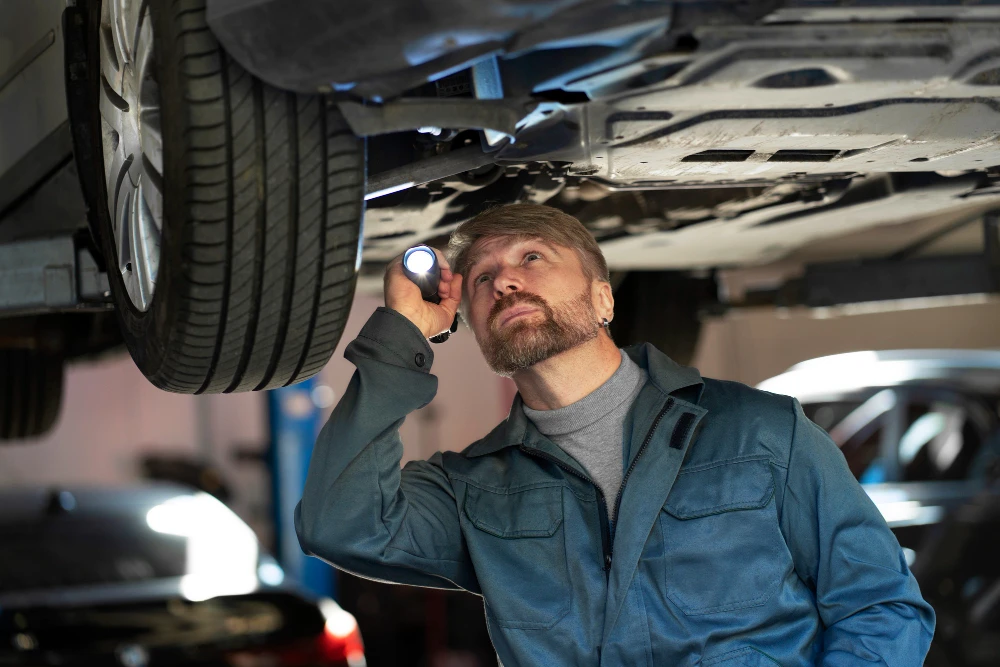
Suspension repairs often focus on expensive components such as shock absorbers, control arms, or ball joints. However, workshop experience shows that many handling issues, recurring suspension noise, and premature component failures actually originate from much smaller parts. Stabilizer links, rubber bushings, clamps, and mounting bolts work together every time the vehicle corners or drives over uneven pavement. When one of these inexpensive parts wears out, the entire suspension system begins operating under additional stress. Understanding their role helps drivers avoid unnecessary repeat repairs and extend the service life of larger suspension components. Available replacement components can be explored through the current product listings.
The stabilizer system does much more than reduce body roll
A stabilizer bar (also known as an anti-roll bar or sway bar) connects the left and right suspension assemblies. During cornering, centrifugal force transfers weight toward the outside wheels. The stabilizer distributes part of that load between both sides of the suspension, helping maintain tire contact with the road surface and improving steering precision.
The system consists of several components working together:
- stabilizer bar;
- stabilizer links;
- rubber or polyurethane bushings;
- mounting brackets;
- bolts, nuts, and fastening hardware.
If only one element develops excessive play, the entire suspension geometry begins to change under load. Drivers may notice knocking sounds, delayed steering response, reduced stability during lane changes, or uneven tire wear.
Why inexpensive suspension parts often become the most expensive oversight
Industry service reports indicate that stabilizer links and bushings belong to the most frequently replaced suspension wear items because they continuously absorb vibration, torsional loads, water, dust, road salt, and temperature fluctuations.
Common reasons for premature replacement
- Installing new stabilizer links while keeping worn bushings.
- Reusing corroded mounting hardware.
- Selecting bushings with an incorrect inner diameter.
- Mixing suspension components from incompatible specifications.
- Ignoring wear on adjacent suspension parts.
- Driving long periods after knocking noises first appear.
Small installation mistakes can significantly shorten the service life of otherwise high-quality replacement parts.
Typical service life of stabilizer components
Actual durability depends on road quality, climate, driving style, vehicle weight, and maintenance practices. The following figures represent common service ranges observed by suspension component manufacturers and professional repair facilities.
| Component | Typical Service Life | Main Wear Factors |
|---|---|---|
| Rubber bushings | 30,000–70,000 km | Rubber aging, contamination, heat cycles |
| Stabilizer links | 40,000–80,000 km | Road impacts, continuous articulation |
| Mounting hardware | Several service intervals | Corrosion, damaged threads, improper torque |
| Stabilizer bar | 100,000–200,000+ km | Mechanical damage, corrosion |
Many professional workshops recommend inspecting stabilizer components whenever suspension maintenance is performed or approximately every 20,000–30,000 kilometers. Early inspection usually identifies deterioration before it affects larger suspension assemblies.
Different vehicle categories place different loads on stabilizer systems
Although every passenger vehicle uses some form of anti-roll system, loading conditions differ considerably. SUVs, pickup trucks, commercial vans, and crossovers generally experience greater suspension travel and higher center-of-gravity forces than compact passenger cars. Likewise, sports sedans often require tighter suspension tolerances because even minor bushing wear can noticeably affect steering accuracy.
Vehicle manufacturers including Toyota, Hyundai, Kia, Volkswagen, BMW, Mercedes-Benz, Ford, Chevrolet, Nissan, Honda, Renault, Peugeot, Skoda, Audi, and LADA frequently use several stabilizer bar diameters within the same model generation. Choosing replacement parts solely by appearance can therefore result in incorrect fitment. More information about the supplier is available on the AutoVazMarket company profile.
How proper installation protects the entire suspension system
Replacing only one worn stabilizer component rarely restores the suspension to its intended operating condition. Rubber bushings gradually lose elasticity, mounting brackets may develop corrosion, and fastening bolts can stretch or lose their specified tightening force after years of service. If these supporting parts remain in place while only the stabilizer link is replaced, additional movement often develops under load, accelerating wear across the suspension.
Before purchasing replacement components, verify the following:
- The vehicle VIN and original part number.
- The stabilizer bar diameter.
- The exact production year and model generation.
- Engine and suspension configuration.
- Condition of mounting brackets and bolts.
- Signs of corrosion around attachment points.
- Wear of nearby suspension components.
AutoVazMarket recommends selecting replacement parts according to manufacturer specifications rather than visual similarity alone. This approach helps reduce compatibility issues and minimizes the likelihood of repeated repairs.
How worn bushings increase repair costs over time
Once stabilizer bushings begin deteriorating, additional movement develops every time the suspension compresses. Instead of distributing forces evenly, the stabilizer transfers irregular loads into control arms, ball joints, shock absorbers, steering components, and suspension bushings. Although these parts may initially appear unaffected, prolonged operation under abnormal loads can gradually shorten their service life.
Fleet maintenance specialists frequently report that ignoring early suspension noises often results in repairs involving several interconnected components instead of a single inexpensive replacement. Preventive maintenance therefore remains considerably more economical than correcting secondary suspension damage.
Examples of available suspension components and replacement options can also be viewed through the company's Reels videos.
Frequent mistakes made during suspension repairs
- Replacing only one stabilizer link instead of inspecting both sides.
- Keeping old rubber bushings during installation.
- Reusing heavily corroded mounting bolts.
- Selecting parts based only on external dimensions.
- Ignoring different suspension specifications within the same vehicle model.
- Skipping suspension alignment and inspection after repairs.
- Tightening mounting hardware without following manufacturer torque specifications.
Each of these mistakes may reduce the lifespan of new components and increase long-term maintenance expenses. A complete inspection of related suspension assemblies generally provides a more reliable repair than replacing only the visibly worn component.
Small suspension components often determine long-term reliability
Although stabilizer links, bushings, and mounting hardware represent only a small fraction of total suspension repair costs, they play a critical role in vehicle stability, steering response, ride comfort, and overall suspension durability. Replacing these components at the appropriate time helps prevent unnecessary stress on larger and significantly more expensive assemblies.
Drivers comparing replacement parts for different vehicle brands can browse available offers through the Mytrade.kz marketplace, where AutoVazMarket presents a wide selection of automotive components for various vehicle manufacturers.
For readers interested in understanding how suspension and replacement part selection varies across manufacturers from different regions, the previous article — choosing automotive parts for Russian, European, Asian, and American vehicles — provides a detailed comparison of compatibility factors and selection criteria.