'%3e%3cpath%20d='M12.0683%2015.2949H11.015C10.9053%2015.2949%2010.8164%2015.3838%2010.8164%2015.4935V25.7849C10.8164%2025.8946%2010.9053%2025.9835%2011.015%2025.9835H12.0683C12.1779%2025.9835%2012.2668%2025.8946%2012.2668%2025.7849V15.4935C12.2668%2015.3838%2012.1779%2015.2949%2012.0683%2015.2949Z'%20fill='%230048FF'/%3e%3cpath%20d='M15.0278%2015.2949H13.9915C13.8819%2015.2949%2013.793%2015.3838%2013.793%2015.4935V25.7849C13.793%2025.8946%2013.8818%2025.9835%2013.9915%2025.9835H15.0278C15.1374%2025.9835%2015.2263%2025.8946%2015.2263%2025.7849V15.4935C15.2263%2015.3838%2015.1374%2015.2949%2015.0278%2015.2949Z'%20fill='%230048FF'/%3e%3cpath%20d='M9.09443%2015.2949H1.71809C1.60845%2015.2949%201.51953%2015.3838%201.51953%2015.4935V21.6128C1.51953%2024.0267%203.47634%2025.9834%205.89013%2025.9834H9.09448C9.20412%2025.9834%209.29304%2025.8946%209.29304%2025.7849V15.4935C9.29299%2015.3838%209.20407%2015.2949%209.09443%2015.2949Z'%20fill='%230048FF'/%3e%3cpath%20d='M24.342%2015.2949H16.9486C16.8389%2015.2949%2016.75%2015.3838%2016.75%2015.4935V25.7849C16.75%2025.8946%2016.8389%2025.9835%2016.9486%2025.9835H20.17C22.5838%2025.9835%2024.5406%2024.0267%2024.5406%2021.6129V15.4935C24.5406%2015.3838%2024.4517%2015.2949%2024.342%2015.2949Z'%20fill='%230048FF'/%3e%3cpath%20d='M15.016%206.07227H13.9798C13.8702%206.07227%2013.7812%206.16113%2013.7812%206.27082V13.6882C13.7812%2013.7978%2013.8701%2013.8868%2013.9798%2013.8868H15.016C15.1257%2013.8868%2015.2146%2013.7979%2015.2146%2013.6882V6.27077C15.2146%206.16113%2015.1257%206.07227%2015.016%206.07227Z'%20fill='%230048FF'/%3e%3cpath%20d='M12.0605%206.07227H11.0071C10.8975%206.07227%2010.8086%206.16113%2010.8086%206.27082V13.6882C10.8086%2013.7978%2010.8975%2013.8868%2011.0071%2013.8868H12.0605C12.1701%2013.8868%2012.259%2013.7979%2012.259%2013.6882V6.27077C12.259%206.16113%2012.1701%206.07227%2012.0605%206.07227Z'%20fill='%230048FF'/%3e%3cpath%20d='M23.5711%206.07227H16.9368C16.8272%206.07227%2016.7383%206.16113%2016.7383%206.27082V13.6882C16.7383%2013.7978%2016.8271%2013.8868%2016.9368%2013.8868H23.571C24.9125%2013.8868%2025.9999%2012.7993%2025.9999%2011.4578V8.50119C26%207.1597%2024.9125%206.07227%2023.5711%206.07227Z'%20fill='%230048FF'/%3e%3cpath%20d='M9.08494%206.07227H2.42892C1.08748%206.07221%200%207.15965%200%208.50114V11.4577C0%2012.7992%201.08748%2013.8867%202.42892%2013.8867H9.08494V13.8867C9.19457%2013.8867%209.28349%2013.7978%209.28349%2013.6881V6.27077C9.28349%206.16113%209.19457%206.07227%209.08494%206.07227Z'%20fill='%230048FF'/%3e%3cpath%20d='M20.1871%201.47349C18.9897%20-0.129579%2016.7113%20-0.459759%2015.1081%200.737715C14.8681%200.916974%2014.1377%201.46252%2013.1094%204.1681C13.109%204.16937%2013.1084%204.17064%2013.1079%204.17191C13.0397%204.35157%2013.173%204.54383%2013.3652%204.54383H20.6349C20.7291%204.54383%2020.8107%204.47766%2020.8298%204.38539C21.0343%203.40226%2020.8339%202.33941%2020.1871%201.47349Z'%20fill='%230048FF'/%3e%3cpath%20d='M12.4378%202.93607C11.6806%201.28298%2011.1489%200.885569%2010.9508%200.737694C9.34772%20-0.459731%207.06926%20-0.129601%205.87183%201.47346C5.22508%202.33944%205.02465%203.40224%205.22915%204.38542C5.24834%204.47764%205.32979%204.54386%205.42404%204.54386H11.7223C11.8052%204.54386%2011.8796%204.49231%2011.9084%204.41447C11.9384%204.33311%2011.9691%204.2509%2012.0006%204.16808C12.1533%203.76609%2012.2995%203.41209%2012.4385%203.09953C12.4616%203.04748%2012.4615%202.98792%2012.4378%202.93607Z'%20fill='%230048FF'/%3e%3c/g%3e%3cdefs%3e%3cclipPath%20id='clip0_4773_3494'%3e%3crect%20width='26'%20height='26'%20fill='white'/%3e%3c/clipPath%3e%3c/defs%3e%3c/svg%3e)
Free ad placement
EN


Free ad placement

Goods, services, cars, real estate and jobs

Create a seller page

EN



0

9

0





SOFA.bz
SOFA.bz is a service for renting rooms and places in large apartments in Almaty with furniture, cleaning, transparent rules and contractual occupancy.
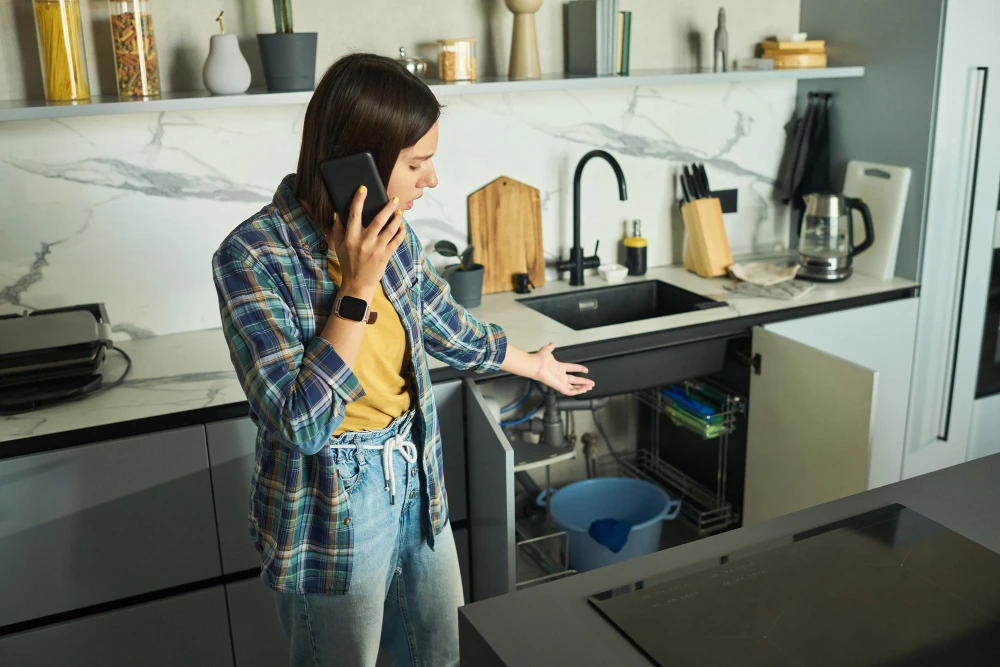
A refrigerator stops cooling, a washing machine begins leaking or an electric cooker suddenly fails. In rented housing, the practical problem is not only restoring the appliance but determining who must pay. The answer depends on the lease, the appliance’s recorded condition and the technician’s diagnosis—not simply on who used it last. This guide helps tenants and landlords collect evidence, avoid impulsive payments and settle the issue without turning a repair into a deposit dispute.
Start with the cause, not with an accusation
An appliance may stop working because of normal wear, an internal defect, unstable voltage, incorrect installation, mechanical damage or misuse. Several causes can produce the same visible symptom. A washing machine that no longer spins, for example, may have a worn bearing, a defective control board, an overloaded drum or a foreign object trapped inside it.
Article 552 of the Civil Code of Kazakhstan states that, unless legislation or the lease provides otherwise, the lessor is responsible for capital repairs and for urgent repairs caused by circumstances for which the tenant is not responsible. For an individual appliance, however, the lease terms and the technical conclusion remain critical.
Before moving in, tenants should ask which appliances form part of the accommodation and how repair duties are allocated. Information about the rental format and living arrangements is available through the SOFA.bz company profile on Mytrade.kz.
Four questions that usually decide who pays
- Was the appliance listed in the lease or handover report?
- Was its model, age and initial condition recorded?
- Did the tenant report the first sign of malfunction promptly?
- What cause was identified in the technician’s written diagnosis?
If these four points are documented, the dispute is usually easier to assess. If none of them is recorded, both sides may rely on recollection: the landlord may say the appliance worked perfectly, while the tenant may say it was already noisy, unstable or partially defective.
When the owner is more likely to bear the cost
- an internal component failed through age or ordinary use;
- the service centre identified a manufacturing or pre-existing defect;
- the fault resulted from wiring problems or voltage fluctuations outside the tenant’s control;
- the tenant reported the problem and stopped using the appliance before additional damage occurred;
- there are no signs of impact, liquid damage, unauthorised opening or improper connection.
When the tenant may be responsible
- a television screen was cracked by impact;
- coins, screws or other objects entered a washing machine mechanism;
- an appliance was overloaded or used against the manufacturer’s instructions;
- water was spilled onto an electronic control panel;
- the tenant opened the casing or arranged an unauthorised repair that caused further damage.
Photographs and video cannot reveal the state of an internal motor or circuit board, but they can confirm scratches, broken controls, damaged cables and the general condition at move-in. Tenants can also review how equipped rooms are presented in the SOFA.bz rental videos.
Appliance age matters, but it does not prove fault
International appliance data illustrates why age should form part of the assessment. Estimates cited by Consumer Reports place the expected service range of refrigerators at approximately 9–13 years and washing machines at 5–15 years. These are broad benchmarks rather than automatic deadlines: a ten-year-old refrigerator may still work properly, while a newer unit can fail because of a defective component.
A separate Consumer Reports survey covered more than 100,000 washing machines and 87,000 electric and gas dryers purchased between 2011 and 2021. Roughly 20% of the washers and 16% of the dryers had broken or stopped performing as intended. The figures show that a breakdown is not, by itself, evidence of careless use.
For this reason, “it was working when you moved in” is not a complete technical conclusion. The landlord should not automatically deduct the replacement cost from the deposit, and the tenant should not automatically agree to pay before the cause is established.
People comparing available rooms can clarify the included equipment before committing by reviewing the current accommodation offers from SOFA.bz.
The handover report should describe more than the furniture
A useful handover report identifies every major appliance and records its condition. Instead of writing only “one refrigerator,” the parties can note the brand, model, visible defects, unusual noise and whether the refrigerator and freezer compartments cool correctly.
A practical five-item test before accepting the keys
- Run the washing machine through filling, spinning and draining stages.
- Check that the refrigerator cools and that its door seal closes evenly.
- Switch on every cooker ring and test the oven controls.
- Inspect television screens and electronic panels for cracks or dark areas.
- Photograph model labels, serial numbers, cables and existing damage.
The same report should state who arranges diagnostics, whether a specific service centre must be used and how emergency repairs are approved. SOFA.bz provides rooms and places in shared apartments in Almaty, where responsibility for shared equipment should be particularly clear. Related rental guidance can be found in the SOFA.bz news and offers section.
What published cases reveal about repair disputes
A faulty refrigerator seal left unresolved for five months
In a case published by The Times, a tenant notified the property manager in September 2024 that the refrigerator door seal had failed. Warm air entered the freezer, causing repeated frost build-up. The seal was not repaired until February 2025—five months after the first notification—and the freezer’s inner casing was damaged during that period.
The landlord later demanded that the tenant repair or replace the whole appliance. The tenant bought a replacement costing several hundred pounds but continued disputing liability. The legal expert consulted for the publication noted that the written correspondence, the repair delay and a reliable contractor’s report were central to determining responsibility. The case concerns another jurisdiction, but it demonstrates why dates, messages and technical evidence matter.
One washer failed within three years; another operated for 28
Consumer Reports has also documented sharply different reader experiences: some owners reported washing machines needing repair within their first three years, while another reader had a machine still operating after 28 years. These real experiences show why appliance age is only one factor. Usage history, maintenance and the exact failed component must also be considered.
For additional visual examples of accommodation, equipment and rental conditions, readers can browse the short-video collection on Mytrade.kz.
Seven actions to take immediately after a breakdown
- Stop using the appliance if there is smoke, leaking water, sparking, overheating or a burning smell.
- Record the visible symptom with photographs or a short video without opening the casing.
- Notify the landlord in writing and state when the problem first appeared.
- Check the lease and handover report for the repair procedure.
- Agree on a technician or service centre before arranging paid work.
- Request a written diagnosis identifying the probable cause of failure.
- Do not deduct repair costs from rent or buy a replacement without written approval.
Kazakhstan rental guidance commonly recommends using a service-centre diagnosis to distinguish wear or an internal defect from misuse or mechanical damage. This distinction is also relevant to the deposit. Krisha.kz notes that a rental deposit is commonly no greater than one month’s rent, so an unsupported deduction for a major appliance can involve a substantial sum.
Tenants looking at other housing or service options can compare seller pages and offers through the English-language Mytrade.kz marketplace.
Do not replace the appliance before agreeing on ownership
A tenant may reasonably want to solve the problem quickly by purchasing another refrigerator or washing machine. Yet an unapproved purchase can create three new disagreements: whether replacement was necessary, whether the selected model was appropriate and who owns the new appliance at the end of the tenancy.
A written agreement should specify the approved cost, who pays the technician, whether the expense will be reimbursed or offset against rent, and whether the replacement remains in the apartment. Receipts, service orders and correspondence should be retained together.
A clause that can reduce future uncertainty
“If an appliance supplied with the accommodation malfunctions, the tenant shall stop using it where continued operation may cause damage and shall notify the landlord in writing. The cause shall be determined by a technician agreed by both parties. The landlord shall bear costs arising from ordinary wear, an internal defect or circumstances outside the tenant’s responsibility. The tenant shall bear costs arising from proven misuse or mechanical damage caused by the tenant.”
This wording should be adapted to the actual lease and agreed by both parties. In a serious or unresolved dispute, the parties may also need individual legal advice.
A repair dispute is won with records, not assumptions
The fairest sequence is simple: record the appliance at move-in, report the fault promptly, obtain a diagnosis and approve the payment arrangement in writing. SOFA.bz encourages tenants to clarify equipment and house rules before moving into shared accommodation. This approach protects both sides: the owner can recover the cost of proven damage, while the tenant is less likely to pay for age-related failure or an old hidden defect.
To reduce the risk of an appliance charge being taken from the security payment, use the checklist in the previous article on protecting your deposit before moving out.