24.07.2026
How to Protect Documents, Money and Personal Belongings in Shared Accommodation
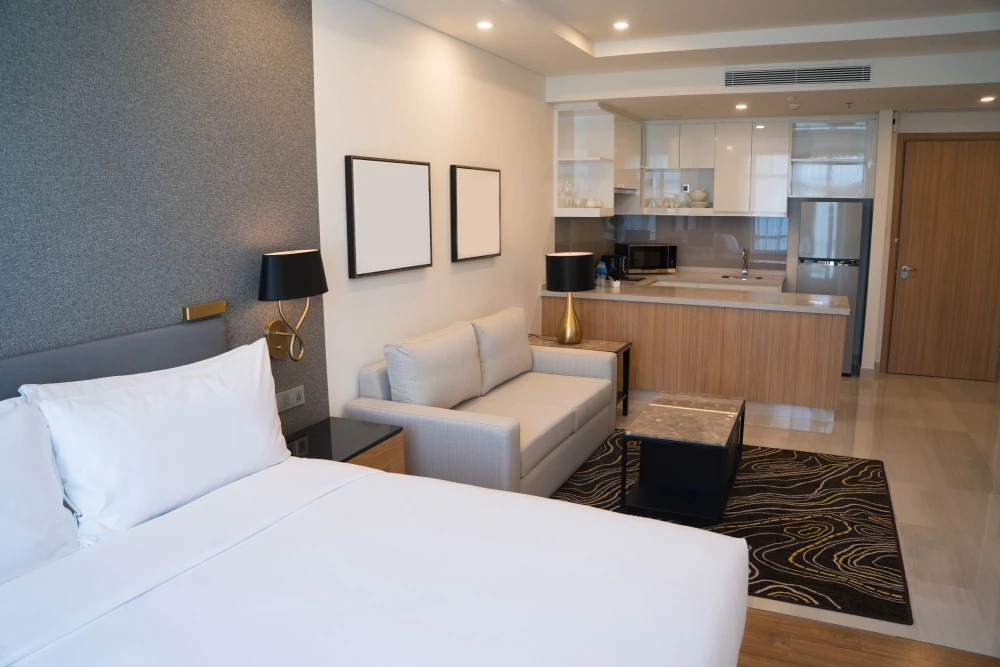
Sharing an apartment can reduce everyday housing costs and make relocation to Almaty easier, but it also changes how personal security should be organised. A document left on a desk, a bank card in a jacket or an unlocked laptop in the kitchen may be accessible to residents, guests, cleaners or visiting technicians. This guide explains how to protect valuables without turning shared living into an atmosphere of suspicion.Start with access, not with assumptions about peopleShared accommodation is not automatically unsafe. The main risk is usually an undefined boundary: nobody has agreed who may enter a bedroom, where spare keys are kept or whether cleaners can move personal bags. Before paying and moving in, inspect the locks, storage options and rules for visitors. The SOFA.bz company profile on Mytrade.kz provides an initial overview of its room-rental format in Almaty.Ask four practical questions during the viewing: does the bedroom lock independently, is there a lockable cabinet, who holds duplicate keys and how is access organised when repairs are needed? A verbal answer is useful, but an important arrangement should also appear in the agreement or written correspondence.International reporting illustrates why identity documents need the same protection as cash. The US Federal Trade Commission recorded 1,135,291 identity-theft reports in its 2024 system. Credit-card identity theft accounted for 449,032 reports, while 70,332 concerned government documents or benefits. These figures describe reports collected in the United States and are not an estimate of incidents in Almaty, but they show how an exposed document can create consequences beyond the loss of the paper itself.Build a personal security zone inside the roomSeparate everyday items from high-impact itemsKeys, headphones and a charging cable may be used daily, while an identity card, passport, payment card and electronic-signature files can create much greater damage if lost. Store these categories differently. Tenant-safety guidance from Nottingham City Council says, “Do not leave valuables on display,” and recommends considering a small safe for jewellery and essential paperwork.Keep original documents in a locked box, case or cabinet.Do not store a passport, every bank card and all cash in one wallet.Avoid leaving keys in a visible place near the entrance or a window.Keep electronic-signature files away from shared computers and removable drives.Remove document photographs from shared chats after the purpose has been completed.When comparing rooms, check whether the furniture provides a realistic place for private storage rather than assuming that one will be available. Current options can be reviewed among the room-rental listings published by SOFA.bz.Create proof of ownership before anything disappearsFor a laptop, phone, smartwatch, camera or headphones, record the model, serial number and visible identifying features. Keep the purchase receipt or electronic order confirmation and take clear photographs. This takes approximately ten minutes for a small set of devices, but it can make communication with the landlord, bank, insurer or police considerably more precise.A useful inventory has four fields: item name, serial number, photograph and storage location. Update it when you buy, sell or replace equipment. Visual materials from SOFA.bz Reels about its accommodation format can also help prospective tenants identify which storage and common areas should be checked during an in-person viewing.Protect payment access, not only physical cashA missing card is visible; copied card details may not be. Enable instant transaction notifications, use a separate passcode for the banking application and review payment limits. Never keep the PIN beside the card, and do not share verification codes with a housemate who claims to be helping with a payment.Dividing funds reduces the impact of one incident. Keep the card used for everyday spending separate from an emergency card, and avoid storing all available cash in the room. If a wallet disappears, block the card immediately instead of waiting until every possible location has been searched.Broader short-form examples of products, services and living spaces are available through the complete Reels collection on Mytrade.kz.A locked screen is part of the bedroom doorPersonal information can be exposed even when the device never leaves the apartment. An unlocked laptop may reveal email, employment documents, bank notifications, saved passwords and scans of identification papers. Use automatic screen locking, full-device encryption where available and a different password for each important account.For important files, the UK National Cyber Security Centre recommends the 3-2-1 approach: at least 3 copies, stored on 2 devices, with 1 copy kept offsite. Cloud Security Researcher James L writes, “It is vital to keep multiple backups and to logically separate them.” A backup should also be tested; a file that cannot be restored is not an effective backup.Keep the working copy on the main device.Create a second copy on another protected device or storage medium.Store one independent copy away from the laptop.Protect cloud storage with two-step verification.Check periodically that the files can still be opened and restored.When contacting accommodation providers, send documents only through an agreed channel and only when there is a clear reason for doing so. Use the English-language Mytrade.kz marketplace to compare published company information instead of relying solely on messages from unknown accounts.Seven household rules that prevent most ownership disputesA resident may regard a charger on the kitchen counter as available for common use, while its owner may regard any use as unacceptable. Clear rules remove this ambiguity. SOFA.bz provides furnished rooms and places in large apartments in Almaty, with cleaning, house rules and move-in under an agreement. Even in an organised format, residents should explicitly define personal boundaries.No entry into another resident’s bedroom without permission.No lending or copying entrance keys for visitors.Advance notice when a guest, cleaner or technician will arrive.No opening or moving another person’s bags, folders or storage boxes.No borrowing electronics without the owner’s express consent.Immediate reporting of a missing key or damaged lock.Written confirmation of important arrangements in the residents’ chat.Further practical guidance for renters is published in the SOFA.bz news and offers section.What to do during the first hour after discovering a lossDo not begin with an accusation. First check the last place of use, private storage, laundry, bags and common areas. Then record what is missing and when it was last seen. A calm sequence preserves evidence and prevents the dispute from becoming more difficult to resolve.Write down the item, model, serial number and approximate last-known time.Inform the landlord or responsible manager in writing.Block missing cards and review recent transactions.Secure the SIM card, email and financial accounts if a phone is missing.Save photographs, receipts, messages and access records.Report suspected theft to the police rather than attempting to search another resident’s belongings.Replace compromised keys, passwords and access codes.Kazakhstan’s e-government guidance distinguishes between a lost and a stolen identity card. In a theft case, reissuance requires a coupon-notification from the authority that accepted the theft report. Standard issuance takes 15 working days; in Almaty, expedited service categories are available within 1 or 3 working days. These administrative steps make early reporting important.A calm home depends on routines that nobody has to guessThe strongest arrangement combines five elements: locked document storage, separated payment methods, an inventory of valuable devices, protected digital copies and written household boundaries. SOFA.bz can help reduce uncertainty through furnished accommodation, cleaning, house rules and contractual move-in, while each resident remains responsible for protecting personal access, documents and belongings.Security also matters when plans change and a tenant needs to leave before the agreed date. Key return, room-condition records and unresolved payments are covered in the previous guide on ending a room rental early when plans change.
'%3e%3cpath%20d='M12.0683%2015.2949H11.015C10.9053%2015.2949%2010.8164%2015.3838%2010.8164%2015.4935V25.7849C10.8164%2025.8946%2010.9053%2025.9835%2011.015%2025.9835H12.0683C12.1779%2025.9835%2012.2668%2025.8946%2012.2668%2025.7849V15.4935C12.2668%2015.3838%2012.1779%2015.2949%2012.0683%2015.2949Z'%20fill='%230048FF'/%3e%3cpath%20d='M15.0278%2015.2949H13.9915C13.8819%2015.2949%2013.793%2015.3838%2013.793%2015.4935V25.7849C13.793%2025.8946%2013.8818%2025.9835%2013.9915%2025.9835H15.0278C15.1374%2025.9835%2015.2263%2025.8946%2015.2263%2025.7849V15.4935C15.2263%2015.3838%2015.1374%2015.2949%2015.0278%2015.2949Z'%20fill='%230048FF'/%3e%3cpath%20d='M9.09443%2015.2949H1.71809C1.60845%2015.2949%201.51953%2015.3838%201.51953%2015.4935V21.6128C1.51953%2024.0267%203.47634%2025.9834%205.89013%2025.9834H9.09448C9.20412%2025.9834%209.29304%2025.8946%209.29304%2025.7849V15.4935C9.29299%2015.3838%209.20407%2015.2949%209.09443%2015.2949Z'%20fill='%230048FF'/%3e%3cpath%20d='M24.342%2015.2949H16.9486C16.8389%2015.2949%2016.75%2015.3838%2016.75%2015.4935V25.7849C16.75%2025.8946%2016.8389%2025.9835%2016.9486%2025.9835H20.17C22.5838%2025.9835%2024.5406%2024.0267%2024.5406%2021.6129V15.4935C24.5406%2015.3838%2024.4517%2015.2949%2024.342%2015.2949Z'%20fill='%230048FF'/%3e%3cpath%20d='M15.016%206.07227H13.9798C13.8702%206.07227%2013.7812%206.16113%2013.7812%206.27082V13.6882C13.7812%2013.7978%2013.8701%2013.8868%2013.9798%2013.8868H15.016C15.1257%2013.8868%2015.2146%2013.7979%2015.2146%2013.6882V6.27077C15.2146%206.16113%2015.1257%206.07227%2015.016%206.07227Z'%20fill='%230048FF'/%3e%3cpath%20d='M12.0605%206.07227H11.0071C10.8975%206.07227%2010.8086%206.16113%2010.8086%206.27082V13.6882C10.8086%2013.7978%2010.8975%2013.8868%2011.0071%2013.8868H12.0605C12.1701%2013.8868%2012.259%2013.7979%2012.259%2013.6882V6.27077C12.259%206.16113%2012.1701%206.07227%2012.0605%206.07227Z'%20fill='%230048FF'/%3e%3cpath%20d='M23.5711%206.07227H16.9368C16.8272%206.07227%2016.7383%206.16113%2016.7383%206.27082V13.6882C16.7383%2013.7978%2016.8271%2013.8868%2016.9368%2013.8868H23.571C24.9125%2013.8868%2025.9999%2012.7993%2025.9999%2011.4578V8.50119C26%207.1597%2024.9125%206.07227%2023.5711%206.07227Z'%20fill='%230048FF'/%3e%3cpath%20d='M9.08494%206.07227H2.42892C1.08748%206.07221%200%207.15965%200%208.50114V11.4577C0%2012.7992%201.08748%2013.8867%202.42892%2013.8867H9.08494V13.8867C9.19457%2013.8867%209.28349%2013.7978%209.28349%2013.6881V6.27077C9.28349%206.16113%209.19457%206.07227%209.08494%206.07227Z'%20fill='%230048FF'/%3e%3cpath%20d='M20.1871%201.47349C18.9897%20-0.129579%2016.7113%20-0.459759%2015.1081%200.737715C14.8681%200.916974%2014.1377%201.46252%2013.1094%204.1681C13.109%204.16937%2013.1084%204.17064%2013.1079%204.17191C13.0397%204.35157%2013.173%204.54383%2013.3652%204.54383H20.6349C20.7291%204.54383%2020.8107%204.47766%2020.8298%204.38539C21.0343%203.40226%2020.8339%202.33941%2020.1871%201.47349Z'%20fill='%230048FF'/%3e%3cpath%20d='M12.4378%202.93607C11.6806%201.28298%2011.1489%200.885569%2010.9508%200.737694C9.34772%20-0.459731%207.06926%20-0.129601%205.87183%201.47346C5.22508%202.33944%205.02465%203.40224%205.22915%204.38542C5.24834%204.47764%205.32979%204.54386%205.42404%204.54386H11.7223C11.8052%204.54386%2011.8796%204.49231%2011.9084%204.41447C11.9384%204.33311%2011.9691%204.2509%2012.0006%204.16808C12.1533%203.76609%2012.2995%203.41209%2012.4385%203.09953C12.4616%203.04748%2012.4615%202.98792%2012.4378%202.93607Z'%20fill='%230048FF'/%3e%3c/g%3e%3cdefs%3e%3cclipPath%20id='clip0_4773_3494'%3e%3crect%20width='26'%20height='26'%20fill='white'/%3e%3c/clipPath%3e%3c/defs%3e%3c/svg%3e)