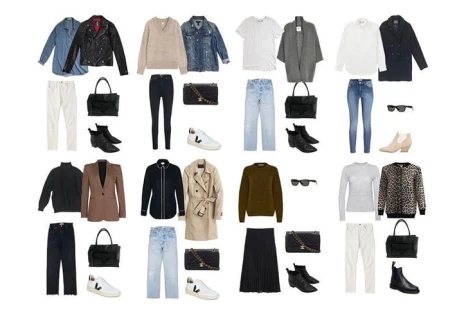
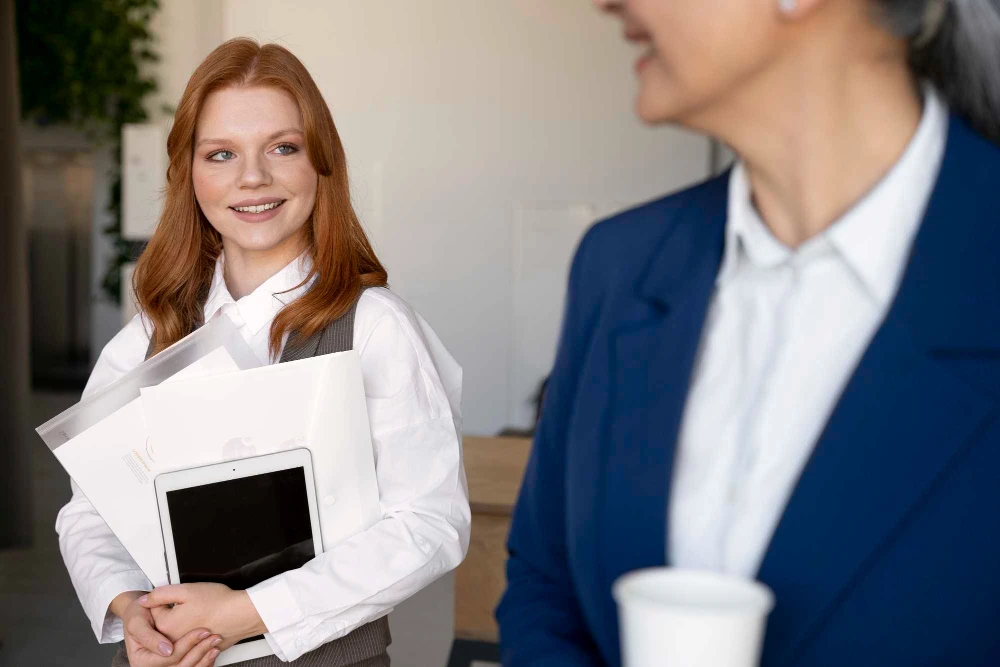
An interview outfit should make your professional message easier to understand, not compete with it. In a CareerBuilder survey conducted by The Harris Poll, 49% of employers said they could decide within the first five minutes whether a candidate appeared suitable for a position. Clothing cannot replace relevant experience or convincing answers, but it can reduce distractions and help you enter the meeting feeling prepared. A useful starting point is to compare coordinated pieces on the by.olga.shop company profile on Mytrade.kz.
Begin with the role, not with a favourite outfit
The same suit can appear appropriate in one workplace and unnecessarily formal in another. Before choosing individual garments, assess three factors: the authority attached to the role, the level of contact with clients and the everyday culture of the employer.
- A finance, legal, management or representative role usually calls for clearer tailoring and restrained details.
- A technology or project-based position may allow softer jackets, knitwear and smart separates.
- A creative role can accommodate more individuality, provided the outfit still looks deliberate and well maintained.
Review the employer’s website, team photographs and public events. Aim to look slightly more polished than the organisation’s normal working standard rather than dramatically more formal. To judge how different combinations behave beyond static photographs, examine the outfit videos presented by by.olga.shop.
Decide what the outfit must communicate
A practical interview look should send three messages before the conversation develops: you understand the setting, you pay attention to detail and you can move naturally through the meeting. Every item should support at least one of these messages.
The three-message test
- Context: would the outfit make sense beside the people who already work in this environment?
- Precision: are the fabric, seams, fastenings, shoes and bag clean and orderly?
- Ease: can you sit, walk, breathe and gesture without adjusting your clothes?
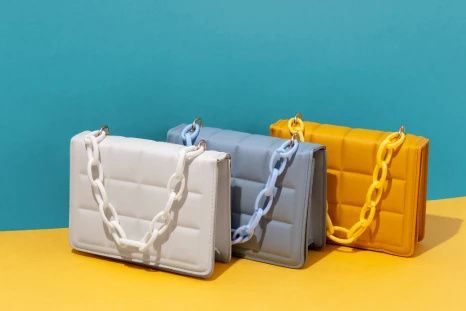
For many interviews, a reliable formula is a tailored or softly structured layer, a simple top, straight trousers or a midi skirt, tested footwear and one controlled accessory. by.olga.shop offers women’s suits, everyday wardrobe pieces, bags and accessories in Almaty. Available categories can be reviewed among the current by.olga.shop listings.
Fit affects more than appearance
CareerBuilder reported that 50% of surveyed employers considered inappropriate clothing an interview mistake capable of damaging a candidate’s chances. The same survey identified lack of eye contact as a concern for 68% of respondents, failure to smile for 38% and poor posture for 31%. These behaviours are not determined by clothing, but an uncomfortable waistband, restrictive jacket or unstable shoe can make natural posture and eye contact harder to maintain.
Do not evaluate the outfit only while standing in front of a mirror. Sit for at least ten minutes, cross and uncross your legs, reach for a document, carry your bag and walk at your normal pace. Check whether the jacket rises, the neckline shifts, the skirt restricts your stride or the trousers crease excessively at the waist.
A useful movement audit
- Walk 20 to 30 steps while carrying everything you plan to take.
- Sit at a table and answer one interview question aloud.
- Raise both arms and check the shoulders, sleeves and neckline.
- Record a short video from the front and side.
Movement-based comparisons are also available in the short-video collection on Mytrade.kz, where proportions and fabric behaviour can be assessed more realistically than in a single image.
Use colour as structure rather than decoration
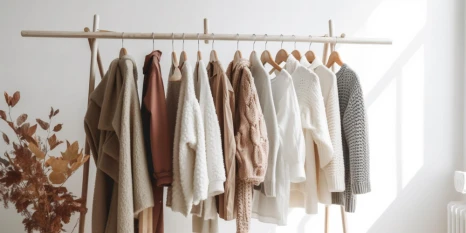
A controlled palette makes an outfit easier to assemble and less likely to distract. Two neutral colours and one moderate accent are usually sufficient. Navy, charcoal, brown, black, cream and muted beige can create a clear base, while a blouse, scarf, bag or small piece of jewellery can provide individuality.
The accent should support the candidate’s presence rather than become the subject of the meeting. Bright colour is not automatically unprofessional, but its scale matters. A vivid full-length garment communicates more strongly than a coloured top beneath a neutral jacket. The more conservative the field, the smaller the visual accent should generally be.
Additional wardrobe guidance and practical clothing comparisons are collected in the by.olga.shop news and offers section.
Prepare differently for an online interview
A video interview presents only part of the outfit, but this does not make clothing irrelevant. The camera emphasises the neckline, shoulders, colour contrast and fabric pattern. Fine checks, narrow stripes and certain textured materials may create visual interference on screen.
- Choose a top that contrasts clearly with the background.
- Test the outfit in the actual camera application, not only in a phone mirror.
- Place the main light source in front of you rather than behind you.
- Check the frame while sitting in the position you will use during the interview.
Even when only the upper body is visible, wearing the complete outfit can help preserve posture and a sense of readiness. It also prevents an awkward situation if you need to stand or move during the call.
Clothing may influence the wearer as well as the observer
Psychologists Janine Willis and Alexander Todorov found that participants could form facial impressions after an exposure of only 100 milliseconds. Their research did not study job interviews and does not prove that appearance determines hiring decisions. It does, however, demonstrate how quickly an initial social assessment can begin.
Hajo Adam and Adam Galinsky introduced the concept of enclothed cognition, arguing that clothing effects depend on both its symbolic meaning and the physical experience of wearing it. Their research proposed that clothes can have “psychological and behavioural consequences for their wearers.” This does not mean that a blazer automatically creates competence. A more useful interpretation is that clothing associated with preparation and professionalism may help reinforce the state in which a person enters the meeting.
Michael Kraus and Wendy Mendes also found behavioural and physiological differences in a negotiation experiment involving men assigned business suits or casual clothing. Because the study concerned negotiation rather than recruitment and involved a limited participant group, it should not be treated as evidence that formal clothing guarantees interview success.
Remove the details most likely to interrupt you
- New shoes that have not been worn for a complete journey or extended walk.
- Jewellery that makes noise when you write, gesture or place your hands on a table.
- A bag so full that documents cannot be retrieved quickly.
- A strong fragrance that remains noticeable in a small meeting room.
- A jacket, skirt or neckline that requires repeated adjustment.
- A highly formal outfit selected without considering the employer’s actual culture.
A professional image is not defined by the highest possible level of formality. It is defined by relevance, good condition, controlled proportions and freedom of movement. Broader comparisons of clothing and accessories can be made through the English-language Mytrade.kz marketplace.
Run a twenty-minute rehearsal the evening before
Put on the complete outfit, including shoes, bag and outer layer. Sit at a table and answer three questions aloud: why you want the role, which result best demonstrates your ability and what you would aim to understand during your first weeks. Record part of the rehearsal and watch it without sound. This makes posture, repeated adjustments and distracting accessories easier to notice.
Rosemary Haefner, CareerBuilder’s former chief human resources officer, advised candidates to “prepare and practice everything,” including answers and body language. Clothing deserves the same advance preparation. Steam the garments, check buttons and fastenings, pack the bag and prepare one alternative top rather than making rushed decisions on the morning of the interview.
Let the interviewer remember the conversation
The strongest interview outfit is not necessarily the most expensive, fashionable or formal. It is the one that fits the role, remains comfortable throughout the meeting and leaves you free to listen, think and answer. Research the environment first, build a restrained combination, test it in motion and rehearse in the complete outfit.
For a broader system that connects interview clothing with everyday professional needs, continue with the previous guide, the 18-piece capsule wardrobe for work, meetings and evenings.