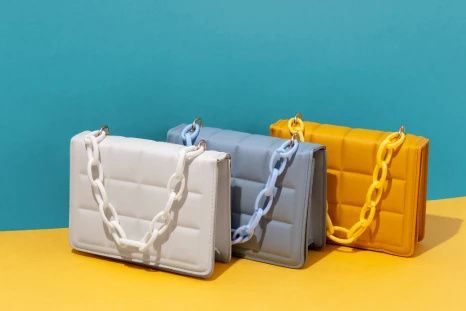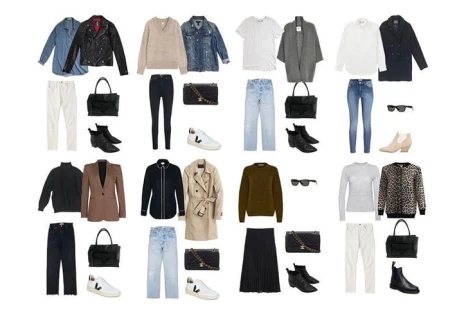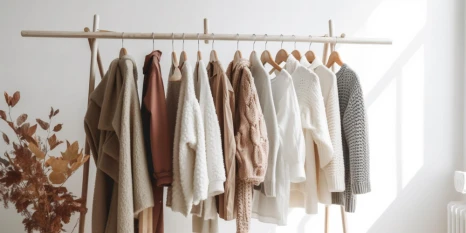
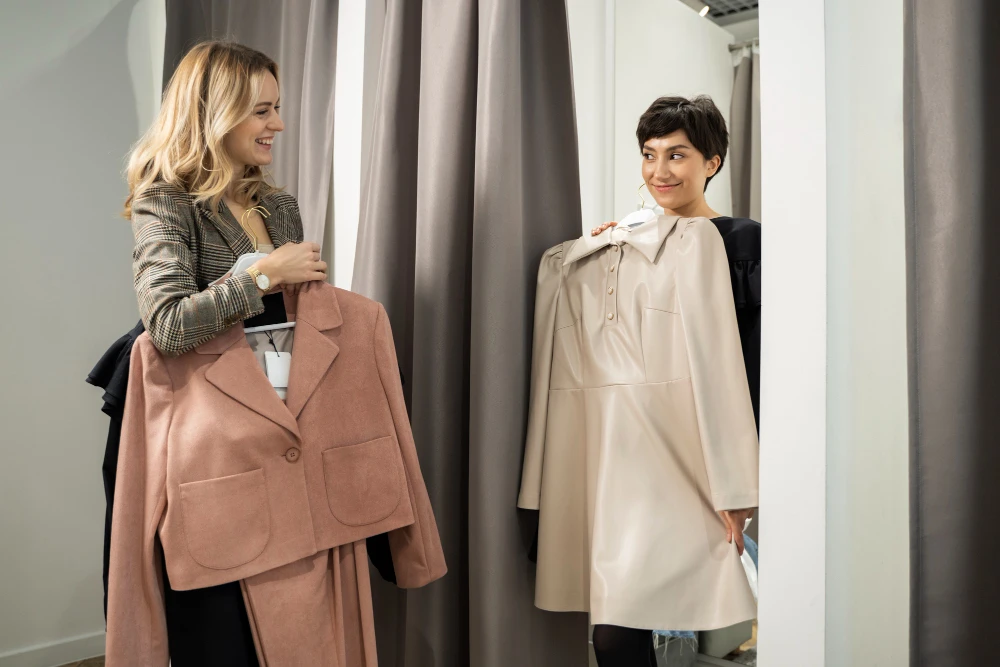
This guide is for women who need a polished outfit for work, a meeting, dinner or an event but cannot spend hours comparing separate garments. A rushed purchase often creates a second problem: the dress needs different shoes, the suit lacks a suitable bag, or the statement piece works only in the fitting room. The solution is to assess the entire wearing scenario. The by.olga.shop profile on Mytrade.kz presents women’s suits, dresses, bags and accessories that can be considered as parts of one complete look.
The real goal is not to choose faster
Fifteen minutes is enough when the decision has a clear sequence. It is not enough when the shopper moves between unrelated colours, silhouettes and occasions. Before touching a hanger, define the assignment in one sentence: “I need an outfit for a business meeting,” “I need a comfortable dinner look,” or “I need a versatile set for several weekday situations.”
This matters in a market where the number of options is expanding quickly. Kazakhstan’s Bureau of National Statistics reports that e-commerce accounted for 14.3% of the country’s retail trade in 2025. Clothing, footwear and sporting goods represented 12.4% of merchandise sales through marketplaces, while the average marketplace receipt for retail goods was 11,123 tenge. These figures cover broad product categories rather than by.olga.shop specifically, but they show why a quick purchase still deserves a structured check.
When reviewing the current clothing and accessory offers from by.olga.shop, begin with the purpose of the outfit rather than the most visually striking item. A garment can be attractive and still be wrong for the buyer’s routine, existing wardrobe or preferred level of comfort.
A fitting-room clock that keeps the decision under control
Minutes 1–2: set three non-negotiable requirements
Choose three conditions that the outfit must meet. A useful combination is occasion, movement and styling mood. For example: suitable for the office, comfortable while sitting for several hours, and visually feminine without appearing overly formal. These requirements prevent the fitting session from turning into a sequence of unrelated experiments.
Style consultant Allison Bornstein’s three-word method can make this step more precise. One word reflects the person’s real wardrobe, one expresses aspiration, and one captures an emotional quality. A shopper might choose “tailored, modern, relaxed” or “feminine, minimal, confident.” The words become a filter: if a garment supports none of them, it may attract attention without strengthening personal style.
Minutes 3–6: choose one visual anchor
The anchor is the garment that determines the outfit’s silhouette and level of formality. It may be a trouser suit, a dress, a jacket or a coordinated set. Check the shoulder line, waist position and overall length before adding accessories. If the foundation does not sit correctly, a belt, necklace or handbag will not solve the structural problem.
Cristóbal Balenciaga’s widely quoted principle, “Elegance is elimination,” is useful at this stage. Instead of adding several decorative details, first ask whether the core silhouette already looks intentional. A strong base usually requires fewer corrections and is easier to restyle later.
Minutes 7–10: test the outfit away from the mirror pose
Stand at least two metres from the mirror, then sit down, walk, raise your arms and turn sideways. Observe whether the waistband moves, the jacket pulls across the back, the neckline requires constant adjustment or the skirt changes position while walking. Comfort problems that appear during these movements usually become more irritating during a full working day or event.
Static photographs can hide differences in drape, scale and movement. The by.olga.shop Reels collection can help a shopper observe how garments and accessories look beyond a single front-facing image. Video is particularly useful for evaluating trouser length, jacket proportions, fabric movement and the visual weight of a bag.
Minutes 11–13: apply the three-outfit rule
Before approving a purchase, identify three realistic ways to wear at least one major component. A suit, for example, can work as a complete set; the jacket can be paired with an existing dress; and the trousers can be worn with a simple top already in the wardrobe. A dress might work with two different bags or under a jacket that the buyer already owns.
- Outfit one should solve the immediate occasion.
- Outfit two should use garments already available at home.
- Outfit three should require only a change of footwear, bag or one small accessory.
This test exposes hidden spending. If one new dress immediately requires a new coat, shoes, bag and jewellery, the purchase is not one item but the beginning of an additional shopping list. Different styling combinations can also be compared through the short-video section on Mytrade.kz, focusing on proportions and practical combinations rather than copying a look exactly.
Minutes 14–15: photograph, subtract and decide
Take one full-length photograph and one image from the side. A phone camera often reveals proportion problems that the fitting-room mirror softens: a jacket ending at an awkward point, a bag overwhelming the silhouette or a colour that dominates the wearer rather than supporting her.
Then remove the most noticeable accessory. If the outfit becomes clearer, the accessory was competing with the clothes. If the look loses its identity, the detail was performing a useful role. Christian Louboutin’s observation that shoes can transform body language and attitude illustrates why the final element should be tested as part of the whole composition, not selected independently.
The wardrobe data behind purchase regret
A WRAP study of clothing habits in the United Kingdom found that the average adult owned 118 clothing items, including underwear, socks and hosiery. Around 26%—approximately 31 items—had not been worn during the previous year. The figures describe the UK rather than Kazakhstan, but the buying pattern is recognisable: wardrobes can grow while the number of dependable outfits remains limited.
The same research identified several common reasons for non-use. Some garments were reserved for rare occasions, some no longer fitted comfortably, and others were liked but repeatedly passed over. This is why “Do I like it?” is an incomplete purchasing question. A more reliable sequence is: “Does it fit my routine, can I move comfortably, and can I combine it without rebuilding my wardrobe?”
Bornstein summarises the creative side of this problem with the line, “We don’t need more stuff, we need more ideas.” The practical meaning is not that every purchase should be avoided. It means that a new garment should create useful combinations instead of adding another isolated object.
Five warning signs before payment
- The garment looks convincing only from one angle or in one fixed pose.
- The outfit needs repeated adjustment around the waist, shoulders or neckline.
- The main item does not coordinate with at least two pieces already owned.
- The purchase is justified by a vague future event rather than a real occasion.
- The look follows an attractive reference image but does not suit the buyer’s daily movement, climate or dress requirements.
Another warning sign is uncertainty about the outfit’s centre of attention. If the dress, jacket, jewellery and handbag are all competing to become the main feature, the result may feel busier than intended. Reviewing different sellers and coordinated options through the Mytrade.kz marketplace allows the buyer to compare complete solutions instead of making a decision based on one garment in isolation.
The final 60-second purchase test
Before paying, answer five questions without explaining or negotiating with yourself. Can the outfit be worn within the next seven days? Is it comfortable while sitting and walking? Does it work with footwear and outerwear already owned? Can at least one major element be used in two other combinations? Would the outfit still feel appropriate without the trendiest accessory?
If four or five answers are positive, the purchase has a clear place in the wardrobe. If only one or two are positive, more styling is unlikely to correct the mismatch. by.olga.shop focuses on women’s suits, dresses, bags and accessories in Almaty, allowing the shopper to consider the main garment and finishing details together rather than postponing half of the decision.
A good 15-minute choice is not the most dramatic outfit in the room. It is the one that fits the body, supports the occasion and remains easy to wear after the excitement of shopping has passed. Further practical materials and seller updates are available in the by.olga.shop news and offers section.