'%3e%3cpath%20d='M12.0683%2015.2949H11.015C10.9053%2015.2949%2010.8164%2015.3838%2010.8164%2015.4935V25.7849C10.8164%2025.8946%2010.9053%2025.9835%2011.015%2025.9835H12.0683C12.1779%2025.9835%2012.2668%2025.8946%2012.2668%2025.7849V15.4935C12.2668%2015.3838%2012.1779%2015.2949%2012.0683%2015.2949Z'%20fill='%230048FF'/%3e%3cpath%20d='M15.0278%2015.2949H13.9915C13.8819%2015.2949%2013.793%2015.3838%2013.793%2015.4935V25.7849C13.793%2025.8946%2013.8818%2025.9835%2013.9915%2025.9835H15.0278C15.1374%2025.9835%2015.2263%2025.8946%2015.2263%2025.7849V15.4935C15.2263%2015.3838%2015.1374%2015.2949%2015.0278%2015.2949Z'%20fill='%230048FF'/%3e%3cpath%20d='M9.09443%2015.2949H1.71809C1.60845%2015.2949%201.51953%2015.3838%201.51953%2015.4935V21.6128C1.51953%2024.0267%203.47634%2025.9834%205.89013%2025.9834H9.09448C9.20412%2025.9834%209.29304%2025.8946%209.29304%2025.7849V15.4935C9.29299%2015.3838%209.20407%2015.2949%209.09443%2015.2949Z'%20fill='%230048FF'/%3e%3cpath%20d='M24.342%2015.2949H16.9486C16.8389%2015.2949%2016.75%2015.3838%2016.75%2015.4935V25.7849C16.75%2025.8946%2016.8389%2025.9835%2016.9486%2025.9835H20.17C22.5838%2025.9835%2024.5406%2024.0267%2024.5406%2021.6129V15.4935C24.5406%2015.3838%2024.4517%2015.2949%2024.342%2015.2949Z'%20fill='%230048FF'/%3e%3cpath%20d='M15.016%206.07227H13.9798C13.8702%206.07227%2013.7812%206.16113%2013.7812%206.27082V13.6882C13.7812%2013.7978%2013.8701%2013.8868%2013.9798%2013.8868H15.016C15.1257%2013.8868%2015.2146%2013.7979%2015.2146%2013.6882V6.27077C15.2146%206.16113%2015.1257%206.07227%2015.016%206.07227Z'%20fill='%230048FF'/%3e%3cpath%20d='M12.0605%206.07227H11.0071C10.8975%206.07227%2010.8086%206.16113%2010.8086%206.27082V13.6882C10.8086%2013.7978%2010.8975%2013.8868%2011.0071%2013.8868H12.0605C12.1701%2013.8868%2012.259%2013.7979%2012.259%2013.6882V6.27077C12.259%206.16113%2012.1701%206.07227%2012.0605%206.07227Z'%20fill='%230048FF'/%3e%3cpath%20d='M23.5711%206.07227H16.9368C16.8272%206.07227%2016.7383%206.16113%2016.7383%206.27082V13.6882C16.7383%2013.7978%2016.8271%2013.8868%2016.9368%2013.8868H23.571C24.9125%2013.8868%2025.9999%2012.7993%2025.9999%2011.4578V8.50119C26%207.1597%2024.9125%206.07227%2023.5711%206.07227Z'%20fill='%230048FF'/%3e%3cpath%20d='M9.08494%206.07227H2.42892C1.08748%206.07221%200%207.15965%200%208.50114V11.4577C0%2012.7992%201.08748%2013.8867%202.42892%2013.8867H9.08494V13.8867C9.19457%2013.8867%209.28349%2013.7978%209.28349%2013.6881V6.27077C9.28349%206.16113%209.19457%206.07227%209.08494%206.07227Z'%20fill='%230048FF'/%3e%3cpath%20d='M20.1871%201.47349C18.9897%20-0.129579%2016.7113%20-0.459759%2015.1081%200.737715C14.8681%200.916974%2014.1377%201.46252%2013.1094%204.1681C13.109%204.16937%2013.1084%204.17064%2013.1079%204.17191C13.0397%204.35157%2013.173%204.54383%2013.3652%204.54383H20.6349C20.7291%204.54383%2020.8107%204.47766%2020.8298%204.38539C21.0343%203.40226%2020.8339%202.33941%2020.1871%201.47349Z'%20fill='%230048FF'/%3e%3cpath%20d='M12.4378%202.93607C11.6806%201.28298%2011.1489%200.885569%2010.9508%200.737694C9.34772%20-0.459731%207.06926%20-0.129601%205.87183%201.47346C5.22508%202.33944%205.02465%203.40224%205.22915%204.38542C5.24834%204.47764%205.32979%204.54386%205.42404%204.54386H11.7223C11.8052%204.54386%2011.8796%204.49231%2011.9084%204.41447C11.9384%204.33311%2011.9691%204.2509%2012.0006%204.16808C12.1533%203.76609%2012.2995%203.41209%2012.4385%203.09953C12.4616%203.04748%2012.4615%202.98792%2012.4378%202.93607Z'%20fill='%230048FF'/%3e%3c/g%3e%3cdefs%3e%3cclipPath%20id='clip0_4773_3494'%3e%3crect%20width='26'%20height='26'%20fill='white'/%3e%3c/clipPath%3e%3c/defs%3e%3c/svg%3e)
Free ad placement
EN


Free ad placement

Goods, services, cars, real estate and jobs

Create a seller page

EN



0

14

0



ТОО "Helio Solar"
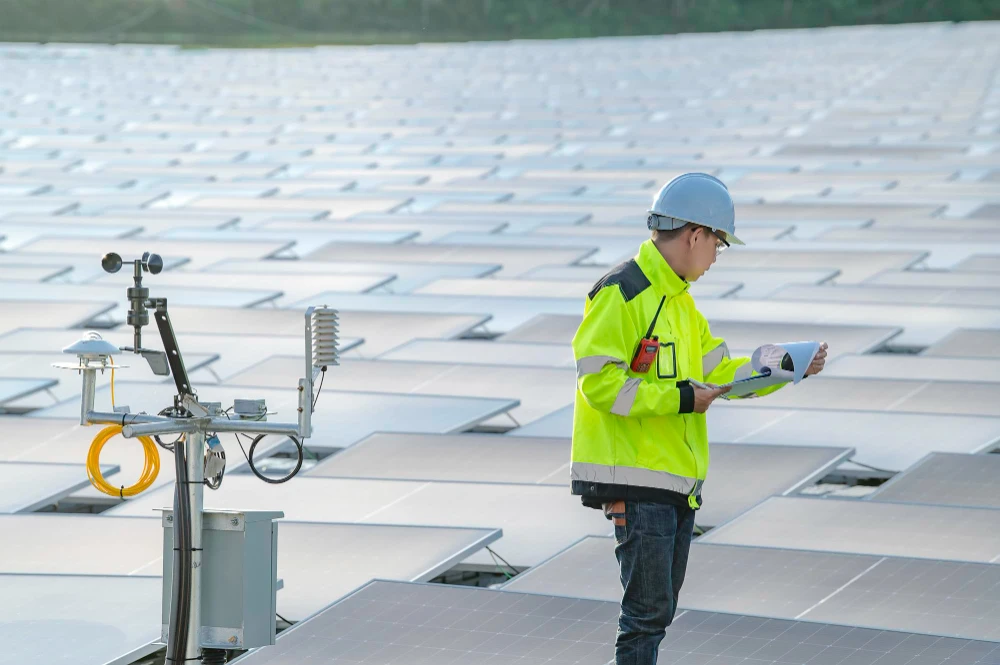
Helio Solar is a company in the field of solar energy and renewable energy, which is engaged in the supply, design, installation and maintenance of solar power plants for businesses, private facilities and industrial enterprises in Kazakhstan.
Purchasing equipment for a solar power plant is a long-term investment rather than a simple product selection. The overall performance of the system depends on how well every component works together. Solar panels, inverters, battery storage, mounting structures and electrical protection devices all contribute to energy production, operational reliability and maintenance costs over many years. Before making a purchasing decision, it is important to evaluate technical characteristics instead of focusing solely on the initial price. More information about the company's activities is available on the Helio Solar company profile on Mytrade.kz.
Why equipment compatibility matters more than individual specifications
Many buyers compare only the wattage of solar panels, assuming that higher capacity automatically means better performance. In reality, every component of a photovoltaic system must operate as a balanced unit. Even premium solar modules cannot achieve their expected output if the inverter is incorrectly sized or low-quality electrical components create unnecessary power losses.
According to the International Energy Agency (IEA), solar photovoltaics remain the fastest-growing source of new electricity generation worldwide. By 2024, global installed solar capacity exceeded 2 terawatts, demonstrating the rapid transition toward renewable energy.
Climate conditions in Kazakhstan also influence equipment selection. High solar irradiation, significant seasonal temperature differences, snow loads during winter and dust accumulation require equipment designed for demanding operating environments.
The essential components of a modern solar power system
Understanding the function of each component helps investors compare different technical solutions more effectively.
Main elements of a photovoltaic installation
- solar photovoltaic modules;
- grid-tied or hybrid inverter;
- battery energy storage system (if required);
- mounting structures;
- DC and AC electrical protection equipment;
- solar cables and connectors;
- remote monitoring system.
Helio Solar supplies equipment, designs, installs and services solar power plants for residential, commercial and industrial facilities. Current solutions can be explored through the company's available offers on Mytrade.kz.
How to evaluate solar panels correctly
Power rating is only one of many parameters that should influence purchasing decisions. Modern photovoltaic modules should be assessed using several technical indicators together.
Important characteristics to compare
- module conversion efficiency;
- temperature coefficient;
- annual power degradation;
- mechanical load resistance;
- performance under low irradiance.
Today's premium monocrystalline modules commonly achieve efficiencies between 21% and 24%, allowing greater electricity production where roof space is limited.
Another critical specification is the temperature coefficient. During summer, panel surface temperatures may exceed 65°C, reducing electrical output. Modules with lower temperature losses generally maintain higher annual energy production.
Choosing the right inverter
The inverter serves as the operational center of every solar power plant. Besides converting direct current into alternating current, it continuously monitors production, manages safety functions, detects faults and enables remote system supervision.
Common inverter categories
- grid-connected inverters;
- hybrid inverters;
- off-grid inverters.
Real-world installation examples can be seen in the Helio Solar Reels gallery, where different solar solutions and equipment configurations are presented.
When does a solar power plant actually need battery storage?
Battery systems are not required for every photovoltaic installation. Grid-connected systems that export or consume electricity during daylight hours can often operate efficiently without energy storage. However, hybrid and off-grid systems depend on batteries to provide backup power and improve energy independence.
Among the available technologies, lithium iron phosphate (LiFePO₄) batteries have become one of the preferred solutions due to their long operational life, high safety standards and stable performance under intensive cycling. Many manufacturers specify service lives exceeding 6,000 charge-discharge cycles under recommended operating conditions.
Key battery characteristics to evaluate
- usable storage capacity;
- depth of discharge;
- cycle life;
- operating temperature range;
- future expansion capability.
Supporting components are just as important
Electrical losses and unexpected failures often originate not from solar panels but from lower-quality auxiliary equipment. Selecting certified cables, connectors and protection devices helps improve long-term reliability while reducing maintenance requirements.
Essential supporting equipment includes
- UV-resistant solar cables;
- certified MC4 connectors;
- DC and AC circuit breakers;
- surge protection devices;
- proper grounding systems;
- remote monitoring equipment.
Additional renewable energy projects can be explored through the Mytrade.kz Reels collection, where companies demonstrate implemented technical solutions.
Common equipment selection mistakes
One of the most frequent purchasing mistakes is comparing only equipment prices without evaluating system compatibility or long-term operating costs.
- mixing incompatible equipment from different manufacturers;
- incorrect inverter sizing;
- ignoring future electricity demand growth;
- underestimating local climate conditions;
- choosing equipment without monitoring capabilities.
Industry studies indicate that design and equipment selection mistakes may reduce actual annual electricity generation by approximately 10–25% compared with the expected system performance.
A practical checklist before purchasing solar equipment
- compare module efficiency rather than rated power alone;
- verify inverter compatibility with photovoltaic capacity;
- determine whether battery storage is genuinely required;
- select certified protection equipment;
- plan for future expansion;
- consider maintenance accessibility throughout the system lifetime.
Helio Solar supplies equipment, designs, installs and services photovoltaic systems for residential, commercial and industrial customers. More technical publications are available in the Helio Solar News section.
Well-selected equipment delivers value for decades
Choosing equipment for a solar power plant should never be based solely on the lowest purchase price. Long-term efficiency depends on balanced system design, reliable components and proper technical integration. Evaluating performance, durability and compatibility before installation helps reduce operational risks and maximize energy production throughout the system's service life.
Additional renewable energy solutions can be found on the Mytrade.kz marketplace. Before making a final purchasing decision, it is also recommended to read the previous article about regular maintenance of solar power plants, which explains how preventive servicing helps preserve system performance over many years.