A women’s suit should not spend most of its life waiting for a formal occasion. With the right cut, colour and proportions, one set can cover a working day, an informal walk, a client meeting, dinner and a special event. This guide is for women who want more outfits without filling the wardrobe with disconnected purchases. The key is to test the suit against real situations before buying it and change only the details that define the dress code. The by.olga.shop showroom profile presents suits, bags and accessories that can be considered as parts of one coordinated wardrobe.
Begin with five occasions, not one fitting-room impression
A suit may look convincing in front of a mirror and still prove difficult to wear outside the showroom. Before making a decision, imagine the same jacket and trousers in five specific settings. Can the jacket work with a shirt and a T-shirt? Do the trousers look balanced with both flat and elevated shoes? Can each piece be worn separately with clothing you already own?
This approach reflects a broader change in how clothing value is assessed. The Ellen MacArthur Foundation reports that global clothing production doubled between 2000 and 2015, while the average number of times a garment was worn before disposal fell by 36%. A versatile suit responds to this problem through repeated use rather than through constant replacement.
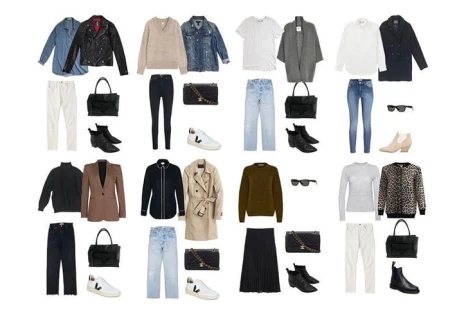
The combination potential can be estimated before purchase. One suit paired with three tops, three types of footwear and two bags creates 18 basic combinations. The purpose is not to buy all 18 components. It is to check how many suitable elements are already in the wardrobe and identify what, if anything, is genuinely missing. Current sets and complementary items can be reviewed among the available by.olga.shop listings.
Work and meetings require structure, but not the same mood
1. The workday: keep the visual message clear
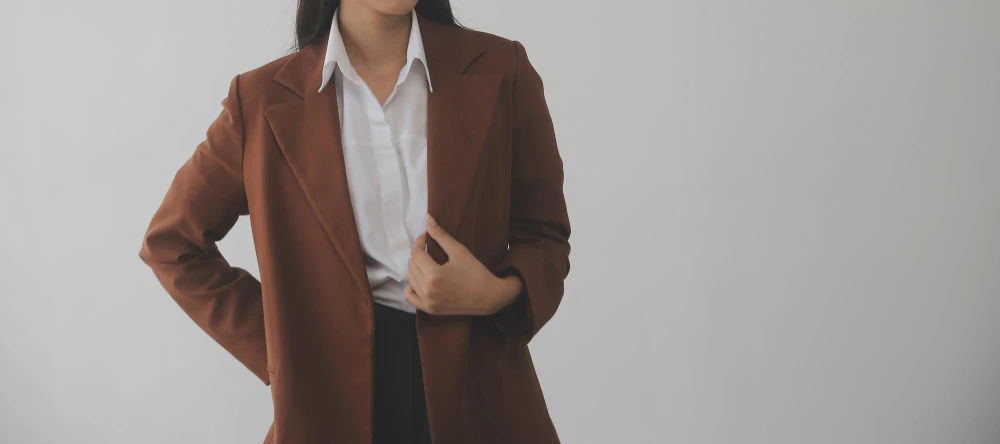
For an office setting, let the suit provide the structure. Add a plain shirt, a fine-knit top or a closed neckline, then choose loafers, restrained pumps or clean ankle boots. A bag that holds its shape reinforces the professional line. Limit the outfit to one noticeable accent, such as a belt, earrings or a contrasting bag, so that the overall impression remains composed rather than overloaded.
Comfort should be tested as seriously as appearance. Sit down, raise both arms and walk several steps. The jacket should not pull sharply across the back, and the trouser waistband should remain comfortable when seated. A suit that only looks good while standing still is unlikely to become a dependable working garment.
2. The meeting: add personality without losing clarity
A business or personal meeting allows slightly more contrast. Pair the tailored silhouette with a softer fabric, a subtle neckline, an unusual shoe shape or a more expressive bag. In an interview with Vogue, stylist Sarah Slutsky explained that for an evening plan after work, she often chooses an outfit where “all I have to do is change my shoes.” That principle works especially well with tailoring: the foundation stays consistent while one element changes the tone.
Short videos can help reveal details that static photographs may hide, including how the jacket moves, where the trousers break above the shoe and whether the proportions remain balanced from different angles. These details can be observed in the outfit Reels from by.olga.shop.
Three off-duty transformations without rebuilding the outfit
3. The walk: remove formality through texture and footwear
For a relaxed daytime look, wear the jacket open, turn the sleeves once or twice and replace the formal shirt with a plain T-shirt. Clean trainers, minimalist sneakers or flat shoes immediately lower the level of formality. A crossbody bag works better than a rigid office tote when freedom of movement matters.
The transformation should still respect proportion. An oversized jacket often needs a cleaner, more compact shoe; wide trousers usually look more intentional when their length is checked against the actual footwear. More styling references can be explored in the Mytrade.kz short-video collection, where different combinations can be compared by silhouette rather than colour alone.
4. Dinner: use two deliberate changes
A dinner outfit rarely requires a complete change after work. Replace the daytime top with one that has a more expressive texture or neckline, exchange the large bag for a smaller one and add a single piece of jewellery. Heels are optional: pointed flats, mules or sleek boots can create an evening effect without reducing comfort.
The most reliable formula is two changes, not five. Change the top and bag, or the shoes and jewellery. Introducing bright colour, metallic shine, a statement bag and large accessories simultaneously can compete with the clean lines of the suit instead of supporting them.
5. The event: let accessories define the occasion
For a celebration or formal event, a suit can provide a strong alternative to a dress. Emphasise the waist with a belt, open the neckline slightly and introduce one polished accessory. If the fabric is already textured or the colour is intense, keep the remaining details restrained. If the suit is neutral and matte, metallic jewellery or a distinctive bag can provide the necessary contrast.
Street-style photographer Tommy Ton has predicted a renewed emphasis on accessorising, highlighting scarves, brooches, belts and unconventional details as tools of personal expression. Updates and new styling combinations from the showroom can also be followed through the by.olga.shop news and offers section.
The cost-per-wear question starts with durability and repetition
WRAP states that extending the active life of clothing by nine months could reduce its carbon, water and waste footprints by up to 20%. In another WRAP-cited shopper survey, 62% of respondents identified durability as a leading purchase consideration. These figures support a practical rule: a useful suit should survive repeated wear, regular movement and several styling scenarios without depending on one precise combination.
Before choosing, inspect the fabric recovery, seams, lining and care instructions. Check whether the jacket returns to shape after movement and whether the trousers maintain a clean line after sitting. Compare the complete set with each piece worn separately. A jacket that works with jeans and trousers that pair with knitwear significantly increase the number of realistic uses.
Fashion and accessory offers from different sellers can be compared through the Mytrade.kz marketplace. The comparison should focus not only on appearance, but also on fit, fabric behaviour, care requirements and compatibility with the buyer’s existing wardrobe.
When five outfits begin to feel effortless
The most versatile suit is not necessarily the most neutral one. It is the suit whose shape remains convincing when the surrounding elements change. Use a simple 1+2 formula: one suit plus two purposeful adjustments for each occasion. For work, choose a shirt and structured bag; for a walk, a T-shirt and sneakers; for a meeting, a softer top and distinctive shoes; for dinner, jewellery and a compact bag; for an event, a belt and one polished accent.
These transformations only work when the original fit supports movement and balanced proportions. Before planning five outfits, check the shoulder line, trouser length, waist position and freedom of movement using the previous guide to choosing a well-fitting women’s suit.