'%3e%3cpath%20d='M12.0683%2015.2949H11.015C10.9053%2015.2949%2010.8164%2015.3838%2010.8164%2015.4935V25.7849C10.8164%2025.8946%2010.9053%2025.9835%2011.015%2025.9835H12.0683C12.1779%2025.9835%2012.2668%2025.8946%2012.2668%2025.7849V15.4935C12.2668%2015.3838%2012.1779%2015.2949%2012.0683%2015.2949Z'%20fill='%230048FF'/%3e%3cpath%20d='M15.0278%2015.2949H13.9915C13.8819%2015.2949%2013.793%2015.3838%2013.793%2015.4935V25.7849C13.793%2025.8946%2013.8818%2025.9835%2013.9915%2025.9835H15.0278C15.1374%2025.9835%2015.2263%2025.8946%2015.2263%2025.7849V15.4935C15.2263%2015.3838%2015.1374%2015.2949%2015.0278%2015.2949Z'%20fill='%230048FF'/%3e%3cpath%20d='M9.09443%2015.2949H1.71809C1.60845%2015.2949%201.51953%2015.3838%201.51953%2015.4935V21.6128C1.51953%2024.0267%203.47634%2025.9834%205.89013%2025.9834H9.09448C9.20412%2025.9834%209.29304%2025.8946%209.29304%2025.7849V15.4935C9.29299%2015.3838%209.20407%2015.2949%209.09443%2015.2949Z'%20fill='%230048FF'/%3e%3cpath%20d='M24.342%2015.2949H16.9486C16.8389%2015.2949%2016.75%2015.3838%2016.75%2015.4935V25.7849C16.75%2025.8946%2016.8389%2025.9835%2016.9486%2025.9835H20.17C22.5838%2025.9835%2024.5406%2024.0267%2024.5406%2021.6129V15.4935C24.5406%2015.3838%2024.4517%2015.2949%2024.342%2015.2949Z'%20fill='%230048FF'/%3e%3cpath%20d='M15.016%206.07227H13.9798C13.8702%206.07227%2013.7812%206.16113%2013.7812%206.27082V13.6882C13.7812%2013.7978%2013.8701%2013.8868%2013.9798%2013.8868H15.016C15.1257%2013.8868%2015.2146%2013.7979%2015.2146%2013.6882V6.27077C15.2146%206.16113%2015.1257%206.07227%2015.016%206.07227Z'%20fill='%230048FF'/%3e%3cpath%20d='M12.0605%206.07227H11.0071C10.8975%206.07227%2010.8086%206.16113%2010.8086%206.27082V13.6882C10.8086%2013.7978%2010.8975%2013.8868%2011.0071%2013.8868H12.0605C12.1701%2013.8868%2012.259%2013.7979%2012.259%2013.6882V6.27077C12.259%206.16113%2012.1701%206.07227%2012.0605%206.07227Z'%20fill='%230048FF'/%3e%3cpath%20d='M23.5711%206.07227H16.9368C16.8272%206.07227%2016.7383%206.16113%2016.7383%206.27082V13.6882C16.7383%2013.7978%2016.8271%2013.8868%2016.9368%2013.8868H23.571C24.9125%2013.8868%2025.9999%2012.7993%2025.9999%2011.4578V8.50119C26%207.1597%2024.9125%206.07227%2023.5711%206.07227Z'%20fill='%230048FF'/%3e%3cpath%20d='M9.08494%206.07227H2.42892C1.08748%206.07221%200%207.15965%200%208.50114V11.4577C0%2012.7992%201.08748%2013.8867%202.42892%2013.8867H9.08494V13.8867C9.19457%2013.8867%209.28349%2013.7978%209.28349%2013.6881V6.27077C9.28349%206.16113%209.19457%206.07227%209.08494%206.07227Z'%20fill='%230048FF'/%3e%3cpath%20d='M20.1871%201.47349C18.9897%20-0.129579%2016.7113%20-0.459759%2015.1081%200.737715C14.8681%200.916974%2014.1377%201.46252%2013.1094%204.1681C13.109%204.16937%2013.1084%204.17064%2013.1079%204.17191C13.0397%204.35157%2013.173%204.54383%2013.3652%204.54383H20.6349C20.7291%204.54383%2020.8107%204.47766%2020.8298%204.38539C21.0343%203.40226%2020.8339%202.33941%2020.1871%201.47349Z'%20fill='%230048FF'/%3e%3cpath%20d='M12.4378%202.93607C11.6806%201.28298%2011.1489%200.885569%2010.9508%200.737694C9.34772%20-0.459731%207.06926%20-0.129601%205.87183%201.47346C5.22508%202.33944%205.02465%203.40224%205.22915%204.38542C5.24834%204.47764%205.32979%204.54386%205.42404%204.54386H11.7223C11.8052%204.54386%2011.8796%204.49231%2011.9084%204.41447C11.9384%204.33311%2011.9691%204.2509%2012.0006%204.16808C12.1533%203.76609%2012.2995%203.41209%2012.4385%203.09953C12.4616%203.04748%2012.4615%202.98792%2012.4378%202.93607Z'%20fill='%230048FF'/%3e%3c/g%3e%3cdefs%3e%3cclipPath%20id='clip0_4773_3494'%3e%3crect%20width='26'%20height='26'%20fill='white'/%3e%3c/clipPath%3e%3c/defs%3e%3c/svg%3e)
Free ad placement
EN


Free ad placement

Goods, services, cars, real estate and jobs

Create a seller page

EN



0

15

0



АвтоВазмаркет
AvtoVazmarket on Valikhanov is a supplier of auto parts and components for cars in Russia, Europe, Asia and the USA. For more than 15 years, the company has been operating in the Kazakhstan market, offering wholesale and retail supplies, parts selection, regional delivery and service replacement of auto parts.
Shock absorbers are among the most overlooked components of a vehicle's suspension system. Many drivers believe they are responsible only for ride comfort. In reality, properly functioning shock absorbers have a direct impact on vehicle safety, handling, braking performance, tire grip, and overall driving stability.
According to Monroe, worn shock absorbers can increase a vehicle's braking distance by up to 20%, especially during emergency braking. Research conducted by Bilstein shows that after approximately 80,000 kilometers, the performance of most factory-installed shock absorbers decreases by 40–60%, even if drivers do not notice any obvious symptoms.
Using high-quality auto parts and regularly inspecting the suspension system helps improve road safety, extend tire life, and prevent expensive suspension repairs.
What Is a Shock Absorber?
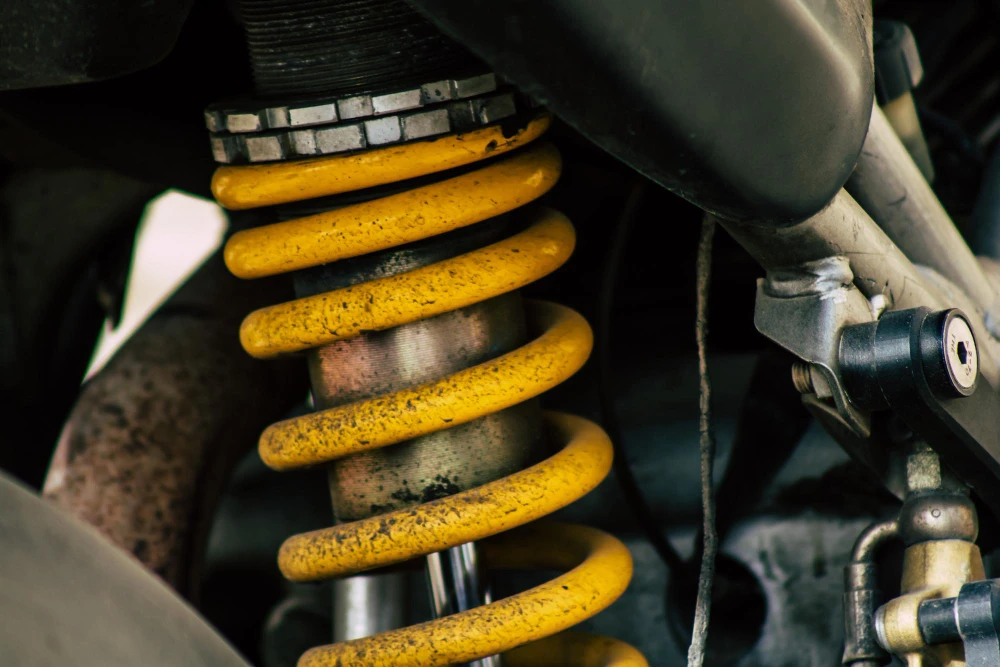
A shock absorber is a hydraulic or gas-filled component designed to dampen the oscillations of the suspension springs after the vehicle passes over bumps or uneven road surfaces.
Without shock absorbers, a car would continue bouncing after every bump, and the tires would repeatedly lose contact with the road surface.
The primary functions of shock absorbers include:
- maintaining continuous tire contact with the road;
- improving steering and vehicle handling;
- reducing braking distance;
- minimizing body roll during cornering;
- reducing vibrations inside the cabin;
- increasing ride comfort;
- protecting other suspension components from excessive impact loads.
What Types of Shock Absorbers Are Available?
Modern vehicles use several different types of shock absorbers.
Hydraulic (Oil-Filled) Shock Absorbers
These are the simplest and most affordable type.
Advantages:
- lower purchase cost;
- smoother ride quality;
- comfortable everyday driving.
Disadvantages:
- more susceptible to overheating;
- reduced performance during aggressive driving;
- lower resistance to heavy loads.
They are commonly found on passenger vehicles designed primarily for urban driving.
Gas-Charged Hydraulic Shock Absorbers
This is the most common type installed on modern passenger cars.
Advantages:
- improved stability;
- more precise steering response;
- higher damping efficiency;
- excellent balance between comfort and performance.
Manufacturers such as Toyota, Hyundai, Kia, Volkswagen, Škoda, Renault, and Nissan commonly equip their vehicles with this type of shock absorber.
Gas Shock Absorbers
Gas shock absorbers are mainly used on sports cars, SUVs, and high-performance vehicles.
Advantages:
- maximum vehicle stability;
- superior handling;
- reduced body roll;
- excellent performance at high speeds.
Disadvantages:
- firmer ride;
- higher purchase price.
How Long Do Shock Absorbers Last?
Service life depends heavily on road quality and driving conditions.
Most manufacturers recommend inspecting shock absorbers every:
- 20,000 kilometers.
The average service life is:
- 60,000–100,000 kilometers.
However, vehicles driven on rough roads with frequent potholes may require replacement after only 40,000–60,000 kilometers.
According to KYB, approximately 30% of vehicles older than five years are driven with shock absorbers that should already be replaced.
What Causes Shock Absorbers to Fail?
The most common causes include:
- poor road conditions;
- frequent vehicle overloading;
- aggressive driving;
- dirt entering beneath damaged dust boots;
- piston rod damage;
- natural seal wear;
- hydraulic oil leakage;
- corrosion.
Even one severe impact from a deep pothole can significantly shorten the lifespan of a shock absorber.
How Can You Tell It's Time to Replace Shock Absorbers?
The most common warning signs include:
- excessive bouncing after driving over bumps;
- increased braking distance;
- excessive body roll while cornering;
- reduced steering precision;
- the front of the vehicle dives during braking;
- the rear squats excessively during acceleration;
- knocking noises from the suspension;
- uneven tire wear;
- visible oil leaks on the shock absorber housing.
If several of these symptoms appear, the suspension system should be professionally inspected as soon as possible.
Why Is It Dangerous to Drive with Worn Shock Absorbers?
Worn shock absorbers affect far more than ride comfort.
They can lead to:
- longer stopping distances;
- reduced tire grip;
- accelerated tire wear;
- increased stress on wheel bearings;
- faster wear of ball joints;
- premature failure of steering components;
- greater load on suspension springs.
According to TÜV, defective shock absorbers can increase the likelihood of skidding on wet roads by approximately 25%.
Should Shock Absorbers Always Be Replaced in Pairs?
Yes.
Virtually every automotive manufacturer recommends replacing shock absorbers in pairs on the same axle.
For example:
- both front shock absorbers;
- or both rear shock absorbers.
Replacing only one shock absorber creates uneven suspension performance, reducing vehicle stability and handling.
Which Shock Absorber Brands Are Considered the Best?
The following manufacturers are widely recognized for quality and reliability:
- KYB (Kayaba)
- Bilstein
- Sachs
- Monroe
- Koni
- Tokico
- Mando
- Boge
Many of these companies also supply original equipment (OEM) suspension components to major automobile manufacturers.
How Can You Extend the Life of Shock Absorbers?
Automotive experts recommend:
- slowing down before potholes and speed bumps;
- avoiding vehicle overloading;
- regularly inspecting protective dust boots;
- checking the suspension every 20,000 kilometers;
- maintaining proper wheel alignment;
- using only high-quality suspension components;
- always replacing shock absorbers in pairs.
Routine maintenance helps preserve suspension performance and extends the lifespan of many other chassis components.
Where Can You Buy Quality Shock Absorbers?
Shock absorbers, struts, mounts, dust boots, bump stops, springs, and many other suspension components are available in the auto parts catalog, where products from numerous suppliers are offered for most popular vehicle brands.
Final Thoughts
Properly functioning shock absorbers are essential not only for ride comfort but also for vehicle safety. They improve tire contact with the road, shorten braking distances, enhance stability, and reduce stress on other suspension components. Even when no obvious symptoms are present, automotive experts recommend inspecting shock absorbers regularly and replacing them as soon as signs of wear appear. Timely replacement helps avoid expensive repairs, improves vehicle handling, and ensures safer driving under all road conditions.
At Mytrade.kz, you can find a wide range of shock absorbers and suspension components for most popular vehicle brands, compare offers from multiple suppliers, and choose reliable replacement parts at competitive prices.
Read also: How Does a Car's Braking System Work and When Should Brake Pads and Rotors Be Replaced?.