Choosing the size you usually wear does not guarantee that the garment will sit correctly. The same number can produce a clean shoulder line in one blazer, pulling at the buttons in another and excess fabric in a third. The difference comes from pattern shape, wearing ease, fabric behaviour and body proportions—not from the shopper having the “wrong” figure. This guide shows how to judge fit before buying and compare models more accurately through the by.olga.shop profile on Mytrade.kz.
The number on the label is a category, not a full measurement
A clothing size compresses many variables into one symbol. It may reflect a bust range, a brand’s base pattern and its intended customer, but it does not tell you the shoulder slope, torso length, rise depth or amount of room built into the garment. That is why two items marked with the same size can feel unrelated once worn.
ASTM’s D5585 tables are designed as body-measurement baselines for pattern development. The standard explicitly says manufacturers must still consider “fabric type, ease for body movement, styling, and fit.” In practice, the label narrows the search; the pattern decides how the garment behaves.
Four variables change the result
- Pattern block: the body proportions used to draft the original shape.
- Ease: the extra room added for movement, layering or a deliberately relaxed silhouette.
- Fabric: stretch, weight, thickness and recovery after movement.
- Design intent: fitted, straight, cropped, oversized or softly tailored.
Before comparing numbers, first identify what the item is meant to do. A structured suit and a relaxed everyday set may share the same label but use completely different proportions. The current women’s clothing offers from by.olga.shop can therefore be assessed more accurately by silhouette and construction, not by size alone.
A practical fit matrix: body, garment and purpose
The most reliable decision comes from checking three layers together. First, record your current body measurements. Second, examine the garment’s construction. Third, decide how you intend to wear it. A blazer for meetings needs room for a blouse and arm movement; the same amount of ease may look excessive in a sleeveless evening dress.
Body layer
Bust, waist and hip measurements are only the starting point. Shoulder width, back length, upper-arm circumference and rise can change the fit even when the main three measurements match the chart. Two women with identical bust and hip measurements may need different jackets because one has a longer torso or broader shoulders.
Garment layer
Look for clues in seams and proportions. A dropped shoulder creates volume by design. A high-rise trouser changes where the waistband meets the body. A cropped jacket shortens the torso visually even when the chest measurement is generous. Motion is especially useful for reading these details, so by.olga.shop Reels videos can provide information that a front-facing product photo may hide.
Purpose layer
Decide whether you want a close, balanced or relaxed fit. Without this step, shoppers often size down to remove intentional volume or size up to solve a pattern mismatch. Neither adjustment fixes the real problem if the cut itself does not suit the required look.
One label, three different outcomes
A blazer
A blazer can close at the front and still fit poorly. Check whether the shoulder seam sits where the design intends, whether the lapels lie flat and whether the back remains smooth when the arms move forward. Diagonal lines from the button usually indicate tension; a collapsing shoulder often indicates too much volume or the wrong shoulder shape.
Trousers
Waist size does not explain rise, seat depth or thigh room. If pockets flare, side seams twist or horizontal lines form across the front, the garment is under tension. If the waistband gaps while the hip fits, moving up or down one size may simply transfer the problem elsewhere; a different trouser block is often the better answer.
A dress
For dresses, the position of the waist seam and the balance between front and back are decisive. A dress may match the bust measurement but ride up at the front if the bodice is too short. A difference of only two or three centimetres in torso length can visibly shift the waist and hem.
Comparing how different sellers show garments in movement can make these distinctions easier to notice. The short-video section on Mytrade.kz is useful for observing fabric flow, length and volume beyond a static pose.
The statistics explain why size alone fails online
A 2025 Vogue Business survey of 687 consumers in the United States and the United Kingdom found that 91% said their clothing size depends on the brand. Poor fit discouraged 43% from buying, while inconsistent sizing deterred 36%. These numbers show that uncertainty is not an isolated shopper mistake; it is a structural feature of fashion sizing.
Coresight Research estimated a 24.4% return rate for online apparel and footwear in the United States and reported that 53% of surveyed brands and retailers named size or fit as a leading return reason. The same research calculated that a market of $155.8 billion could generate approximately $38 billion in returns at that rate.
Fashion editor Anna Woodham summarised the everyday reality in a concise observation: “sizing can vary from product to product.” The useful response is not to chase a preferred number, but to gather enough evidence about the garment before ordering.
by.olga.shop presents women’s clothing, suits, bags and accessories in Almaty, so a fit decision can also be considered as part of a complete outfit rather than as an isolated garment. Related guidance is available in the by.olga.shop news and recommendations section.
How to read a garment before choosing the size
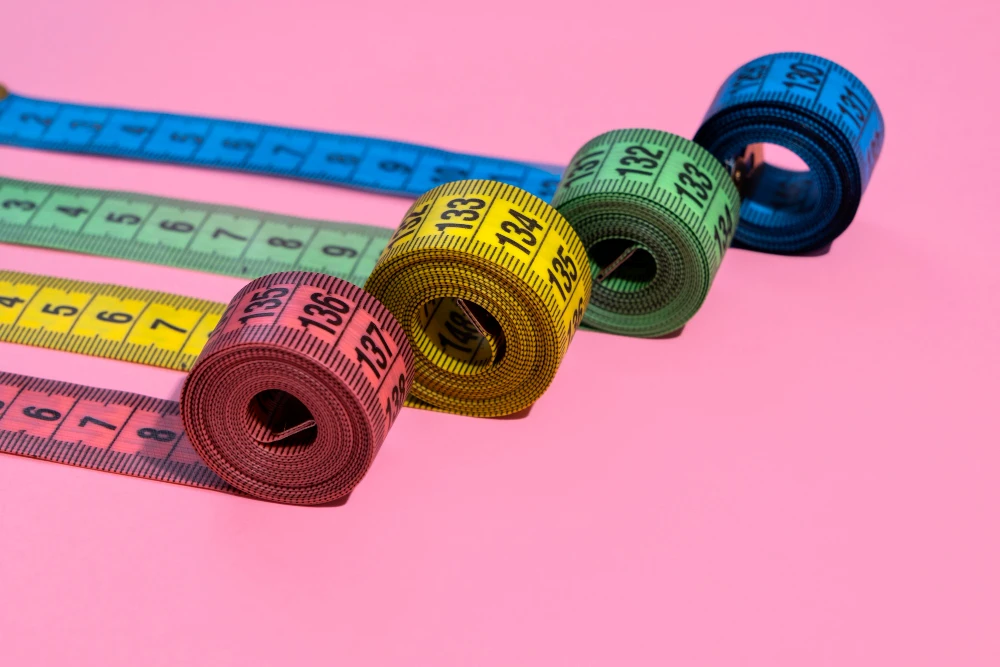
- Measure your body again instead of relying on an old size habit.
- Measure a similar garment you already own and like, laid flat without stretching it.
- Identify the critical zone: shoulders for a blazer, hips and rise for trousers, torso length for a dress.
- Check fabric composition and whether the material contains stretch fibres.
- Note the model’s height, the size worn and whether the item is described as fitted, regular or oversized.
- Compare garment measurements where available, not only body-size charts.
- Choose according to the intended silhouette and movement, not the smallest number that closes.
This process turns sizing into a controlled comparison. It also reduces the tendency to treat every fit issue as a reason to move one size up or down.
A 90-second movement test reveals more than the mirror
- Raise both arms and check whether the garment climbs towards the neck.
- Sit down and stand up to test the waistband, rise and seat.
- Reach forward to see whether the back and armholes restrict movement.
- Fasten every button and inspect the fabric for radiating tension lines.
- Take several wide steps and check whether the side seams remain vertical.
- Look at the back: horizontal wrinkles often signal tension, while deep vertical folds can indicate excess volume.
A garment should preserve its intended line while the body moves. A size that looks acceptable in a still pose may fail during sitting, walking or reaching. For broader comparison across sellers and outfit categories, the Mytrade.kz marketplace provides a practical starting point.
When to size up, size down or change the cut
- Size up when buttons pull, pockets open, arm movement is restricted or the fabric is visibly strained.
- Size down when the shoulder collapses, the waistband cannot stay in place or the intended shape disappears into uncontrolled volume.
- Change the cut when one area fits and another consistently fails: shoulders fit but hips pull, waist fits but rise is wrong, or bust fits but the back collapses.
The third option is often overlooked. A different cut can solve proportion problems that repeated size changes cannot. Straight tailoring may work better than a sharply fitted jacket; a different rise may improve trousers more effectively than a larger waist.
The best size is the one that lets the design work
The label should guide the first comparison, not make the final decision. Good fit appears when the garment’s critical measurements, fabric, ease and intended silhouette work together in motion. That is why the same number can look polished in one design and uncomfortable in another.
Before placing the next online order, update the measurements that matter for the garment and use the step-by-step guide to measuring for women’s clothing online.