'%3e%3cpath%20d='M12.0683%2015.2949H11.015C10.9053%2015.2949%2010.8164%2015.3838%2010.8164%2015.4935V25.7849C10.8164%2025.8946%2010.9053%2025.9835%2011.015%2025.9835H12.0683C12.1779%2025.9835%2012.2668%2025.8946%2012.2668%2025.7849V15.4935C12.2668%2015.3838%2012.1779%2015.2949%2012.0683%2015.2949Z'%20fill='%230048FF'/%3e%3cpath%20d='M15.0278%2015.2949H13.9915C13.8819%2015.2949%2013.793%2015.3838%2013.793%2015.4935V25.7849C13.793%2025.8946%2013.8818%2025.9835%2013.9915%2025.9835H15.0278C15.1374%2025.9835%2015.2263%2025.8946%2015.2263%2025.7849V15.4935C15.2263%2015.3838%2015.1374%2015.2949%2015.0278%2015.2949Z'%20fill='%230048FF'/%3e%3cpath%20d='M9.09443%2015.2949H1.71809C1.60845%2015.2949%201.51953%2015.3838%201.51953%2015.4935V21.6128C1.51953%2024.0267%203.47634%2025.9834%205.89013%2025.9834H9.09448C9.20412%2025.9834%209.29304%2025.8946%209.29304%2025.7849V15.4935C9.29299%2015.3838%209.20407%2015.2949%209.09443%2015.2949Z'%20fill='%230048FF'/%3e%3cpath%20d='M24.342%2015.2949H16.9486C16.8389%2015.2949%2016.75%2015.3838%2016.75%2015.4935V25.7849C16.75%2025.8946%2016.8389%2025.9835%2016.9486%2025.9835H20.17C22.5838%2025.9835%2024.5406%2024.0267%2024.5406%2021.6129V15.4935C24.5406%2015.3838%2024.4517%2015.2949%2024.342%2015.2949Z'%20fill='%230048FF'/%3e%3cpath%20d='M15.016%206.07227H13.9798C13.8702%206.07227%2013.7812%206.16113%2013.7812%206.27082V13.6882C13.7812%2013.7978%2013.8701%2013.8868%2013.9798%2013.8868H15.016C15.1257%2013.8868%2015.2146%2013.7979%2015.2146%2013.6882V6.27077C15.2146%206.16113%2015.1257%206.07227%2015.016%206.07227Z'%20fill='%230048FF'/%3e%3cpath%20d='M12.0605%206.07227H11.0071C10.8975%206.07227%2010.8086%206.16113%2010.8086%206.27082V13.6882C10.8086%2013.7978%2010.8975%2013.8868%2011.0071%2013.8868H12.0605C12.1701%2013.8868%2012.259%2013.7979%2012.259%2013.6882V6.27077C12.259%206.16113%2012.1701%206.07227%2012.0605%206.07227Z'%20fill='%230048FF'/%3e%3cpath%20d='M23.5711%206.07227H16.9368C16.8272%206.07227%2016.7383%206.16113%2016.7383%206.27082V13.6882C16.7383%2013.7978%2016.8271%2013.8868%2016.9368%2013.8868H23.571C24.9125%2013.8868%2025.9999%2012.7993%2025.9999%2011.4578V8.50119C26%207.1597%2024.9125%206.07227%2023.5711%206.07227Z'%20fill='%230048FF'/%3e%3cpath%20d='M9.08494%206.07227H2.42892C1.08748%206.07221%200%207.15965%200%208.50114V11.4577C0%2012.7992%201.08748%2013.8867%202.42892%2013.8867H9.08494V13.8867C9.19457%2013.8867%209.28349%2013.7978%209.28349%2013.6881V6.27077C9.28349%206.16113%209.19457%206.07227%209.08494%206.07227Z'%20fill='%230048FF'/%3e%3cpath%20d='M20.1871%201.47349C18.9897%20-0.129579%2016.7113%20-0.459759%2015.1081%200.737715C14.8681%200.916974%2014.1377%201.46252%2013.1094%204.1681C13.109%204.16937%2013.1084%204.17064%2013.1079%204.17191C13.0397%204.35157%2013.173%204.54383%2013.3652%204.54383H20.6349C20.7291%204.54383%2020.8107%204.47766%2020.8298%204.38539C21.0343%203.40226%2020.8339%202.33941%2020.1871%201.47349Z'%20fill='%230048FF'/%3e%3cpath%20d='M12.4378%202.93607C11.6806%201.28298%2011.1489%200.885569%2010.9508%200.737694C9.34772%20-0.459731%207.06926%20-0.129601%205.87183%201.47346C5.22508%202.33944%205.02465%203.40224%205.22915%204.38542C5.24834%204.47764%205.32979%204.54386%205.42404%204.54386H11.7223C11.8052%204.54386%2011.8796%204.49231%2011.9084%204.41447C11.9384%204.33311%2011.9691%204.2509%2012.0006%204.16808C12.1533%203.76609%2012.2995%203.41209%2012.4385%203.09953C12.4616%203.04748%2012.4615%202.98792%2012.4378%202.93607Z'%20fill='%230048FF'/%3e%3c/g%3e%3cdefs%3e%3cclipPath%20id='clip0_4773_3494'%3e%3crect%20width='26'%20height='26'%20fill='white'/%3e%3c/clipPath%3e%3c/defs%3e%3c/svg%3e)
Free ad placement
EN


Free ad placement

Goods, services, cars, real estate and jobs

Create a seller page

EN



0

9

0


ТОО "Helio Solar"
Helio Solar is a company in the field of solar energy and renewable energy, which is engaged in the supply, design, installation and maintenance of solar power plants for businesses, private facilities and industrial enterprises in Kazakhstan.
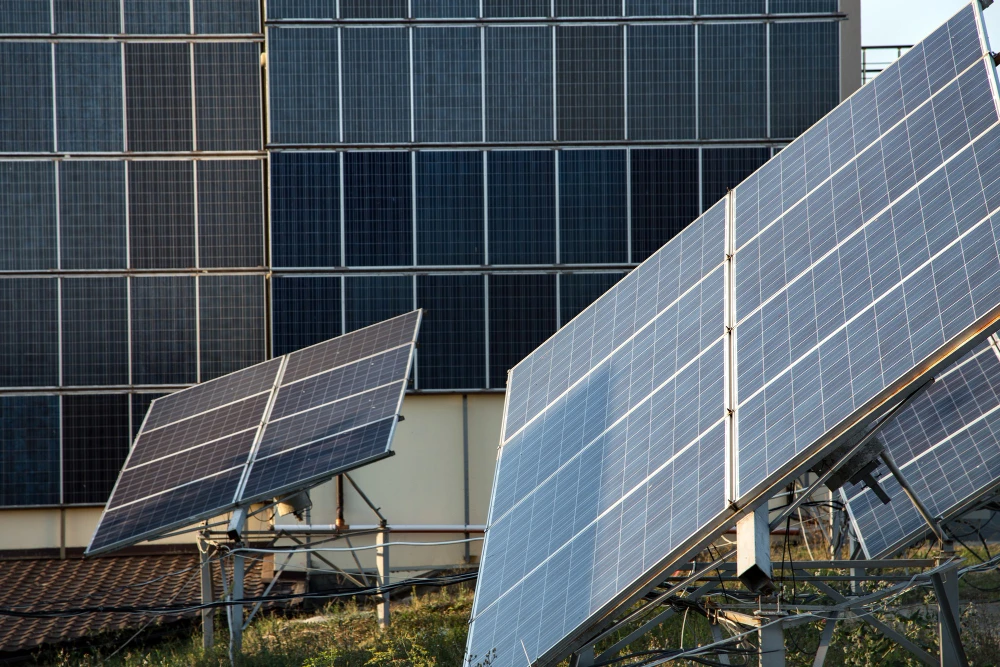
Choosing a solar power system involves much more than selecting photovoltaic panels. One of the most important decisions is determining which system architecture best matches the site's operating conditions. Grid-tied, off-grid and hybrid solar power systems are designed for different objectives, and selecting the wrong configuration can increase costs or limit long-term performance. Understanding these differences before installation helps property owners and businesses make more informed investment decisions.
Why system architecture matters as much as solar panels
According to the International Energy Agency (IEA), solar photovoltaic capacity continues to be the fastest-growing source of renewable electricity worldwide. However, overall project performance depends not only on panel efficiency but also on selecting the right combination of inverters, batteries and electrical infrastructure.
LLP "Helio Solar" supplies equipment, designs, installs and maintains solar power plants for residential, commercial and industrial facilities throughout Kazakhstan. Additional information is available on the company profile on Mytrade.kz.
Understanding the three main solar power system types
Grid-Tied Solar Power System
A grid-connected system operates together with the public electricity network. During sunny hours, solar panels generate electricity that is immediately consumed by the building, reducing electricity purchased from the utility.
- does not require battery storage;
- offers lower initial investment than battery-based systems;
- provides excellent conversion efficiency because energy is used immediately;
- works well where utility power is reliable.
Most conventional grid-tied inverters automatically shut down during a utility outage to comply with electrical safety regulations, meaning backup power is generally unavailable unless batteries are integrated.
Off-Grid Solar Power System
An off-grid installation operates independently from the utility network. Electricity generated during the day is stored in battery banks and later supplied whenever solar production decreases.
These systems are commonly selected for:
- remote farms;
- mountain properties;
- telecommunication facilities;
- tourist camps and isolated buildings;
- locations where grid access is unavailable or prohibitively expensive.
Battery sizing is critical because the system must provide sufficient stored energy during nighttime operation and extended periods of cloudy weather.
Examples of available equipment can be explored through the current offers published by the company.
Hybrid Solar Power System
A hybrid system combines grid connectivity with battery storage. During normal operation it prioritizes solar generation while simultaneously maintaining energy reserves that automatically supply electricity during power outages.
Hybrid installations are becoming increasingly attractive for:
- private homes;
- office buildings;
- manufacturing facilities;
- medical centres;
- businesses where uninterrupted electricity is essential.
Comparing the three solutions
- Grid-Tied: lowest investment cost and maximum efficiency where utility power is dependable.
- Off-Grid: complete electrical independence supported by battery storage.
- Hybrid: combines electricity savings with emergency backup capability.
Industry analyses published by BloombergNEF indicate that battery storage costs have fallen substantially during recent years, making hybrid systems increasingly accessible for both residential and commercial applications.
Important questions before selecting a system
- How reliable is the existing electrical grid?
- What is the average daily electricity consumption?
- Is uninterrupted backup power required?
- How much roof or ground area is available?
- Will electricity demand increase in the future?
- Can the installation be expanded later?
Real installation examples and equipment demonstrations are available through the Helio Solar video Reels collection.
When a Grid-Tied System Makes the Most Sense
Grid-connected solar installations are ideal for properties that already have stable access to the utility network and primarily want to reduce daytime electricity expenses. Offices, retail facilities, warehouses, schools and manufacturing plants often achieve the greatest return because most of their electricity consumption occurs while solar panels are actively producing energy.
Without battery storage, the system remains simpler, easier to maintain and generally requires a lower initial investment than other configurations.
Planning an Off-Grid Installation Requires Accurate Energy Forecasting
An off-grid solar power system should never be designed based solely on panel capacity. Daily consumption, seasonal weather patterns, battery autonomy and future electricity demand all influence system sizing. Underestimating these factors may result in insufficient energy availability during winter months or prolonged cloudy periods.
LLP "Helio Solar" provides engineering, equipment supply, installation and maintenance services for solar power plants serving residential, commercial and industrial customers throughout Kazakhstan. Every project benefits from evaluating present and future energy requirements before selecting equipment.
Why Hybrid Systems Continue to Gain Popularity
Hybrid technology has become increasingly attractive because it combines two important objectives: lowering electricity costs while maintaining operational continuity during unexpected power interruptions.
Businesses operating sensitive equipment, refrigeration systems, computer servers or production machinery often consider hybrid solutions to minimise operational risks associated with utility outages.
Additional technical articles and practical recommendations are regularly published in the Helio Solar news section.
Choosing Based Only on Price Can Become an Expensive Mistake
The least expensive proposal is not always the most economical over the lifetime of the installation. A grid-tied system may not provide adequate protection where outages occur frequently, while investing in oversized battery storage for a location with an exceptionally reliable electrical network may unnecessarily increase project costs.
Before selecting a configuration, decision-makers should evaluate:
- the reliability of the local electricity supply;
- critical loads requiring uninterrupted operation;
- daytime versus nighttime electricity consumption;
- future expansion plans;
- available installation space;
- expected operational priorities over the coming years.
If you are evaluating residential installations for the first time, it is also worth reading the previous guide on selecting a solar power system for a private home.
Selecting the Right Configuration Creates Long-Term Value
Although grid-tied, off-grid and hybrid solar power systems all generate renewable electricity, each serves different operational priorities. Matching the system architecture to the property's energy profile, reliability requirements and future expansion plans is the foundation of a successful investment.
LLP "Helio Solar" supplies equipment, designs, installs and maintains solar energy systems for residential, commercial and industrial facilities across Kazakhstan. Businesses and property owners comparing suppliers and available solutions can also explore the Mytrade.kz marketplace for additional industry information and offers.