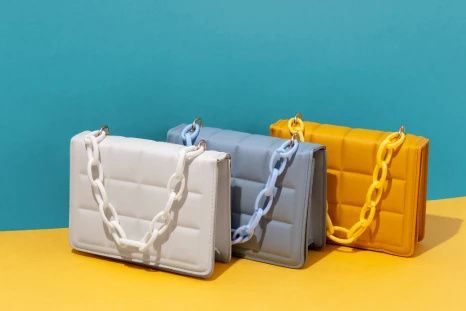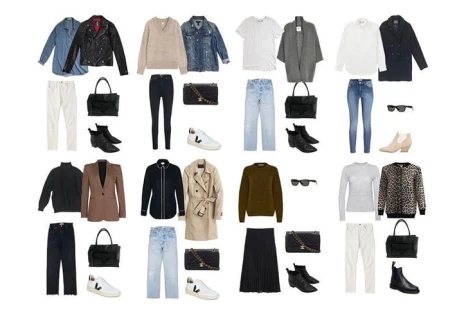
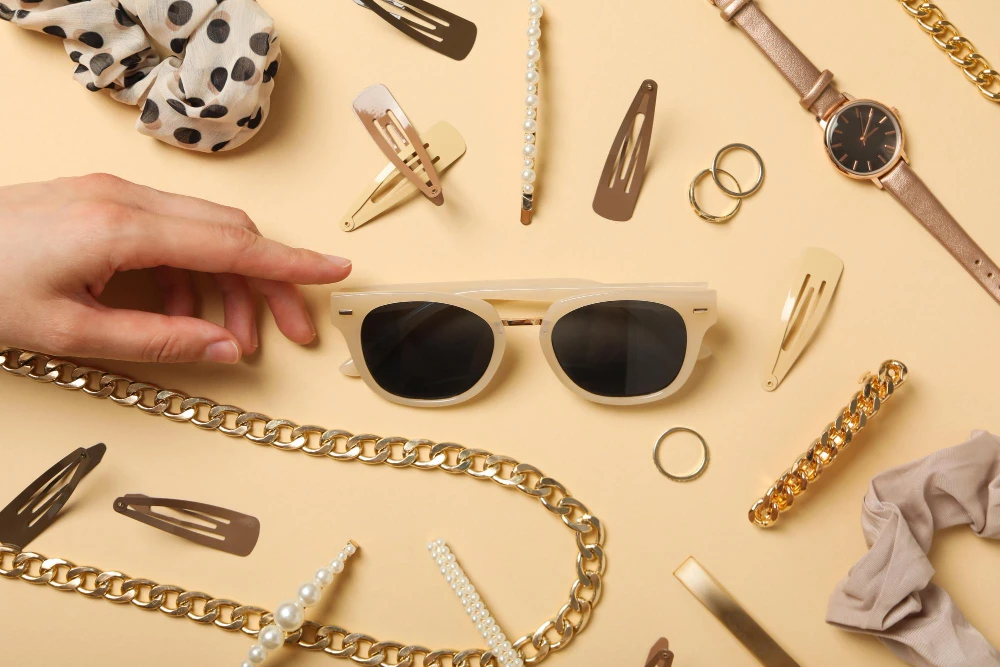
Accessories should sharpen an outfit, not turn it into a contest between earrings, a bag, a belt and shoes. This guide is for women who want a polished everyday or evening look without buying more pieces than they can realistically wear. The method is simple: map the outfit into visual zones, choose one dominant accessory, then make every other detail echo rather than compete. The approach can be applied while reviewing complete looks on the by.olga.shop storefront on Mytrade.kz.
Start with the outfit’s visual map, not the jewellery box
Before adding anything, divide the look into four zones: face, torso, hands and feet. A statement earring activates the face; a wide belt activates the centre; a structured bag draws attention to the hand and hip; contrast shoes pull the eye downward. When three or four zones are equally loud, the silhouette becomes fragmented.
The 1–1–1 framework
- One lead piece: the accessory you want people to notice first.
- One echo: a smaller detail that repeats its colour, metal, shape or texture.
- One quiet function: a practical item that completes the outfit without asking for attention.
This is not a scientific formula; it is a fast styling test. If the lead piece is a sculptural pair of earrings, the echo might be the bag hardware, while the shoes stay close to the colour of the clothes. If the bag is the hero, jewellery can become finer and less reflective. Comparing items through the current clothing and accessory offers from by.olga.shop is more useful when each item is judged as part of a real outfit rather than in isolation.
Why online shopping makes scale more important
Kazakhstan’s Bureau of National Statistics reports that retail e-commerce reached 3,768.8 billion tenge in 2025 and represented 14.3% of total retail trade. Marketplaces accounted for 86% of that online turnover. The practical consequence is clear: more accessories are chosen from photographs, where a close crop can hide their true size, shine and visual weight.
Use a three-outfit test before buying. Picture the accessory with one work look, one casual look and one evening look already in your wardrobe. If it supports at least two of the three without requiring extra purchases, it has a stronger chance of being worn regularly. Movement also matters: the short styling videos from by.olga.shop can help show how a bag sits against the body or how jewellery behaves when the wearer turns.
Create distance between strong accents
Two bold elements can work together when they occupy separate zones. Statement earrings and a stack of bracelets leave visual space between the face and hands. By contrast, oversized earrings and a heavy necklace sit close together and can merge into one dense block.
Jewellery designer Jennifer Fisher told Vogue that with layered jewellery she prefers to choose “either my ears or my neck—rarely both.” It is a useful decision rule, not a universal ban. Fine chains can coexist with large earrings because their visual weight is low; a thick collar necklace usually needs calmer earrings.
A practical distance check
- Stand two metres from the mirror.
- Identify the first two details you notice.
- If they sit in the same zone, remove or soften one.
- If they sit apart, check whether they share one linking feature.
Colour, repeated metal or a related geometric line can provide that link. More examples of different accessory placements can be explored through the short-video collection on Mytrade.kz.
Mixing metals works when repetition looks intentional
Gold-tone and silver-tone details do not have to match perfectly. The combination looks deliberate when each metal appears at least twice or when one bridge piece contains both: a two-tone watch, mixed bag hardware or a layered ring set. One isolated silver buckle in an otherwise warm-gold outfit can look accidental; repeating silver in a ring or earring turns it into a system.
Texture needs the same discipline. Satin, patent leather, crystals and polished metal all reflect light. Using all four at equal intensity can make a simple outfit feel restless. Balance one glossy surface with something quieter, such as matte leather, suede, knitwear or brushed metal. The by.olga.shop news and styling articles provide a useful place to compare such combinations before choosing new pieces.
Use colour as an echo, not a uniform
An accessory does not need to match another item exactly. A burgundy bag can connect with a muted berry lipstick, a scarf pattern or a small stone in a ring. Exact repetition can sometimes feel overly planned; a related shade often looks more natural.
As a quick audit, count how many high-contrast colour points appear in the outfit. One is clear, two can feel intentional, and three may work if one is noticeably smaller. This is a styling heuristic rather than a fixed law. The purpose is to protect hierarchy: the eye should know where to land first.
Stylist Micaela Erlanger has described accessories as the easiest way to elevate a look. The important word is “elevate”: the accessory should improve the outfit’s message rather than introduce a second, unrelated one. Broader comparisons across categories are available on the Mytrade.kz marketplace.
Cost per wear matters more than the number of pieces
WRAP reports that 62% of shoppers consider durability an important factor when choosing a fashion brand. The organisation also estimates that extending the active life of clothing by nine months can reduce its carbon, water and waste footprints by up to 20%. Although the figure concerns clothing, the purchasing logic also applies to accessories: a versatile belt or bag worn repeatedly can deliver more value than several striking pieces that work with only one outfit.
Before buying, write down ten realistic occasions for wearing the item over the next year. If the list stops at two or three, the piece may be decorative but not foundational. by.olga.shop presents clothing and accessories as coordinated options, which makes it easier to evaluate how a detail supports more than one combination.
The final mirror test: does the person still come first?
- Take one full-length photograph rather than relying on a close mirror view.
- Name the first accessory you notice; it should be the intended lead.
- Remove one secondary item and compare the two images.
- Walk, sit and carry the bag to check comfort as well as appearance.
- Keep the version in which the face, silhouette and main accent are read in that order.
A successful accessory does not disappear, but it also does not detach from the wearer. It clarifies the mood of the outfit, links colours or textures and leaves enough visual space for the person. To review the foundation before experimenting with stronger combinations, read the previous guide to the accessories a practical women’s wardrobe actually needs.