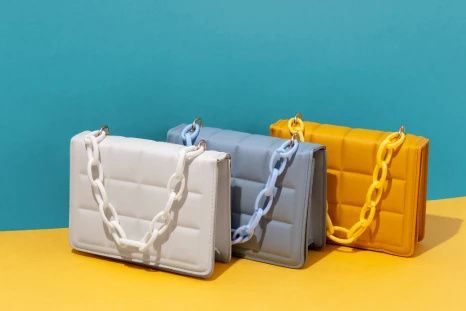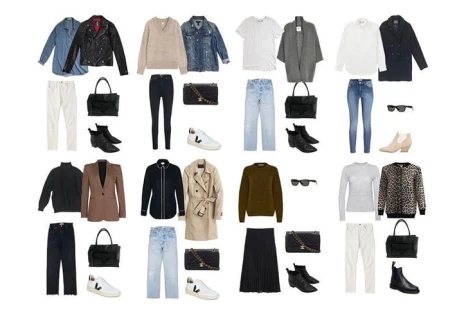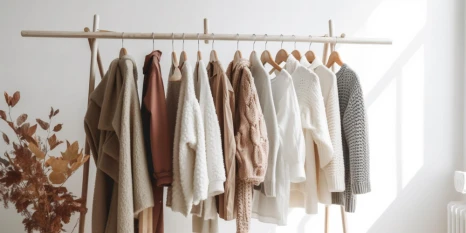

This article is for shoppers who want contemporary clothes without building a wardrobe around trends that may feel dated after a few months. A lasting piece and a viral microtrend can look equally convincing in a styled photograph, but they behave differently after purchase: one adapts to several outfits, while the other works only when the original look is copied. The by.olga.shop storefront on Mytrade.kz allows shoppers to assess women’s suits, bags and accessories as parts of a usable wardrobe rather than isolated fashion moments.
The real distinction is styling dependence
A current item does not have to be plain, neutral or conventional. It may feature a strong shoulder, a fresh trouser proportion, a distinctive colour or an unusual bag shape. What makes it durable is that its appeal survives when the surrounding styling changes. It can be worn with different shoes, layers and accessories without losing its visual logic.
A short-lived trend is usually more dependent. It may need one specific hairstyle, one type of footwear, a matching viral accessory and a carefully staged silhouette. Remove two of those elements and the item begins to look incomplete. When reviewing current clothing and accessory offers from by.olga.shop, the useful question is not simply “Is this fashionable?” but “Can this item create several credible outfits without additional purchases?”
Run the item through a six-part relevance audit
1. Remove the editorial styling
Mentally take away the model’s pose, jewellery, makeup, location and dramatic lighting. Then look at the garment itself. Are the shoulder line, waist placement, length and fabric still convincing? When an item loses most of its appeal outside the original image, the buyer may be responding to the campaign rather than the product.
2. Build three unrelated outfits
Create one outfit for an ordinary daytime activity, one for work or a meeting and one for an evening setting. Changing only the bag does not count as a new combination. The garment should interact with different footwear, layers and proportions. If every version requires another special purchase, the item is creating a shopping chain rather than strengthening the wardrobe.
3. Check it in motion
Some designs are highly effective in a still photograph but difficult to wear. Watch what happens when the person walks, sits, raises an arm or carries a bag. Fabric should recover its shape, fastenings should remain aligned and the silhouette should not depend on constant adjustment. short videos from by.olga.shop can provide more useful evidence about movement and proportion than a single carefully selected frame.
4. Identify the item’s loudest feature
Ask what you noticed first: the overall cut or one exaggerated detail. Oversized hardware, an extreme sleeve, a novelty cut-out or a highly specific decorative motif can dominate the garment so completely that the design has no second source of interest. Strong details are not automatically a problem, but the underlying shape and construction should still work without them.
5. Estimate twelve realistic wears
List twelve occasions on which you could genuinely wear the item over the next six months. Use real situations from your calendar rather than an imagined lifestyle. A practical purchase usually produces examples quickly. A microtrend often produces vague answers such as “for an event” or “when I have the right shoes”.
6. Compare the idea, not one viral example
Look at how the same proportion or detail appears across several outfits, age groups and product categories. A lasting direction normally develops in multiple interpretations. A microtrend tends to be repeated almost literally. Browsing the short-video selection across Mytrade.kz can help separate a broadly adaptable idea from one highly circulated styling formula.
Market figures explain why hesitation can be valuable
McKinsey’s 2026 fashion analysis reported that 70% of surveyed consumers planned to spend less, while 80% showed value-seeking behaviour such as waiting for sales or comparing retailers. The same analysis stated that fashion inventory days in 2024 were 14% above pre-2020 averages. High visibility can therefore reflect heavy supply and intense selling activity, not necessarily long-term relevance.
McKinsey senior partner Colleen Baum observed that consumers have become “far more discerning about quality [and] craftsmanship”. That distinction matters when assessing a trend. A strong item gives the buyer something beyond immediate novelty: reliable construction, a considered fit, useful combinations and a design that does not collapse when attention moves elsewhere.
WRAP found that the average UK adult owned approximately 118 clothing items, with 31 pieces, or 26%, left unworn for at least a year. The figures describe the UK rather than Kazakhstan, but the purchasing pattern is recognisable: wardrobes become crowded when shoppers overestimate future wear and underestimate the difficulty of integrating a distinctive piece.
For a more deliberate comparison, shoppers can use the articles and wardrobe ideas published by by.olga.shop to evaluate how a suit, bag or accessory connects with existing clothes instead of judging it as a standalone object.
Four fashion signals and what they usually mean
A proportion update
A slightly longer jacket, a different trouser width or a revised waist position can remain relevant because the change affects the whole silhouette without turning it into a costume. Proportion updates are often easier to combine with existing clothes than highly literal decorative trends.
A seasonal accent
A colour, texture or compact accessory can introduce novelty without controlling the complete outfit. This is often the safest place to experiment because the trend occupies a limited visual area and can be removed or restyled easily.
A viral microtrend
This signal spreads rapidly and is reproduced with few variations. It usually has a recognisable name, a fixed styling formula and a strong association with one season or online aesthetic. It can still be enjoyable, but its expected role should be limited and deliberate.
A costume-level statement
The item communicates a specific theme before it communicates the wearer’s personal style. It may be appropriate for events, creative work or occasional dressing, but it should not be mistaken for a versatile wardrobe investment.
Resale growth is changing how buyers define value
ThredUp’s 2026 report projected that the global secondhand apparel market could reach 393 billion US dollars by 2030 and grow twice as fast as the overall apparel market. Company co-founder James Reinhart described it as “a $393 billion powerhouse”. McKinsey’s Gemma D’Auria similarly noted that “resale is having a fantastic moment”.
This does not mean every purchase must have resale potential. It does show that buyers increasingly recognise value beyond first-season excitement. Construction, condition, recognisable design and continued desirability matter when a garment moves through a longer life cycle. A piece that remains easy to style is more likely to stay in use than one whose identity depends entirely on a fading online reference.
Warning signs that the excitement may not last
- You can describe the item only by naming a viral aesthetic or public figure.
- It works with one exact shoe, bag and outer layer combination.
- The decorative feature is more convincing than the fabric, fit or construction.
- You are considering it because you fear missing the trend rather than because it suits your routine.
- The item requires several additional purchases before it becomes wearable.
- It photographs well but appears awkward during normal movement.
- You cannot identify five realistic occasions for wearing it.
One warning sign does not automatically make an item a poor choice. Three or more signals, however, suggest that the buyer should pause and decide whether the purchase is intended for repeated use or for a brief fashion experience. Comparing categories on the English-language Mytrade.kz marketplace can make differences in proportion, purpose and styling flexibility easier to recognise.
When a trend-led purchase can still be sensible
A short-lived trend is not inherently wasteful if the buyer understands its role. It may be appropriate when it suits a specific event, reflects a genuine personal preference or refreshes several existing outfits without requiring a full wardrobe change. The mistake is not choosing novelty; it is paying for assumed versatility that the item does not possess.
by.olga.shop is a women’s clothing showroom in Almaty offering suits, bags and accessories in a contemporary style. Looking at these categories together helps shoppers assess scale, colour balance and outfit compatibility before choosing a statement element. The strongest purchase is often not the most neutral item, but the one whose distinctive feature can be supported by clothes already owned.
The piece should outlive the moment that introduced it
Before buying, remove the styling, test the item in motion, build three genuinely different outfits and identify twelve realistic wears. Then wait until the next day and look again. If the garment remains attractive without urgency, imitation or additional purchases, it is more likely to represent a lasting contemporary choice rather than a trend nearing the end of its cycle.
For a broader method of deciding where novelty deserves more spending and where reliable wardrobe foundations matter most, continue with the previous analysis of budgeting for trend-led and foundational clothing.