
A higher price does not automatically make a garment a better purchase. A neutral blazer may remain unworn because the shoulders do not sit correctly, while a distinctive dress may work repeatedly for meetings, dinners and events. The useful question is not whether an item is basic or fashionable, but how much practical value it adds to the wardrobe. This guide is for shoppers comparing quality, versatility and spending priorities before ordering. The by.olga.shop profile on Mytrade.kz provides a starting point for viewing women’s clothing, bags and accessories as coordinated outfits rather than isolated products.
Build the budget around frequency, not labels
The word “basic” is often treated as a synonym for sensible, yet a basic item is only useful when it fits the wearer’s body, routine and existing wardrobe. A white shirt that needs constant adjustment is not a strong foundation. A coloured jacket worn every week may be far more functional.
A practical way to compare two purchases is cost per wear: divide the purchase price by the number of times the garment is realistically expected to be used. The estimate should be conservative. An everyday coat may be worn dozens of times in one season, while a statement piece bought for a single event may have only three or four clear occasions.
Kazakhstan’s Bureau of National Statistics reported that retail e-commerce reached 3,768.8 billion tenge in 2025 and represented 14.3% of total retail trade. Clothing, footwear and sporting goods accounted for 12.4% of marketplace retail sales. As online choice expands, buyers using the Mytrade.kz marketplace benefit from comparing more than price: garment purpose, fit, maintenance and compatibility deserve equal attention.
Four wardrobe zones deserve different spending rules
Instead of dividing everything into “classic” and “fashionable”, classify a potential purchase by the work it will do. This approach makes it easier to decide when better construction is worth paying for and when a lower-risk experiment is more appropriate.
Zone 1: high-frequency structural pieces
Outerwear, jackets, trousers, suits and everyday footwear shape the silhouette and receive repeated physical wear. A greater share of the budget is often justified when the higher price is supported by precise fit, resilient fabric, clean seams, stable lining and reliable hardware.
- A jacket should remain comfortable when the wearer sits, reaches forward and raises both arms.
- Trousers should stay balanced at the waist and hips without pulling or twisting.
- A coat should accommodate the layers normally worn underneath it.
- Daily footwear should be evaluated for stability, weight and walking comfort.
Zone 2: supporting layers
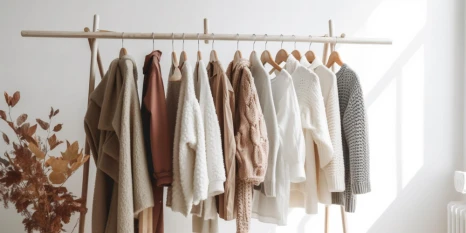
Tops, shirts, knitwear and simple dresses connect the wardrobe. They do not always require the highest individual spend, but they need the correct neckline, length, opacity and care requirements. One useful layer that works with five existing garments may create more value than three separate impulse purchases.
Zone 3: accessories with repeated visibility
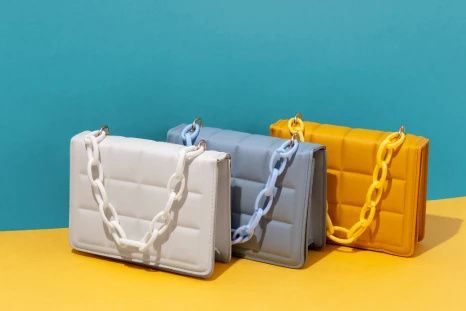
A bag, belt or piece of jewellery can refresh familiar clothing without replacing it. Accessories deserve a larger budget when they are used frequently, remain comfortable and support several colour combinations. The current clothing and accessory offers from by.olga.shop can be assessed by asking how many complete outfits each item helps create.
Zone 4: short-cycle experiments
A strong print, unusual volume or highly seasonal detail can add personality, but its budget should reflect uncertainty. Spending less is rational when the item depends on one occasion, one pair of shoes or an entirely new set of supporting pieces.
A planning ratio can prevent one trend from consuming the whole budget
One practical planning model is to direct approximately 60–70% of the clothing budget toward frequently used foundations, 20–30% toward seasonal updates and no more than 10% toward uncertain experiments. This is not an industry standard or a universal rule. A person attending formal events every week will need a different ratio from someone working remotely and walking around the city daily.
The value of the model is discipline. A trend purchase should be funded as a deliberate experiment rather than treated as an emergency wardrobe replacement. When the experimental allowance has already been used, the next striking item must compete with practical needs such as outerwear, shoes or a well-fitting pair of trousers.
Before deciding, movement matters. Product photographs can hide the behaviour of fabric, the depth of an oversized cut and the actual scale of an accessory. The short outfit videos from by.olga.shop help shoppers observe proportion, drape and styling in a more realistic context.
The three-outfit test exposes expensive wardrobe orphans
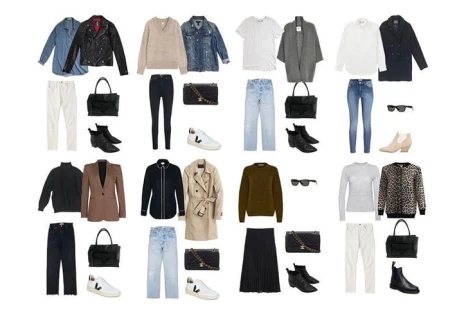
Before purchasing, build three complete outfits using items already owned. The test should include footwear, outerwear and a bag, not only a top and bottom. If every combination requires another purchase, the advertised price understates the real cost.
- Create one outfit for the most frequent weekly situation.
- Create one more polished version for a meeting, dinner or event.
- Create one relaxed combination for travel, errands or a casual day.
- Check whether the same shoes and outer layer can support at least two versions.
- Estimate whether the garment will still be useful after the current season.
Browsing the Mytrade.kz collection of short product videos can provide ideas for changing proportion or accessories without copying an entire look. The goal is to identify a styling method that works with the buyer’s own wardrobe.
Durability changes the financial result of a purchase
The Ellen MacArthur Foundation reports that clothing production doubled between 2000 and 2015 while utilisation—the number of times an item is worn before disposal—fell by 36%. This explains why a low initial price can still produce poor value: the item becomes expensive when it is rarely worn or quickly loses its shape.
WRAP has reported that extending the active life of clothing by nine months can reduce its carbon, water and waste footprints by up to 20%. WRAP executive Leah Karrer summarised the consumer side of the issue directly: “Longer lasting clothes are what the public wants to see on shelf.”
Durability should therefore be checked through visible and practical details:
- whether the fabric recovers after gentle stretching;
- whether seams lie flat rather than pulling;
- whether buttons, fasteners and zips can be repaired or replaced;
- whether the care instructions match the buyer’s routine;
- whether pilling or fading is likely to affect the most visible areas.
UNEP estimates that textiles generate 2–8% of global greenhouse gas emissions and use water equivalent to 86 million Olympic-sized swimming pools each year. UNEP Goodwill Ambassador Amber Valletta described the responsibility clearly: “Fashion has the opportunity and the responsibility to be an agent of change.” For an individual wardrobe, that change begins with selecting garments that will remain useful rather than merely new.
Seven questions to ask before paying a premium
- Will I use this item at least twice a month during its main season?
- Does it fit comfortably in motion, not only in a standing pose?
- Can I style it with at least three garments I already own?
- Do I already have suitable shoes, outerwear and accessories?
- Am I paying for stronger material and construction or only for novelty?
- Can I follow the care instructions consistently?
- Would I still choose it without the trend label?
A “no” to several questions does not mean the item must be rejected. It means the purchase belongs in the experimental part of the budget rather than the long-term foundation. by.olga.shop combines women’s clothing, suits, bags and accessories for everyday and business situations. Additional guidance on fit, colour and wardrobe planning is available in the by.olga.shop news and offers section.
A strong wardrobe earns its price through combinations
Spend more where fit errors would be costly, physical wear is frequent and the garment can support many situations. Spend more cautiously where a design has a short visual cycle, limited compatibility or demands several additional purchases. The most valuable foundation is not necessarily beige, black or simple: it is the item that repeatedly solves a real dressing need.
At by.olga.shop, clothing and accessories can be considered as parts of complete outfits, making it easier to judge whether a purchase expands the wardrobe or duplicates what is already there. The same budgeting method can be applied to accessories in the previous analysis of one versatile bag versus several specialised bags.