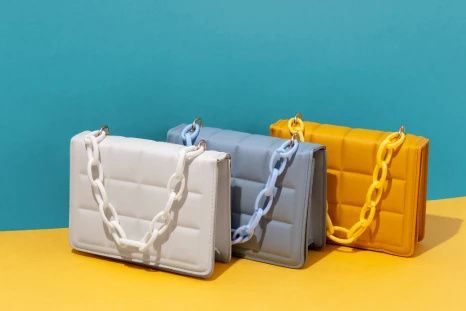
Buying one handbag for every situation sounds economical, while owning several models appears to offer more styling freedom. In practice, either strategy can waste money when it ignores daily routines, capacity and dress codes. This guide helps you decide whether your wardrobe needs one dependable bag or a compact set of specialised options. At the by.olga.shop showroom in Almaty, clothing and accessories can be considered as complete outfits rather than unrelated purchases.
Start with the jobs your handbag must perform
A useful bag should solve a recurring task. A workday may require a laptop, documents and personal items; a walk calls for light weight and free hands; an evening event may need a smaller, more structured shape. When one model is forced to cover all three situations, it often becomes too bulky for one outfit and too limited for another.
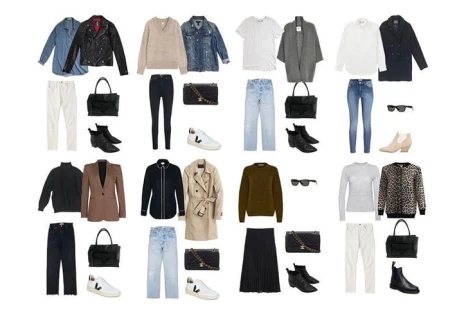
List your ten most common outings and mark what you carry, how long you wear the bag and how formal the setting is. Then compare potential combinations through the current clothing and accessory offers from by.olga.shop. A bag is genuinely versatile when it works with real outfits already present in the wardrobe, not merely with a neutral product photograph.
The 70-percent rule separates a staple from a compromise
One main handbag can be sufficient when it comfortably serves about 70% of regular outings. It should hold everyday essentials, remain comfortable when loaded and coordinate with at least eight frequently worn outfits. Medium scale, restrained hardware and a practical fastening usually make a model easier to repeat.
The remaining 30% matters, however. If you regularly alternate between carrying a computer and travelling with only a phone and wallet, two bags may be more economical than one supposedly universal model. The second bag is not duplication when it changes capacity, weight or carrying method.
One bag is usually enough when:
- Most weekdays follow the same routine.
- Your daily load changes very little.
- Work and leisure dress codes are similar.
- The bag can be worn in more than one way.
A two-to-three-bag capsule works better when:
- You regularly move between work, active days and events.
- A large bag becomes inconvenient outside working hours.
- You need both hands free during commuting or travel.
- A compact structured model is repeatedly needed for formal outfits.
Scale and movement are easier to judge in video than in a static image. The Reels collection from by.olga.shop can help show how different proportions interact with dresses, suits and relaxed everyday sets.
Cost per wear reveals which option is actually cheaper
Purchase price alone does not measure value. Divide the price index of a bag by the number of times you realistically expect to use it. A model with a price index of 120 worn 240 times costs 0.5 units per use. Another model with an index of 60 worn only eight times costs 7.5 units per use. The second purchase is cheaper at checkout but fifteen times more expensive in practical use.
McKinsey reported that 64% of US fashion shoppers traded down during the third quarter of 2024. The figure reflects growing attention to value, but value should include quality, usefulness and frequency of wear rather than price alone. A well-planned bag capsule can therefore be more economical than repeatedly replacing inexpensive models that do not match daily needs.
Articles in the by.olga.shop news and styling section can support this evaluation by connecting accessories with complete wardrobe decisions rather than presenting them as isolated decorative objects.
Three designers point to the same principle
Michael Kors described an accessory as something that crosses barriers of weather, season and age. He has also argued for buying strong pieces that can be used for years. Alber Elbaz expressed the practical side even more directly: “If it’s not wearable, it’s not fashion.” Miuccia Prada has said that she wants clothes to be useful and to create a positive feeling for the person wearing them.
These opinions do not mean that every practical handbag must look plain. They suggest that aesthetics and function should reinforce each other. A vivid colour may still be versatile when it repeats shades already present in the wardrobe. An unusual shape may be useful when it remains comfortable and fits the items carried every day.
Vogue’s 2026 survey of fashion stylists found that spaciousness, versatility and durability repeatedly shaped their everyday bag choices. One stylist described using the same travel bag since 2012. The example does not guarantee identical longevity for every product, but it shows why seams, handles, lining, closure and structural stability deserve as much attention as the logo or current trend.
Resale growth strengthens the case for deliberate buying
ThredUp and GlobalData projected that the global secondhand apparel market could reach 393 billion US dollars by 2030 and grow twice as fast as overall apparel retail. Bags, footwear and accessories form part of this wider resale environment. A functional, well-maintained item is more likely to remain useful or retain secondary-market relevance than a highly specific impulse purchase.
That does not mean every handbag should be selected for future resale. The more immediate question is whether the purchase fills a genuine gap. Explore styling and product presentation through the short-video section on Mytrade.kz, then compare each candidate against the situations in which it will actually be carried.
Use a seven-point purchase test
- Does the bag work with at least eight existing outfits?
- Can it hold the items required for its intended role?
- Is the strap comfortable when the bag is fully loaded?
- Can the fastening be operated easily during a normal day?
- Does the scale remain balanced with coats, suits and lighter clothing?
- Does it perform a job that no current bag performs properly?
- Is there a realistic prospect of using it at least 30 times within one year?
When comparing several options through the English-language Mytrade.kz marketplace, record the number of compatible outfits, expected annual uses and any overlap with bags you already own. This simple check makes it easier to distinguish a useful addition from a visually attractive duplicate.
Give every handbag a defined role
One versatile bag offers the best value when your routine is consistent and the model performs comfortably across most outfits. Two or three different bags become more efficient when they solve recurring conflicts in size, carrying method or formality. The strongest wardrobe is not necessarily the smallest one; it is the one in which every item has a clear purpose and is worn regularly. For the previous step in this decision process, see the guide to choosing whether the handbag or the outfit should come first.