A bag can solve a practical problem, create the focal point or quietly connect the rest of an outfit. The difficulty is knowing which role it should play before making a purchase. Starting with colour alone often leads to a bag that looks attractive in isolation but feels too small, too formal or too visually active with real clothes. This guide explains when to build an outfit around the bag and when the clothing should make the first decision. Clothing, bags and accessories can be compared through the by.olga.shop company profile on Mytrade.kz.
The first decision is not colour — it is purpose
Before comparing shapes or finishes, define what the bag must do during the day. A work bag may need space for documents, personal items and a charger. A weekend model may need to leave both hands free. An evening bag can sacrifice capacity if its main task is to add character to a simple dress or suit.
The State of Fashion 2026 projects an average annual sales growth rate of 4.8% for handbags between 2025 and 2028. The report separates this into approximately 1.5% price growth and 3.3% volume growth. A growing category creates more choice, but also more opportunities to buy a model that does not fit an actual wardrobe. Reviewing the current clothing and accessory offers from by.olga.shop makes it possible to compare a bag with the garments it may accompany rather than judging it as an isolated object.
Table 1. Which element should lead the selection?
| Situation | Best starting point | Reason |
|---|---|---|
| Office, study or business meetings | Function and clothing first | Capacity, carrying comfort and formality must support the day’s requirements. |
| Dinner, celebration or evening event | The bag can come first | A distinctive shape, finish or colour may provide the main visual idea. |
| Neutral or monochrome clothing | Start with one accent item | The bag can introduce contrast without adding another garment or print. |
| Printed, layered or sculptural clothing | Complete the outfit first | The bag should organise the composition rather than compete with it. |
| Everyday bag intended for frequent use | Begin with a wardrobe audit | The most important measure is how many existing outfits and situations it supports. |
Build around the bag when it already has a strong voice
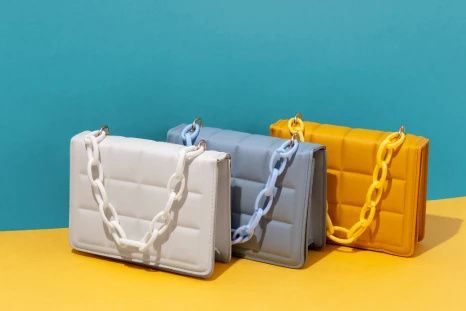
A bag should lead when it contains one dominant feature: a vivid colour, recognisable geometry, prominent texture, metallic detail or unusual proportion. In that situation, the clothing does not need to repeat every characteristic. A restrained base usually gives the accessory enough visual space to appear intentional.
Maria Grazia Chiuri told Vogue that “Accessories are very important,” while also noting that communicating too many ideas at once can create confusion. Applied to styling, this means that a statement bag rarely needs equally strong shoes, jewellery, outerwear and print. One clear focal point is usually more effective than four competing ones.
Scale is easier to judge in motion than in a product image. The by.olga.shop Reels with coordinated looks can help show how a bag sits against a jacket, dress or suit and whether its strap length and overall volume work with the silhouette.
Table 2. Matching bag scale to the clothing silhouette
| Clothing structure | Useful bag direction | Common visual problem |
|---|---|---|
| Oversized blazer, coat or relaxed suit | Medium or larger bag with a clear outline | A very small bag may disappear beside the volume of the clothing. |
| Simple dress or tonal outfit | Contrasting colour, texture or geometric form | Several statement accessories can weaken the clean composition. |
| Layered casual outfit | Soft shape with limited decoration | A highly structured, detailed bag may add unnecessary visual weight. |
| Large-scale print | Plain bag using a secondary colour from the print | A second pattern may divide attention and make the outfit feel unsettled. |
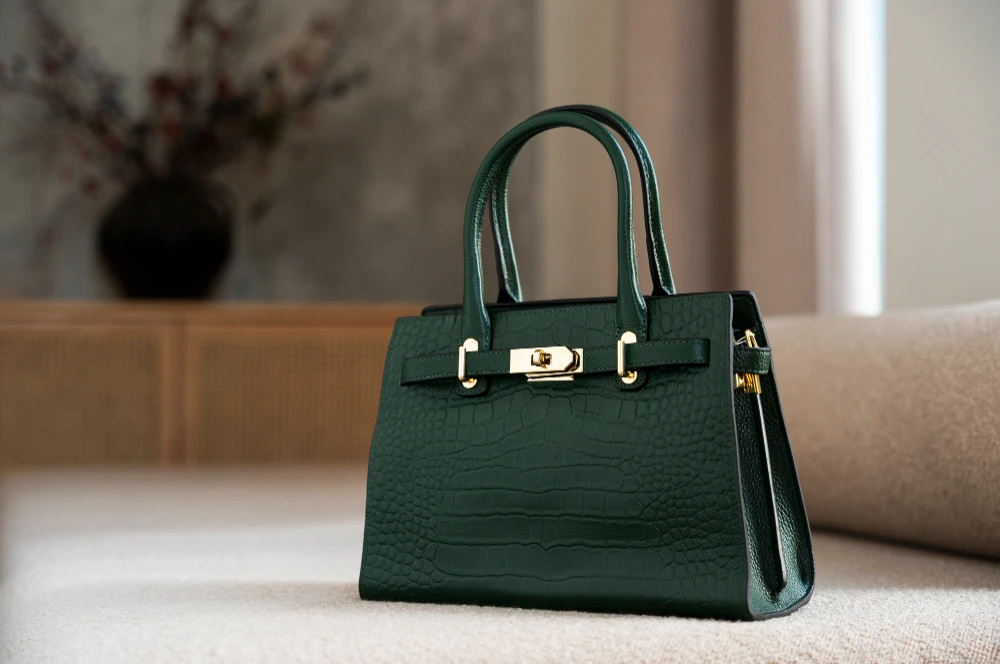
| Tailored business suit | Structured tote, top-handle or neat shoulder bag | An extremely relaxed shape may reduce the intended level of formality. |
Let the outfit lead when it already contains the main idea
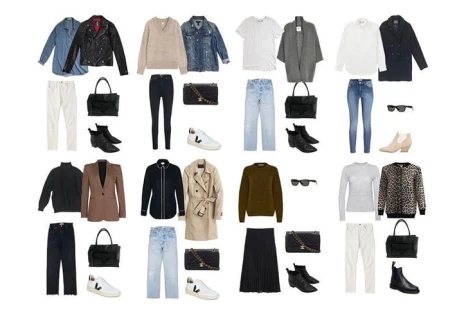
Clothing should come first when the look includes an asymmetric cut, defined shoulders, decorative buttons, a large print, strong colour blocking or noticeable footwear. Once those elements are in place, the bag becomes a connecting device. It can repeat a secondary shade, reinforce the direction of the lines or soften a formal silhouette.
Exact colour matching between the bag and shoes is not essential. Compatibility is often stronger when the items share a similar level of formality, visual weight or colour temperature. For example, a warm brown bag may work with an ivory suit and burgundy shoes without duplicating either colour.
Further guidance on combining colour, proportions and wardrobe basics is available in the style articles published by by.olga.shop. This helps assess whether a new accessory will extend existing combinations or require additional purchases before it becomes usable.
Table 3. Ten-point bag compatibility test
| Criterion | 0 points | 1 point | 2 points |
|---|---|---|---|
| Existing outfit matches | One outfit only | Two outfits | Three or more outfits |
| Real-life occasions | One rare event | One regular setting | At least two different settings |
| Capacity | Essentials do not fit | Only the minimum fits | Capacity matches the intended task |
| Colour compatibility | Requires new clothing | Works with a few pieces | Fits the main wardrobe palette |
| Carrying comfort | Uncomfortable to hold or wear | Minor practical limitations | Handles, strap and closure feel suitable |
A score of 8–10 suggests that the bag has strong repeat-wear potential. A result of 5–7 means the planned occasions and outfit combinations should be checked again. Below 5 points, the model may still be attractive, but it is more likely to remain tied to one specific look. This is a practical editorial framework rather than an industry standard.
More choice does not automatically create a more useful wardrobe
The European Environment Agency reports that average EU consumption of clothing, footwear and household textiles increased from 17 kg per person in 2019 to 19 kg in 2022. EU countries also generated approximately 16 kg of textile waste per person in 2022. These figures make frequency of use an important part of the buying decision, even when choosing a relatively small accessory.
WRAP reports that extending the active life of clothing by nine months can reduce its carbon, water and waste footprints by up to 20%. A later consumer survey found that 62% of shoppers considered durability a leading purchase factor. For bags, durability can be assessed through handle attachments, stitching, closure design, lining and the ability to retain shape.
Different proportions and combinations can be studied through the short-video collection on Mytrade.kz. The most useful approach is not to copy every look, but to notice how scale, contrast and repetition create a balanced result.
A five-minute test before making the decision
- Place the bag beside the complete outfit, including outerwear and shoes.
- Check the look from the front and side, not only in a close-up mirror.
- Remove the bag and identify whether the clothing already has a strong focal point.
- Name at least three existing outfits and two realistic occasions for the bag.
- Confirm that the required contents fit without changing the bag’s shape.
When comparing several options, change one variable at a time: size first, then shape, material, colour and decoration. This makes it easier to identify which feature genuinely improves the outfit. Different sellers and product categories can be explored through the English-language Mytrade.kz marketplace.
The best starting point is the item carrying the most responsibility
Start with the bag when it is intended to establish the colour, mood or visual identity of the outfit. Start with the clothing when cut, print, layering or dress requirements already determine the direction. Because by.olga.shop presents women’s clothing, bags and accessories in Almaty, the pieces can be considered as parts of one coordinated system rather than unrelated purchases.
The final test is not whether the bag exactly matches another item. It is whether function, scale and visual intensity remain balanced. The previous guide to colour accents, scale and visual balance provides an additional method for deciding whether the bag should become the focal point or remain a quieter supporting element.