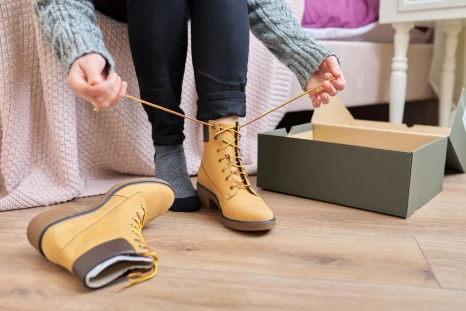
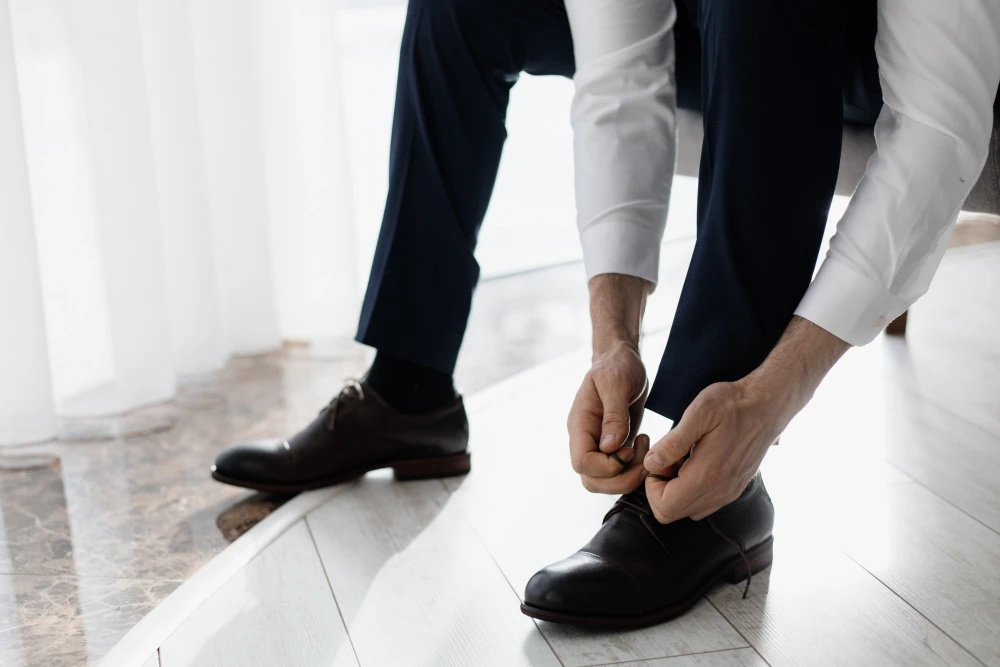
A new pair may feel firmer than your familiar shoes, but sharp pain, numb toes or a heel that repeatedly slips are not normal parts of breaking footwear in. The first task is to decide whether the material needs gradual softening or the size and last are simply unsuitable. This guide explains how to test the fit, schedule the first wears and protect the toe box, heel counter and upper. Available styles can be reviewed through the PASSAGE footwear store profile on Mytrade.kz.
Break-in cannot correct the wrong size
A systematic review of 18 studies found that 63–72% of participants wore shoes that failed to accommodate either the length or width of their feet. This matters because buyers often interpret pressure as temporary stiffness and continue wearing a pair that is too short, too narrow or too shallow over the instep.
Oxford Health NHS podiatry guidance states: “There should be 1 cm between the end of your longest toe and the end of your shoe.” Check this space while standing, because the foot spreads under body weight. The toes should move without overlapping, the widest part of the foot should correspond to the widest part of the shoe, and the heel should remain secure without being pinched.
A pair is unlikely to improve through wear when:
- the longest toe touches the front while you are standing;
- numbness, burning or concentrated pain appears within 5–10 minutes;
- the upper is visibly pulled sideways by the foot;
- the heel rises considerably with every step;
- your walking pattern changes to avoid a pressure point.
Leather and suede may adapt slightly across the width, but they cannot safely add meaningful length. A tightly constructed synthetic upper may change even less. Before trying to stretch a pair, compare toe shapes, fastening systems and materials in the current footwear selection from PASSAGE.
Use a four-stage wear test instead of a full day
Wearing new shoes for eight or ten hours on the first day gives you little control over friction. Heat and moisture build gradually, while repeated rubbing continues in the same place. Cleveland Clinic explains that friction blisters can develop when poorly fitting shoes repeatedly rub against the skin. Mayo Clinic also notes that pressure, heat, moisture and friction can all contribute to blister formation.
- Wear the shoes indoors for 20 minutes on a clean, dry floor. Walk normally, turn, sit down and climb a few steps.
- On the next test, increase the time to 40–60 minutes. Use the same type of socks or hosiery you expect to wear later.
- Choose a short outing of 60–90 minutes. Avoid a route that requires prolonged standing or leaves no opportunity to change footwear.
- Move to half-day wear only when the previous test produced no blister, swelling, numbness or persistent redness.
The schedule is not a deadline. Some soft textile shoes may feel natural during the first session, while structured leather or formal footwear may need several short wears. Visual details such as sole flexibility, heel height and upper construction can be assessed in the short product videos published by PASSAGE.
Match the solution to the pressure zone
When the heel rubs
First determine whether the heel counter is firm or the shoe is simply too loose. A lace-up model may become more stable when the upper eyelets are secured more closely around the ankle. Do not repeatedly fold or crush a structured heel counter: once its reinforcement bends, it may stop holding the heel correctly and can become asymmetrical.
When the instep feels compressed
Try changing the lacing pattern rather than forcing the foot into the shoe. Skipping one pair of eyelets above the sensitive area can reduce local pressure. If a zip struggles to close or the upper forms deep horizontal tension lines, the shoe may not have enough internal depth for the foot.
When the toe box feels narrow
The toes should be able to spread and move. A small amount of width adaptation may occur in soft leather or suede, but a pointed toe cannot be transformed into a wide anatomical shape. Continuing through pain may damage the shoe before it makes the fit acceptable. Material-specific buying and care guidance is available in the PASSAGE news and recommendations section.
Different uppers need different treatment
Leather
Wear leather shoes for short periods and let them rest between sessions. Insert correctly sized shoe trees after wear to support the toe and heel while moisture dissipates. A stretcher may be useful for a small, precisely located pressure point, but aggressive expansion can distort stitching and make the left and right shoes look different.
Suede
Suede is flexible, yet its nap and colour can react unpredictably to moisture, heat and untested products. Keep the first sessions short, avoid soaking the upper and test any conditioning or stretching product on an inconspicuous area. Brush only after the material is dry.
Textile and knitted uppers
These materials may feel soft immediately, but their final shape is also controlled by seams, overlays and internal reinforcement. Excessive stretching can pull the fabric away from the sole or create uneven tension around the toe box.
Patent and coated materials
These surfaces usually tolerate less expansion. Strong bending or mechanical stretching may leave permanent creases, cloudy patches or small cracks in the coating. When pressure is limited to one specific point, professional local stretching is safer than treating the whole upper.
Why rapid household methods can deform the pair
Heating shoes with a hair dryer is difficult to control. The surface may soften before the lining, adhesive and reinforcement respond, leaving the upper warped or uneven. Wearing wet shoes creates another problem: leather, textile, lining and insole materials may dry at different rates, so the finished shape can differ from the original last.
The freezer method is equally unpredictable. As water expands, it follows the area of least resistance rather than the exact place that needs more room. One shoe may stretch more than the other, while the toe box or sidewall may lose symmetry. Practical demonstrations of footwear handling and care can also be found in the Mytrade.kz collection of short videos.
Safer tools for controlled adjustment
- a shoehorn to protect the heel counter during dressing;
- properly sized shoe trees to maintain the original outline;
- a revised lacing pattern for local instep pressure;
- protective blister patches during short test sessions;
- professional stretching for a small and clearly identified pressure point.
Stop before discomfort becomes an injury
Temporary firmness should gradually become less noticeable. Pain that intensifies, numbness, a blood blister, persistent swelling or redness that remains after the shoes are removed indicates that the test should stop. Do not use thick socks or patches merely to conceal a fundamentally incorrect fit.
Cleveland Clinic advises leaving an ordinary blister intact because the skin above it protects the deeper layers. Signs such as pus, increasing heat, spreading redness or worsening pain require medical attention. People with diabetes, impaired circulation or reduced foot sensation should be particularly cautious because they may not detect pressure damage early.
A controlled start protects both the foot and the shoe
Successful break-in is a sequence of observations rather than a forceful stretching exercise. Begin with the 1 cm length check, identify where pressure occurs, complete several short wear sessions and let the shoes recover between them. PASSAGE offers everyday, classic and sports-inspired footwear, accessories and models made from suede, textile and combined materials in Esik. Other relevant products and sellers can be compared through the Mytrade.kz marketplace.
A pair that still compresses the toes, slips at the heel or alters your natural stride after controlled testing is unlikely to become comfortable without losing its structure. Before breaking in a suede model, review the previous guide to wearing and caring for suede shoes in summer.