A polished photograph, a familiar fibre name or a high price cannot guarantee that a garment will keep its shape after several wears. Quality becomes clearer when you examine the material, construction, fit, hardware and care requirements as one system. This guide provides a quick inspection routine for women comparing dresses, suits, jackets or trousers in a showroom or online and trying to avoid pieces that look convincing but perform poorly in everyday life.
Quality is a chain of evidence, not a claim on the label
A well-made garment should be suitable for its intended use. A lightweight summer dress needs breathability and controlled transparency; a jacket must retain its structure; trousers should remain comfortable while sitting and walking. The most expensive option is not automatically the most durable, just as a delicate fabric is not automatically weak. The practical question is whether the material, pattern and finishing work together.
WRAP reports that 62% of surveyed shoppers considered durability a leading purchase driver. Its research also indicates that extending the active life of clothing by nine months can reduce associated carbon, water and waste footprints by up to 20%. This makes pre-purchase inspection more than a way to prevent disappointment: it helps each garment deliver more useful wears.
The by.olga.shop profile on Mytrade.kz presents women’s clothing, suits, bags, accessories and coordinated looks in Almaty. Whatever category you are considering, begin with evidence that can be checked rather than with styling alone.
First layer: read what the garment is made to do
Check percentages, not just fibre names
“Cotton blend”, “wool touch” or “stretch fabric” does not provide enough information. Read the full fibre composition and compare it with the garment’s purpose. Elastane may support movement, polyester can improve shape retention, and linen may offer comfort in warm weather while creasing visibly. No single fibre guarantees quality; density, yarn structure, finishing and the balance between fibres also matter.
When comparing current women’s fashion offers from by.olga.shop, look beyond colour and silhouette. Two visually similar garments may behave differently because of their composition, weight and care requirements.
Use light, touch and recovery
Hold the fabric toward a light source and inspect several areas, including the back, underarms and lower front. Intended transparency can be part of a design, but random thin patches, irregular colour or inconsistent weave deserve attention. Rub a small area gently between your fingers and check whether the surface releases fibres or immediately develops fuzz.
For knitwear or stretch fabrics, pull a discreet section lightly and release it. The material should recover without leaving a distorted patch. This simple test does not predict the garment’s entire lifespan, but it can reveal weak recovery before the first wear.
Second layer: turn the garment inside out
Vintage retailer Dan Neilsenbeck offers a direct rule: “The best way to assess the quality of a garment’s construction is to look inside.” The interior shows whether the maker controlled the details hidden from the fitting-room mirror.
Inspect five construction points
- Stitches should remain reasonably even without skipped sections.
- Seams should not open into large gaps when gently separated.
- Raw edges should be finished appropriately for the fabric and design.
- Loose threads should not appear throughout high-stress areas.
- Side seams should hang vertically unless the cut intentionally places them elsewhere.
Check the hem, armholes, crotch seam, waistband and pocket attachment points because these areas experience repeated tension. On striped, checked or large-patterned fabrics, compare the alignment at the centre front, pockets and symmetrical panels. Perfect matching is not required for every design, but an obvious mismatch can indicate less precise cutting.
Movement and drape can also be assessed through fashion videos from by.olga.shop. Video does not replace a physical inspection, but it can reveal stiffness, clinging, transparency and changes in the silhouette that a still image may hide.
Third layer: test the garment as you will actually wear it
A mirror shows appearance in a stationary pose. Daily life includes reaching, sitting, walking, carrying a bag and wearing additional layers. During a fitting, complete four movements:
- Raise both arms without adjusting the garment.
- Sit down and stand up normally.
- Take one wider step and bend slightly forward.
- Cross your arms and rotate your shoulders.
Watch for buttons pulling apart, a hem rising excessively, pockets opening, sleeves restricting the elbows or the lining tightening across the back. These signs do not always mean the garment is poorly made. They may show that its pattern does not match your proportions, which is equally important before purchase.
Operate every functional detail
Open and close the zip several times. Test buttons, hooks, press studs, drawstrings and belt hardware rather than assuming they work because the garment is new. The lining should allow the outer fabric to move naturally, remain concealed at the hem and provide enough ease at the back and sleeves.
The by.olga.shop fashion guidance collection offers additional material on fit, wardrobe coordination and practical purchasing decisions. These factors help assess a piece as part of a working wardrobe rather than as an isolated item.
Online quality checks require specific evidence
When shopping remotely, enlarge images of the hem, closures, cuffs, pockets and fabric surface. Look for photographs from more than one angle and compare the product measurements with a similar garment you already own. A size name alone is not enough because pattern proportions can differ even when the number on the label is the same.
Use video to observe whether the fabric returns to position after movement, whether the garment becomes transparent under stronger light and whether the side seams remain straight. The short-video section on Mytrade.kz provides another format for comparing products beyond catalogue photographs.
Before placing an order, confirm the exact fibre composition, lining, closure type, care instructions and garment measurements. Missing information does not prove poor quality, but it increases uncertainty and should be resolved before payment.
The care label predicts whether the purchase fits your routine
ISO 3758:2023 establishes a system of textile-care symbols covering treatments such as washing, bleaching, drying, ironing and professional cleaning. These symbols indicate the most severe process that should not cause irreversible damage. Reading them before purchase helps distinguish a garment you can maintain easily from one that may remain unworn because its care is impractical.
A delicate-care instruction is not evidence of low quality. Silk, embroidery, beadwork and complex structures can legitimately require careful handling. The important point is compatibility: decide whether you are prepared for hand washing, controlled drying, lower ironing temperatures or professional cleaning before the garment enters your wardrobe.
Global consumption data reinforces the value of this decision. The European Environment Agency reports that average EU consumption of clothing, footwear and household textiles increased from 17 kilograms per person in 2019 to 19 kilograms in 2022. The Ellen MacArthur Foundation has also reported a 36% worldwide decline in clothing utilisation compared with 15 years earlier. Buying more while wearing each item less makes careful selection increasingly important.
A practical approval test before payment
A garment is a stronger candidate when you can answer yes to the following questions:
- Does the fibre composition suit the season and intended use?
- Is the fabric surface consistent across the entire garment?
- Are the seams, edges and high-stress points properly finished?
- Do the zip, buttons and other functional elements work smoothly?
- Does the garment remain comfortable during normal movement?
- Can you realistically follow the stated care instructions?
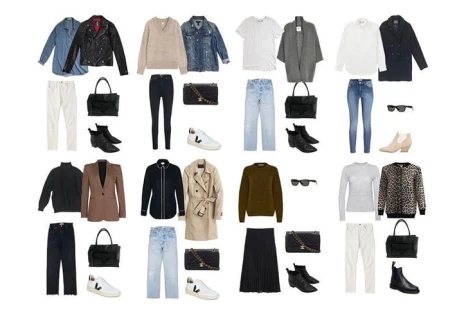
- Can the piece form at least three outfits with items you already own?
Vivienne Westwood summarised the broader principle in seven words: “Buy less, choose well, make it last.” On the Mytrade.kz marketplace, product pages, seller profiles and videos can be used together to compare more than appearance alone.
A garment should earn its place before reaching the wardrobe
by.olga.shop offers women’s clothing, suits, bags, accessories and ready-made combinations in Almaty. Before choosing an item, inspect its label, surface and interior, then test its fit in motion. This sequence takes only a few minutes but provides a clearer basis for deciding whether the piece is likely to remain useful rather than becoming an attractive but rarely worn purchase.
After confirming the quality of the main garment, consider how jewellery, bags and other details will interact with it. The previous guide to visual balance when wearing accessories explains how to complete an outfit without making its elements compete for attention.