Sneakers can simplify a wardrobe when one pair works with a dress, tailored trousers and a relaxed suit. The challenge is making the combination look deliberate rather than as though formal shoes were replaced at the last minute. This guide explains how to assess silhouette, hem length, colour, material and fit before buying. Shoppers in Almaty can begin by reviewing the footwear, clothing and accessories presented in the PASSAGE company profile on Mytrade.kz.
The shift from sports product to everyday wardrobe tool
The scale of the sneaker market reflects a broader change in how people dress. Grand View Research valued the global sneaker market at USD 104.5 billion in 2025 and reported that low-top models represented 76.9% of revenue. Future Market Insights expects lifestyle use to account for 61.9% of sneaker demand in 2026. These figures suggest that buyers increasingly need shoes for commuting, work, social plans and routine walking rather than for one narrow purpose.
Rahul Pandita, Principal Consultant at Future Market Insights, summarises the change clearly: “Sneaker demand is no longer limited to sports use.” This does not mean that every athletic model automatically works with formal clothing. A heavily cushioned running shoe, a minimal leather low-top and a retro suede model create three very different visual effects. A broader selection of footwear categories can be compared through the Mytrade.kz marketplace.
Start with the shape of the sneaker, not the clothing label
Before deciding whether a pair suits a dress or a blazer, examine its visual weight. Sole thickness, toe shape, upper material and contrast panels determine whether the shoe appears refined, casual or strongly athletic. A practical scale can make the choice easier:
- A slim low-top creates the least visual weight and works well with precise tailoring.
- A retro runner adds texture and suits relaxed trousers, knitwear and casual dresses.
- A platform or chunky silhouette needs enough volume in the clothing to balance the sole.
- A technical running model usually looks most natural with functional or deliberately sporty outfits.
The objective is not to hide the sneaker but to give it a clear role. PASSAGE presents models for women, men and children, and suitable options can be reviewed among the current footwear and fashion listings from PASSAGE.
Dresses work best when one design element is repeated
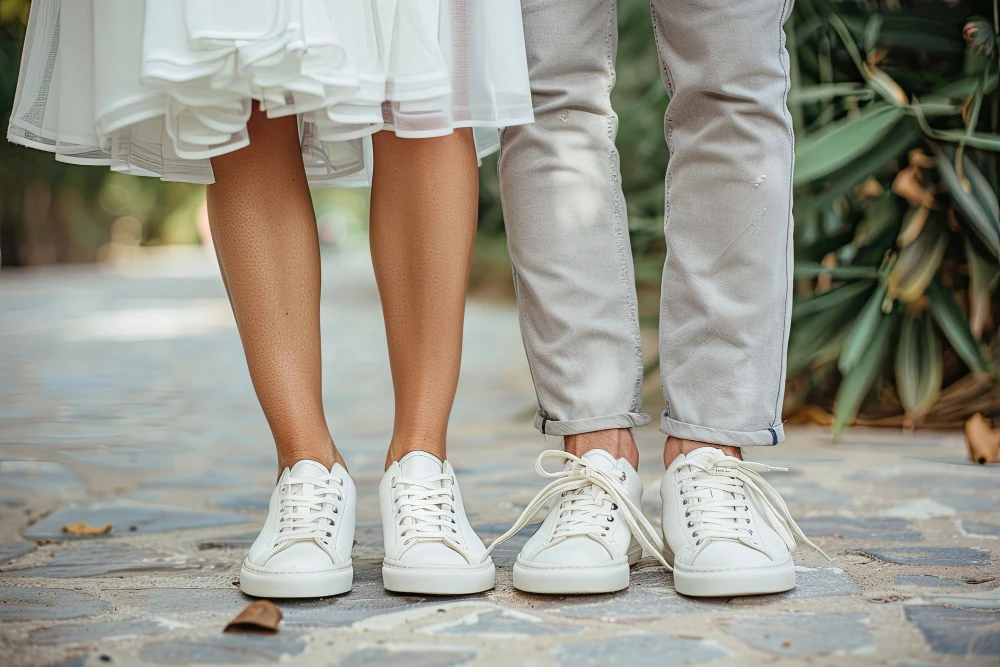
A dress and sneakers already create contrast, so the outfit needs one repeated feature to hold it together. That connection may come from colour, texture or shape. For example, an ivory leather sneaker can echo a light belt, while a suede pair can repeat the soft appearance of a knitted dress.
Match the shoe to the construction of the dress
- With a straight midi dress, choose a low-profile sneaker that leaves the ankle visible and keeps the silhouette clean.
- With a flowing or pleated dress, use a light shoe with limited detailing so that the sole does not overpower the movement of the fabric.
- With a shirt dress, try leather, canvas or suede sneakers in a colour already present in the belt, buttons or bag.
- With an oversized sweatshirt dress, a broader sole can provide the visual weight required at the bottom of the outfit.
Hem length should also be checked while walking. A midi hem that ends at the widest point of the calf may shorten the leg visually when combined with a high, bulky shoe. A slightly shorter hem or a lower sneaker usually restores balance. The way different silhouettes appear in motion can be assessed through the short fashion videos from PASSAGE.
Trousers and sneakers depend on the break of the hem
With trousers, the decisive detail is often the point where the fabric meets the shoe. If the hem collapses into several folds, a refined sneaker disappears and the lower part of the outfit looks heavy. If the trousers are too short, the gap above the shoe may divide the leg awkwardly.
- Cropped straight trousers generally suit narrow low-top sneakers.
- Wide-leg trousers may touch the upper but should not drag beneath the heel.
- Pleated trousers look more polished with restrained colours and fewer technical panels.
- Cargo trousers can accommodate mesh, visible cushioning and a more substantial sole.
Vogue Style Editor Edward Barsamian explains the appeal of this contrast: “Nothing offsets the formality of a suit or tailored trousers quite like a great pair of sneakers.” The important word is “great”: the pair must look intentional, clean and proportionate to the trousers. More styling references can be explored in the Mytrade.kz collection of short videos.
A suit requires control over the level of contrast
Sneakers can make a suit more approachable, but the type of suit determines how much contrast is appropriate. A sharply structured office suit usually works with a smooth leather or suede low-top. A softer, unstructured suit can support a retro runner, a gum sole or a restrained colour accent.
Use a five-point suit test
- The trousers reveal enough of the shoe to show its shape.
- The sneaker colour relates to the shirt, knitwear, belt or another accessory.
- The upper does not introduce more visual details than the suit itself.
- The socks bridge the transition rather than creating an accidental stripe.
- The soles, laces and toe area are clean and well maintained.
GQ’s business-casual guidance advises wearers to “avoid the bells and whistles” when choosing office sneakers. In practice, this means limiting oversized logos, highly technical overlays and extreme soles when the suit needs to remain the dominant element. Leather is a reliable option, but clean canvas, suede and nylon can also work when their colours and finishing remain restrained.
Colour coordination does not require an exact match
Matching every accessory to the same shade can make an outfit appear overly planned. A more flexible method is to coordinate colour temperature and intensity. Warm cream, sand and caramel tones usually work together, while cool white, grey, navy and graphite form another coherent group.
- For a neutral outfit, allow the sneakers to provide one controlled accent.
- For a printed dress, repeat one minor colour from the pattern rather than the dominant shade.
- For a dark suit, off-white, grey or muted coloured sneakers often create a softer transition than bright optical white.
- For wide trousers, keeping the sole close to the trouser colour can visually lengthen the leg.
Readers can follow additional guidance on selecting and coordinating footwear through the PASSAGE news and buying guides.
Style is only useful when the pair remains comfortable
A sneaker may suit several outfits visually and still be a poor everyday purchase if the heel slips, the toe box compresses the foot or the sole bends in the wrong place. Fit should therefore be assessed after the styling decision, not replaced by it.
- Walk for several minutes rather than judging the pair while standing.
- Check that the heel remains stable without excessive pressure.
- Confirm that the toes can move naturally inside the front of the shoe.
- Wear the type of socks that will normally be used with the pair.
- Test the shoe with the dress, trousers or suit that creates the most difficult proportion.
The three-outfit test prevents an isolated purchase
Before choosing a pair, build three complete combinations: one with a dress, one with everyday trousers and one with a suit. If the sneaker works in all three without requiring a different bag, coat or set of accessories each time, it has genuine wardrobe value. PASSAGE offers footwear alongside clothing and accessories, allowing buyers to consider the entire combination rather than the shoe in isolation. For another perspective on relaxing formal style, read the previous guide to wearing classic shoes without a strict suit.