A sale price can feel economical at checkout and still become expensive after the garment has been worn only twice. A higher-priced item may deliver better value when it fits several routines, works with existing clothes and returns to the wardrobe every week. Cost per wear turns that difference into a measurable figure. When viewing the women’s fashion profile of by.olga.shop, this method helps compare garments by their likely usefulness rather than by the price tag alone.
Begin with the life of the item, not the discount
The basic calculation is straightforward: divide the total cost of an item by the number of times it is worn. However, a realistic calculation should also include alterations, professional cleaning, repairs and any other expense required to keep the garment usable.
Consider two hypothetical examples. A suit costing 72,000 ₸ and worn 90 times has a cost per wear of 800 ₸. A blouse costing 28,000 ₸ but worn only four times costs 7,000 ₸ per wear. These figures are illustrative and do not represent prices offered by by.olga.shop.
The first item requires a larger payment, yet it performs more efficiently in the wardrobe. The second appears more affordable but provides less practical value because its use is limited.
Why an optimistic forecast makes the calculation unreliable
According to the United Nations Environment Programme, the average person buys approximately 60% more clothing than 15 years ago while keeping each item for only half as long. The Ellen MacArthur Foundation reports that clothing production doubled between 2000 and 2015, while the average number of times garments were worn fell by 36%.
These figures show why the number of expected wears must be based on real routines. Before selecting from the current clothing offers from by.olga.shop, identify where the item will be worn during the next three months rather than imagining occasions that may never occur.
Three levels of expected use
- High use: workwear, everyday trousers, a versatile suit or a practical bag used weekly.
- Medium use: an item suitable for meetings, dinners and selected social occasions.
- Low use: a garment intended for one event, a specific season or a narrow dress code.
A low-use purchase is not automatically a mistake. It simply needs to be assessed honestly. A dress intended for two confirmed events should be calculated on the basis of two wears, not twenty hypothetical invitations.
The outfit dependency test reveals hidden spending
A garment may appear reasonably priced but require new shoes, a different bag, suitable underwear and an additional layer. These dependent purchases increase the real cost of the original item and often delay its first use.
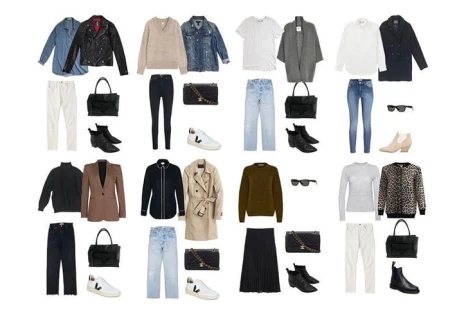
Before placing an order, list at least three complete outfits using clothes already owned. The by.olga.shop Reels featuring coordinated looks can help assess proportions, movement and styling possibilities that may be difficult to judge from a single catalogue photograph.
Classify the item before buying
- A connector item works with several existing garments and completes unfinished outfits.
- A supporting item works in one part of the wardrobe but may require one additional purchase.
- An isolated item needs an almost entirely new outfit before it can be worn.
The more dependent purchases an item requires, the higher its effective cost becomes. An isolated garment may also remain unworn while the buyer continues searching for the pieces needed to complete it.
Use ten, thirty and sixty wears as decision checkpoints
Instead of relying on one optimistic figure, calculate three scenarios. Suppose a jacket has a hypothetical cost of 54,000 ₸. At ten wears, it costs 5,400 ₸ per use. At thirty wears, the figure falls to 1,800 ₸. At sixty wears, it becomes 900 ₸.
The ten-wear scenario shows the risk if the item is used less frequently than expected. The thirty-wear figure reflects regular but not intensive use. The sixty-wear scenario is realistic only when the jacket suits several seasons, settings and combinations.
Ideas in the short-video collection on Mytrade.kz can be used as a practical test: focus on whether one garment can be restyled with pieces already available, rather than treating every new outfit as a reason for another purchase.
Style longevity matters as much as frequency
Vogue quoted fashion executive Olivia Kim saying that an investment piece is not primarily about price or even cost per wear, but about “style longevity.” A garment may be worn frequently during one short trend cycle and then feel dated before its physical condition has deteriorated.
Harper’s Bazaar captured Vivienne Westwood’s well-known principle: “Buy less, choose well, make it last.” Applied to a wardrobe decision, this means checking whether the silhouette, colour and detailing can remain relevant after the current season.
The line “Florals. For spring. Groundbreaking.” from the film “The Devil Wears Prada” offers a humorous reminder that familiarity should not be confused with necessity. A recognisable seasonal idea may attract attention without adding a genuinely new function to the wardrobe.
Emotional value deserves a separate calculation
Not every purchase must achieve the lowest possible cost per wear. A distinctive handbag, an event dress or an expressive accessory may be valuable because it marks an important occasion or supports personal style.
The important distinction is whether the buyer understands the purpose before paying. An occasional item should be judged by its role, comfort, reusability and emotional relevance rather than being presented to oneself as an everyday essential.
Further guidance on combining garments and evaluating their long-term relevance is available in the by.olga.shop wardrobe guidance section. Considering each item as part of a wider system makes it easier to separate a deliberate statement piece from an impulse purchase.
A five-minute scorecard before checkout
Score the item from zero to two points in each of the following categories:
- Frequency: how often it fits the buyer’s real weekly or monthly routine.
- Compatibility: how many complete outfits can be created without further shopping.
- Season range: whether it works during one short period or across several seasons.
- Care: whether cleaning, pressing and storage match existing habits.
- Design lifespan: whether the item reflects personal style beyond a temporary trend.
A score of eight to ten suggests a strong probability of repeated use. Five to seven points indicate that the wearing scenarios need closer examination. A result below five signals a high risk that the item will have an expensive cost per wear.
The strongest purchase keeps returning to the wardrobe
Before completing a purchase on the Mytrade.kz marketplace, record three numbers: the number of ready outfits, the expected wears during the first year and the estimated cost per wear including care. This short calculation creates a clearer comparison than a discount percentage alone.
A worthwhile garment is not necessarily the cheapest or the most basic. It is an item that suits real routines, connects easily with the existing wardrobe and remains desirable after repeated use. The previous guide to distinguishing lasting relevance from a short-lived trend provides an additional test for estimating how long a prospective purchase may continue to work.