A garment can look convincing on a hanger yet reveal weak construction as soon as you sit down, raise your arms or fasten the zip. This guide is for shoppers who want to judge women’s clothing before paying, rather than discover twisted seams, unstable fabric or loose hardware after the first wear. At by.olga.shop in Almaty, ready-made outfits include clothing, bags and accessories, so a structured fitting-room inspection helps separate visual appeal from practical quality. The store format is presented in the by.olga.shop company profile.
Begin with the component that determines how the whole garment behaves
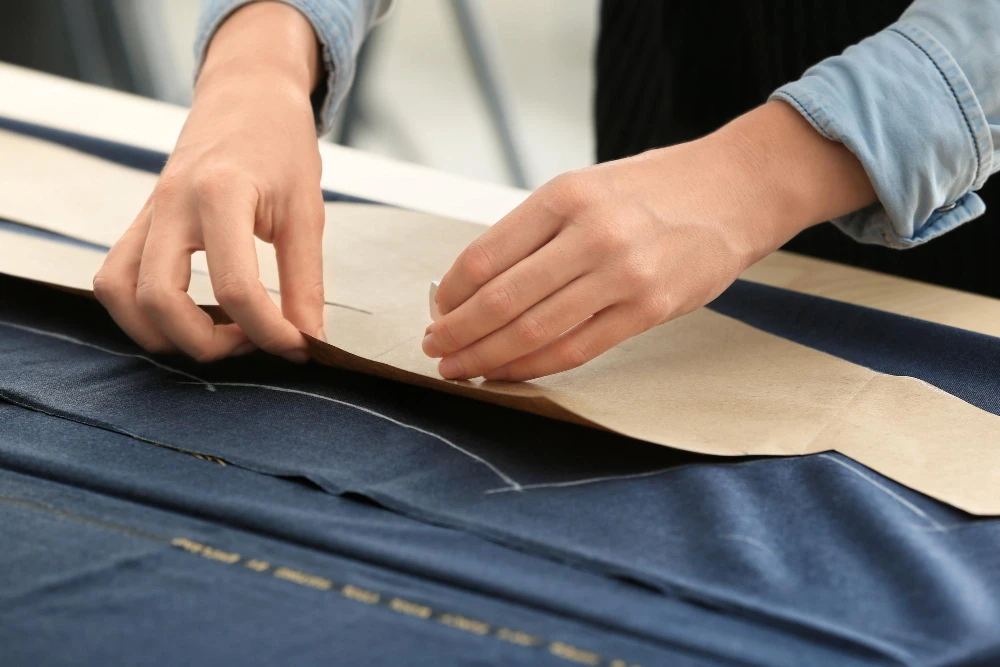
Fabric should be examined first because it affects drape, comfort, shape retention and the way every seam sits on the body. A neat zip cannot compensate for material that stretches unevenly, becomes transparent under light or forms permanent creases within minutes.
The Ellen MacArthur Foundation reports that between 2000 and 2015 global clothing production doubled while the average number of times a garment was worn fell by 36%. The organisation argues that products should be designed to last longer and remain suitable for repair or remaking. These figures make the fitting room more than a place to check size: it is where the buyer can look for early signs of limited wearability.
A ninety-second fabric inspection
- Read the fibre composition and care label. Consider whether the stated washing, drying or ironing requirements fit your routine.
- Hold part of the garment against the light. Unexpected thin patches, irregular density or visible gaps may become more noticeable in daylight.
- Compress the fabric in your hand for five to seven seconds. Release it and observe whether deep creases remain immediately.
- Stretch a small section gently across the grain, then let go. The material should recover without waves, distortion or a permanently widened area.
- Run your fingertips over the surface. Snags, loose fibres or early pilling on an unworn item deserve closer attention.
Different fabrics are expected to behave differently, so the goal is not to demand complete resistance to creasing or stretch. The goal is to notice whether the behaviour matches the intended use. Before visiting the showroom, the current by.olga.shop clothing offers can help you identify which garments and outfit combinations you want to compare in person.
Turn the garment inside out before judging the silhouette
The outside shows the design; the inside shows how it was assembled. Inspect the side seams, armholes, shoulders, waistband and areas around pockets. Stitches should be reasonably even, with no skipped sections, tangled loops or long unsecured threads. Fabric beside the seam should lie flat rather than gathering into a narrow ridge.
- Pull gently on both sides of a seam. Large openings between stitches may indicate insufficient stitch density or tension problems.
- Check reinforcement at pocket corners, vents, belt loops and the lower end of a zip, where repeated pressure is concentrated.
- Compare the left and right sides. Shoulder lines, sleeves, pockets and trouser legs should be balanced unless asymmetry is intentional.
- For checks, stripes or directional prints, inspect alignment at the front closure, central seams and visible pockets.
- Look at the hem from inside. It should lie evenly without sections that pull upward or twist around the leg.
A lining deserves the same attention as the outer fabric. It should allow movement without pulling the garment upward, extending below the hem or creating tight horizontal lines. The by.olga.shop articles and shopping guides provide additional material for evaluating garments and building coordinated women’s outfits.
Hardware should work repeatedly, not only once
A zip that closes during the first attempt may still be poorly aligned. Open and close it three to five times while the garment is both hanging naturally and worn on the body. The slider should move without catching the fabric, separating behind the slider or creating a ripple along the closure.
Test every button, snap, hook and decorative fastening. Buttons should not wobble excessively, buttonholes should be finished without loose threads, and snaps should close securely without requiring force that pulls the surrounding fabric. Metal parts should have no sharp edges that could scratch the skin, damage a bag or catch another garment.
Hardware is especially important on pieces intended for frequent wear. WRAP reported in 2025 that 62% of surveyed shoppers regarded durability as a leading purchase driver. Its Americas executive director, Leah Karrer, summarised the finding clearly: “Longer-lasting clothes are what the public wants to see on shelf.” For a visual comparison of garments in motion, shoppers can review outfit videos from by.olga.shop.
Movement exposes faults that a static mirror hides
After checking construction, fasten the garment completely and move as you would during a normal day. Sit down, lift both arms, bend slightly, take a long step and turn sideways. Watch whether the front closure opens, the skirt rises, the trouser seams rotate or the back pulls across the shoulders.
Four questions to answer before leaving the fitting room
- Does the garment return to its correct position after movement, or must it constantly be adjusted?
- Do the shoulder, waist and side seams remain where the construction intends them to sit?
- Can you sit, walk and reach comfortably without stressing the zip, buttons or pocket openings?
- Can the garment work with at least three items already in your wardrobe?
Short videos can also train the eye to notice dragging, twisting and unstable fabric. The Mytrade.kz short-video collection offers additional examples of clothing and complete looks shown from different angles rather than only in static product photographs.
A six-minute order prevents the design from distracting you
A practical inspection does not require specialist equipment. Spend roughly two minutes on fabric, two on seams and lining, one on hardware and one on movement. This order matters: colour, styling and an attractive mirror image can create a strong first impression, while structural defects remain unnoticed.
WRAP estimates that extending a garment’s useful life by nine months can reduce its carbon, water and waste footprints by as much as 20%. The figure does not mean every fitting-room test can predict the full lifespan of a garment, but it shows why durability and repeated use are relevant purchasing criteria.
At by.olga.shop, customers can assemble complete looks ranging from everyday and business combinations to occasion-focused outfits, with bags and accessories selected as part of the overall image. Because the showroom sells sourced garments rather than presenting them as its own production, each individual item should still be assessed on its fabric, stitching, hardware and fit.
The right garment should survive more than a flattering reflection
A confident decision combines appearance with evidence: stable fabric, secure internal construction, reliable fastenings and unrestricted movement. Use the same sequence for every garment so that price, colour or styling do not cause you to overlook a weak seam or difficult zip. Broader product comparisons are available through the Mytrade.kz marketplace.
For a wider assessment that also covers fit, symmetry, care information and compatibility with your wardrobe, continue with the previous guide, how to check the quality of women’s clothing before purchase.