A women’s suit can look appealing in the fitting room yet spend most of its life waiting for a meeting, ceremony, or formal dinner. This guide is for women who want one coordinated set to work for coffee runs, city walks, travel, informal workdays, and evening plans. The goal is not to make tailoring deliberately careless, but to choose a suit whose two pieces support the clothes already in your wardrobe. Coordinated options can be explored through the by.olga.shop storefront on Mytrade.kz.
Think of the suit as a two-piece wardrobe system
The first mistake is judging a suit only as a complete look. Before buying, mentally separate the jacket from the trousers. Would the blazer work over a dress, with straight-leg jeans, or with a simple skirt? Could the trousers be worn with a T-shirt, fine knit, relaxed shirt, or fitted top? If each piece depends on the other, the set may remain reserved for occasional wear.
Use the seven-look test
- Count the complete suit as one ready-made outfit.
- Pair the blazer with three bottoms you already own.
- Pair the trousers with three existing tops.
- Check whether at least two of those combinations suit your regular footwear.
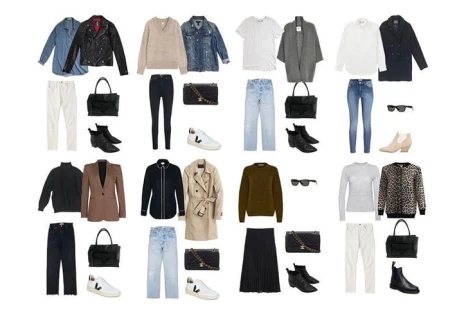
This calculation produces at least seven practical outfit directions from one purchase: one full suit, three blazer combinations, and three trouser combinations. Before committing, compare the cut, colour, and available pieces among the current women’s clothing offers from by.olga.shop.
Remove one corporate signal instead of changing everything
A suit rarely looks overly formal because of tailoring alone. The impression usually comes from several signals appearing together: a crisp shirt, pointed pumps, a structured bag, restrained jewellery, and perfectly matched pieces. Replacing just one or two of these elements is often enough to move the outfit beyond the office.
- Replace a formal shirt with a plain T-shirt or ribbed top.
- Wear loafers, clean trainers, or flat shoes instead of classic pumps.
- Choose a soft shoulder bag rather than a rigid briefcase-style design.
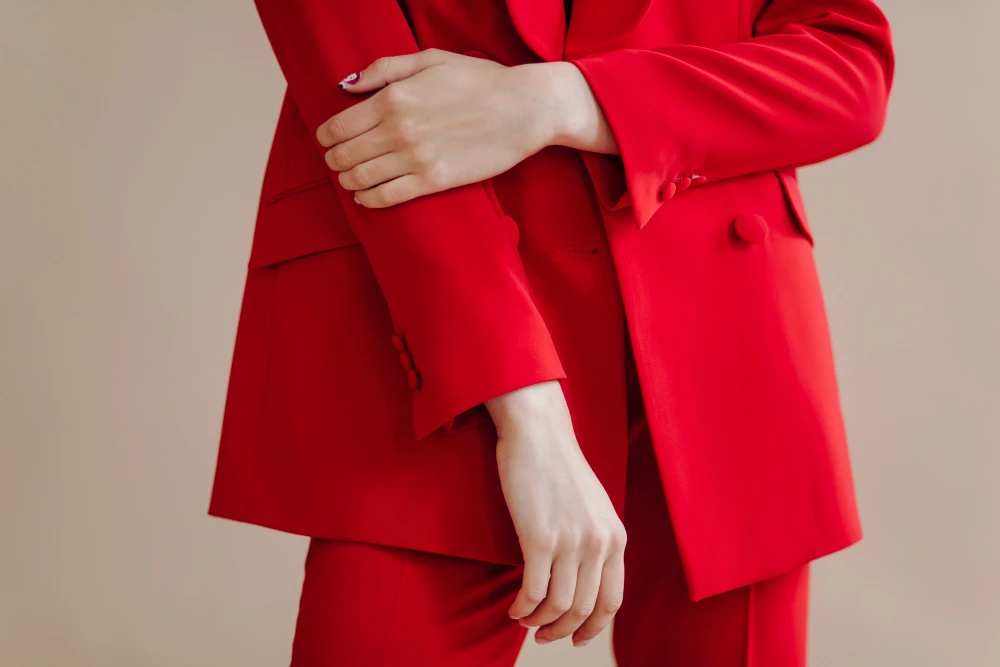
- Roll the sleeves slightly to expose the wrists and make the silhouette lighter.
- Use a knit layer when the outfit needs warmth without additional formality.
Designer Gabriella Periera told Vogue, “I’m always guided by what I feel comfortable in.” Her preference for relaxed tailoring and elegant silhouettes reflects an important shopping principle: comfort is not the opposite of a polished appearance. It is easier to assess that balance in motion through the by.olga.shop outfit videos, where sleeve length, trouser movement, and overall proportions are more visible than in a static image.
Match the styling choice to the actual day
An everyday suit should respond to a schedule rather than impose a dress code. Start with the most demanding part of the day and build the outfit around it. A long walk calls for practical footwear; a dinner may need a stronger accessory; travel requires layers that remain comfortable while seated.
Five realistic wearing scenarios
- Morning appointments: suit, fitted T-shirt, loafers, and a medium-sized bag.
- Informal workday: blazer, jeans, simple top, and flat shoes.
- Weekend lunch: trousers, knitwear, trainers, and relaxed accessories.
- Evening meeting: complete suit, tonal top, compact bag, and jewellery.
- Travel day: trousers, breathable base layer, trainers, with the blazer carried as an outer layer.
Writer Megan O’Sullivan explained her approach to Vogue in five useful words: “I wear them everywhere.” She described using blazers for work events, rehearsal dinners, and even an ordinary coffee run. The practical lesson is to plan at least three non-office occasions before buying. Additional guidance on building repeatable outfits appears in the by.olga.shop news and style articles.
Check the fit when sitting, walking, and layering
A relaxed cut should still look intentional. Oversized does not mean that the shoulder line can fall unpredictably, the sleeves can cover the hands, or the trousers can collapse into heavy folds. The fitting-room mirror shows only one position, while everyday wear includes walking, sitting, carrying a bag, and adding another layer.
A five-step fitting-room check
- Lift both arms and bring them forward to test the jacket across the back.
- Sit down and check whether the trouser waistband becomes restrictive.
- Walk several steps to see whether the fabric twists or gathers.
- Try the jacket over both a light top and a thin knit.
- Remove the jacket and confirm that the trousers still form a complete outfit.
When comparing silhouettes, short videos can reveal practical differences between structured, cropped, elongated, and relaxed tailoring. The Mytrade.kz collection of short product videos provides additional visual references for footwear, bags, proportions, and layering.
Repeat wear is a better measure than the first impression
International fashion data explains why versatility matters. The Ellen MacArthur Foundation reports that clothing production doubled between 2000 and 2015, while the average number of times garments were worn before disposal fell by 36%. Vogue also reported that The RealReal recorded a 45% increase in searches for women’s trouser suits during the period covered by its article. Together, these figures show both renewed interest in tailoring and the continuing risk of purchasing more clothing without using it more often.
Before checkout, prepare a seven-day wear map. Assign the full suit to one occasion, the blazer to three different outfits, and the trousers to another three. Use clothes and shoes you already own rather than imagined future purchases. For broader comparisons between sellers and product categories, review the English-language Mytrade.kz marketplace.
Choose the suit that can leave the hanger tomorrow
The strongest everyday suit is not necessarily the most dramatic one. It is the set that fits your movements, works with familiar footwear, and separates into two useful wardrobe pieces. by.olga.shop is an Almaty showroom offering coordinated women’s clothing, suits, bags, and accessories, allowing a complete outfit to be considered together. The final decision, however, should be based on how easily the pieces enter your real weekly routine.
A new suit will not solve wardrobe frustration if it remains disconnected from everything else you own. Before adding another set, read the previous guide on why a full wardrobe still creates the feeling of having nothing to wear, then list the combinations the suit can create without further purchases.