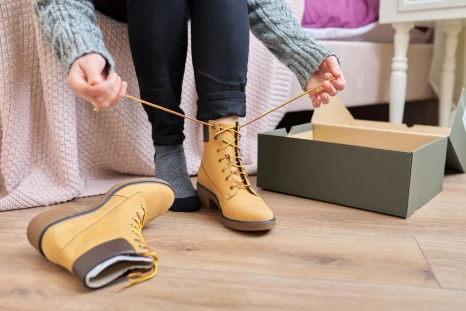
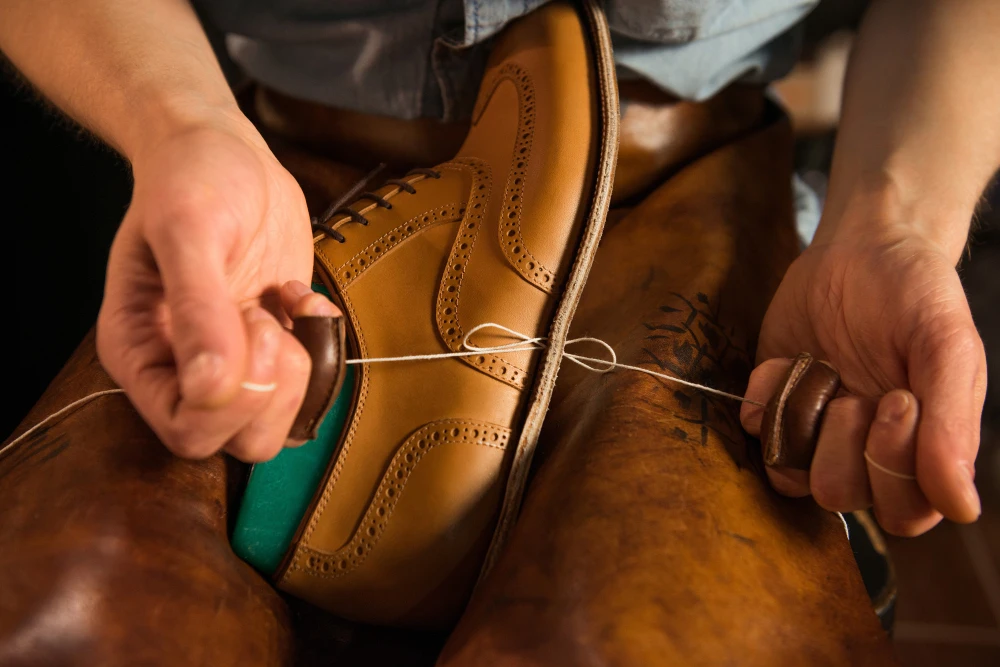
A polished finish can make almost any pair look convincing on the shelf, but visible design does not always reveal how carefully the shoe has been assembled. Buyers comparing everyday trainers, lightweight summer styles or classic footwear can reduce the risk of a poor choice by following the same five-minute inspection each time. The sequence below helps assess symmetry, stitching, sole attachment, structural support, materials and fit before deciding whether a pair from PASSAGE deserves a closer look.
Begin with the shape of the pair, not its price or colour
Place both shoes on a flat surface with the toes pointing forward. Look at them from the front, then compare the side profiles and heel sections. The toe shapes, heel heights, sole lines and positions of the eyelets should be reasonably consistent. Natural leather may show minor differences in grain, while textile panels may vary slightly in texture, but one shoe should not lean, twist or sit noticeably higher than the other.
The intended use of the model also matters. A soft summer shoe should not be judged by the same stiffness standard as structured classic footwear. The PASSAGE company profile on Mytrade.kz presents the store and its footwear focus, helping buyers identify which type of construction they need before examining an individual pair.
Follow the areas where manufacturing faults become visible first
Minute one: compare both shoes as a matched set
Check whether the back seams run vertically and whether the heel counters stand at the same angle. Compare the lengths of straps, the positions of decorative panels and the distance between the upper and the edge of the sole. Press each shoe lightly against the floor: both should remain stable rather than rocking differently from side to side.
When several models are being shortlisted online, the current footwear listings from PASSAGE can be used to compare silhouettes and construction details before inspecting the selected pair in person.
Minute two: trace every visible and hidden seam
Follow the stitching from beginning to end. The gaps between stitches should be broadly even, without skipped sections, loose loops or threads left unsecured. Pay particular attention to the base of the tongue, the eyelet area, straps and the seam running around the heel. These parts are repeatedly pulled and flexed during wear.
Run a finger around the inside lining as well. A shoe may look neat externally while containing a raised seam, folded lining or hard knot that can rub against the foot. Close views in the PASSAGE footwear Reels can help buyers notice panel joins and finishing details before repeating the check on the actual product.
Minute three: inspect the bond between upper and sole
Turn the shoe slowly and examine the entire joining line. Look for open gaps, sections where the sole edge is lifting, irregular bonding or large deposits of adhesive. A small surface trace from production does not automatically mean failure, but a gap that widens when the front of the shoe is gently flexed is a reason to request another pair.
SATRA uses dedicated tests to measure the strength of the bond between the upper and the sole at the toe and heel. A shop-floor inspection cannot reproduce laboratory forces, but it can reveal separation that has already started. Further buying guides and product-related materials are available in the PASSAGE news and offers section.
Minute four: test the heel, flex point and resistance to twisting
Press both sides of the heel counter. The American Podiatric Medical Association gives a direct instruction for this check: “It shouldn’t collapse.” Next, bend the forefoot gently. A walking shoe should normally flex near the area where the toes bend rather than folding freely through the centre of the arch.
Try a light twisting movement while holding the heel and forefoot. The middle should provide some resistance. The required level varies by footwear type, so the purpose is not to find the hardest shoe, but to identify uncontrolled twisting, cracking sounds or a major difference between the right and left shoes. Construction ideas across different footwear categories can also be viewed in the short-video collection on Mytrade.kz.
Minute five: look beyond the material label
Leather, textile and combined uppers can all be appropriate when the materials suit the season and intended use. Quality cannot be determined from the material name alone. Bend the upper slightly and watch whether the finish cracks, flakes or forms an unusually sharp crease. Check that cut edges are tidy and that the lining lies flat without bubbles or folded areas.
Fit remains part of quality assessment because even a carefully assembled shoe is unsuitable when its proportions do not match the foot. A systematic review covering 18 studies found that 63–72% of participants wore footwear that failed to accommodate either the width or length of their feet. In specific groups, the proportion wearing shoes that were too narrow ranged from 46% to 81%.
Try on both shoes and walk several steps. The toes should not be compressed, the sides should not create concentrated pressure and the heel should not lift excessively. NHS footwear guidance notes that the front should be “round or square” enough to avoid squeezing the toes. Buyers can compare additional sellers and footwear options through the Mytrade.kz marketplace.
Visible warning signs that justify choosing another pair
- the two shoes differ noticeably in shape, height or stability;
- stitches are missing, loose or placed too close to the material edge;
- the sole is already separating from the upper;
- the heel counter folds with very little pressure;
- the shoe bends freely through the middle instead of the forefoot;
- the lining contains raised seams, folds or hard internal edges;
- the right and left shoes feel significantly different when walking.
A five-minute check cannot predict an exact service life or replace professional material testing. It can, however, remove pairs with visible asymmetry, weak bonding, careless finishing or unsuitable proportions from consideration. PASSAGE offers casual, classic and lightweight footwear made from leather, textile and combined materials, so each model should be judged according to its purpose rather than by one universal stiffness or weight standard.
Confidence should come from construction as well as appearance
Use the same order every time: pair geometry, stitching, sole attachment, heel support, flex point, material condition and fit. This prevents an attractive colour or fashionable silhouette from distracting attention from practical faults. Buyers who are still deciding which shade will work across the greatest number of outfits can continue with the previous guide on choosing the most versatile shoe colour.