This guide is for travellers who want to reduce luggage volume without spending an entire trip in unsuitable shoes. Packing separate footwear for the airport, city walks, restaurants and uncertain weather may seem sensible, but several bulky pairs quickly consume a large share of cabin-bag space. A better approach is to choose one tested, versatile pair that matches the route, climate and most of the clothes in your suitcase.
Calculate the luggage cost of every pair
IATA notes that many airlines use 56 × 45 × 25 cm as a general reference for cabin baggage, while weight allowances at some carriers start at 5 kg. A pair weighing 700 g would therefore use 14% of a five-kilogram allowance before clothes, toiletries and electronics are added. Airline rules differ, so the final dimensions and weight must always be checked with the relevant carrier.
Before browsing travel-ready products on the Mytrade.kz marketplace, write down the actual situations on your itinerary: the flight, daily walking distance, expected surfaces, weather and evening plans. A shoe that covers three real situations is more useful than three pairs packed for unlikely events.
A practical versatility score
- One point if the shoe works with at least three outfits.
- One point if the upper can be cleaned quickly with a soft cloth.
- One point if laces or another adjustable fastening hold the heel securely.
- One point if the sole suits both indoor floors and ordinary city pavements.
- One point if the pair remains comfortable after a continuous indoor test.
A score of four or five suggests that the model is a realistic candidate for a compact travel wardrobe. PASSAGE offers everyday footwear made from suede, textile and combined materials. Travellers can compare suitable formats through the PASSAGE company storefront on Mytrade.kz before deciding which construction best matches the journey.
Fit matters more than the number on the label
Footwear guidance from Guy’s and St Thomas’ NHS recommends approximately 1 cm between the longest toe and the end of the shoe. That space matters during travel because feet lengthen slightly while walking and may swell after prolonged sitting or warm-weather sightseeing. At the same time, the heel should not lift noticeably with every step.
Another professional reminder is especially relevant when buying travel footwear: “The most expensive shoe is not necessarily the best shoe.” The best option is the one that fits the individual foot and feels comfortable from the beginning. When reviewing current footwear listings from PASSAGE, compare toe-box shape, fastening, upper material and sole construction rather than relying only on appearance.
Test the pair before the departure date
- Wear the same type of socks that you plan to use during the trip.
- Walk indoors for 20 to 30 minutes on more than one day.
- Climb stairs, turn sharply and stand on your toes.
- Check the heel, little toe and instep for persistent pressure marks.
- Repeat the test later in the day if your feet tend to swell.
A still photograph cannot always show how bulky a sole looks or how high the upper sits around the ankle. The short product videos from PASSAGE can provide an additional visual reference when comparing proportions and deciding whether a model will work with several travel outfits.
Choose the pair around the hardest day of the trip
Do not select footwear for the easiest part of the itinerary. Base the decision on the day with the longest walk, the warmest forecast or the most varied surfaces. A model that remains comfortable on that day will usually cope with the airport and shorter outings as well. For an urban holiday, this often means a neutral low-profile shoe with secure fastening, sufficient forefoot room and a sole that bends near the toes rather than collapsing through the middle.
Comfort-focused podiatry guidance recommends supportive footwear with a padded sole when a person expects to remain on their feet for most of the day. However, ordinary city shoes should not replace specialist footwear for mountain hiking, technical trails, water activities or other demanding routes. Examples of compact outfit combinations can be explored in the Mytrade.kz collection of short videos.
Pack less without damaging the shoes
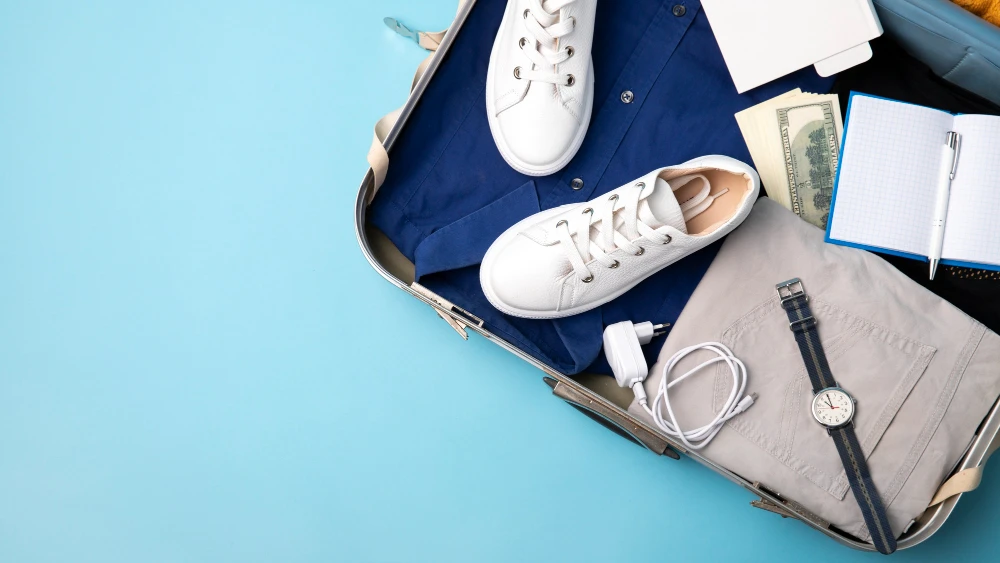
Wear the bulkiest suitable pair during the journey instead of placing it in the suitcase. If a second lightweight pair is genuinely necessary, position each shoe separately along the sides of the bag. Fill the inside only with rolled socks or other soft items; rigid objects can stretch the upper or distort the toe box.
A spare set of insoles and two additional pairs of socks may take less space than another full pair of shoes. They can also make it easier to air the footwear after a long walking day. Before packing, allow the shoes to dry completely, loosen the laces and remove dust from the sole so that moisture and dirt are not sealed inside the luggage.
Long journeys require adjustability
The CDC treats trips lasting more than four hours as long-distance travel in its guidance on reduced mobility and blood-clot risk. It advises passengers to move their legs frequently and walk periodically when possible. Footwear used during the journey should therefore allow some adjustment if the feet swell rather than relying on tight straps or a rigid, narrow upper.
PASSAGE serves customers in Almaty, Esik and the Almaty Region and offers footwear, clothing and accessories for everyday use. Additional selection and care guidance is available in the PASSAGE news and practical advice section, where travellers can compare their packing decision with recommendations for regular wear.
The pair that earns its place in the suitcase
A travel shoe deserves luggage space when it passes five checks: it matches several outfits, leaves approximately 1 cm of toe room, holds the heel securely, remains comfortable during a realistic indoor test and suits the most demanding ordinary day on the itinerary. This approach reduces unnecessary weight without forcing the traveller to compromise throughout the trip.
After returning home, cleaning and drying the pair correctly will help preserve its shape for future journeys. The next useful step is the guide on how to extend the life of footwear by at least one more season.